Theopolis Logo

Writing

Explore our collection of theological essays, biblical studies, and reflections on faith and culture.

See all
hebrew-manuscript-2
Hermeneutics

The Complexity of Biblical Allusion

There is no question about the fact that the book of Deuteronomy is full of literary allusion. But there is a serious problem, even a paradox, of understanding how that allusion works. To begin with, if we assume that Deuteronomy was written by Moses — with some editorial emendations added…

by Ralph Allan SmithJanuary 23, 2018

bladerunner
Culture

The Artificial Resurrection

Genesis and Genetics in Blade Runner 2049 The power of science fiction, and what’s positive about it, is that you’re able to experience the worst-case scenario without actually having to live it. (Actor Ryan Gosling, who plays Officer “K”) (Warning: The following analysis contains spoilers for both Blade Runner films.)…

by Mike BullJanuary 18, 2018
sixteen-miles-out-d40gdcd_-he-unsplash
Biblical Studies

The Battle of Gog and Magog

The battle of Gog and Magog is found in Ezekiel 38-39. My purpose in this brief essay is to propound an explanation for this passage that I have not encountered in any of my commentaries, but that makes more sense to me than any other. I offer it here in…

by James B. JordanJanuary 16, 2018
resurrection

Deep Hope

I. Varlam Shalamov in Kolyma Tales describes his experience of the Gulag, where he spent more than a dozen of years. In a story titled The Life of Engineer Kipreev Shalamov reflects on the theme of hope in the life of a prisoner: “Hope always shackles the convict. Hope is…

by Bogumil JarmulakJanuary 11, 2018
abraham-defeats-kings-g-jollain-2
Biblical Theology

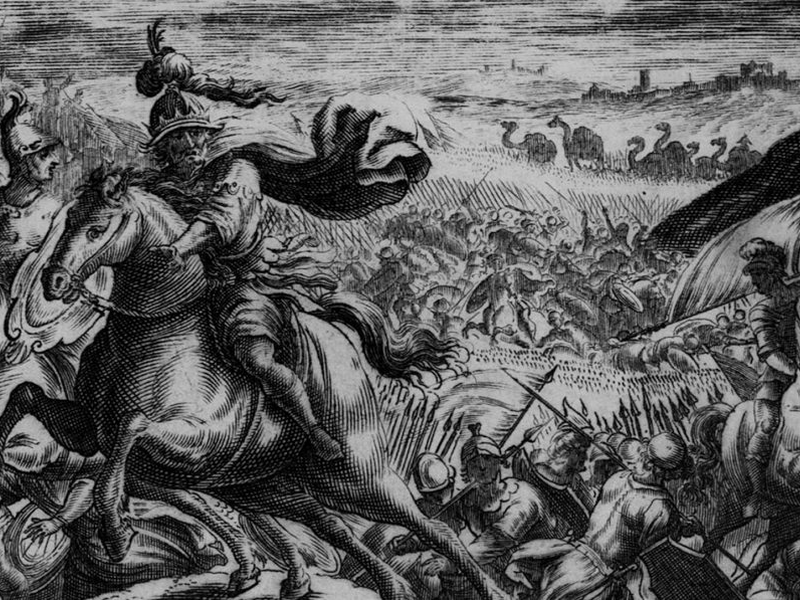
Abram’s 318 Men

Genesis 14:14 says that Abram mustered his trained men, “born in his house,” to rescue Lot, and gives their number as 318. It is clear that the precise number is provided for some reason, but what is it? S. Gevirtz notes that 318 is the sum of all the prime…

by James B. JordanJanuary 9, 2018
tanner-mardis-xuxghzhibn4-unsplash-1
Biblical Studies

The Flying Scroll

And he said to me, "What do you see?" And I answered, "I see a flying scroll; its length is twenty cubits and its width ten cubits" (Zechariah 5:2). Immediately following his vision of the outpouring of the Spirit upon the restoration community (4:1-14), Zechariah saw a flying scroll. The…

by Peter LeithartJanuary 4, 2018

Showing page 100 of 309

See all

Showing page 34 of 43

See all
Theology

Image of God

Gil Baillie, working in a Girardian framework, suggests that the claim that man is made in the image of God means “this creature can only fulfill its destiny by becoming like someone else. So counterinstinctual and counterintuitive is such a thing, that the likelihood of this creature actually fulfilling such…

April 29, 2006
History

Creative destruction

Vitz suggests that postmodern thought has been largely an act of “creative destruction” serving as an “expose, in the best sense of the term.” The result is “a much large intellectual framework within which everyone, including Christians, can function. It provides a much bigger framework than that which existed fifty…

April 29, 2006
History

Modern self

Paul Vitz describes the modern self this way: “The modern self is characterized by such things as freedom and autonomy, by a strong will, and by the presumption that the self is self-created by the will, operating freely in its construction. The self is assumed to be strong, capable, and…

April 29, 2006
Philosophy

Metanarratives

Many Christians find Lyotard’s claim that postmodernity is incredulity toward metanarratives directly contrary to Christian faith, but James KA Smith offers an interpretation of Lyotard’s that is not hostile to Christianity. For Lyotard, he argues, the issue is not so much the scope of the narrative as the claims they…

April 29, 2006
History

Anti-antimedievalism

David Burrell writes, “Modernity was fairly constituted by a quite specific opposition to medieval thought, as we have noted, so could be called ‘post’ or even ‘antimedieval’ . . . this mode of thinking proceeded by avoiding, if not aggressively removing, any reference to creation and the creator/creature relation. It…

April 29, 2006

Cosmic mediation

Philo’s views on the mediation of the logos are summarized in the TDNT article on mediator: “Stretching from the middle of the world to the ends, and back from the extreme edges to the middle . . . [the logos] holds together all the parts of the world . .…

April 29, 2006

Showing page 1849 of 2212

Browse by Category

In Medias Res

Your weekly digest for all things Theopolis.

Donate

Theopolis is nearly 100% donor-supported. Consider joining us on our mission.