
Theopolis Logo

Writing

Explore our collection of theological essays, biblical studies, and reflections on faith and culture.

See all
giammarco-zeh-ljawhtg-unsplash
Biblical Horizons

OPEN BOOK: Views and Reviews

Isaac E. Mozeson, The Word: The Dictionary that Reveals the Hebrew Sources of English (Northvale, NJ: Jacob Aaronson Inc., 1995), 310 pp. Reviewed by James B. Jordan. Once there was only one language in the world, the language God spoke to Adam. At the Tower of Babel, there came to…

by James B. JordanJune 28, 1996
tim-wildsmith-j6jv-mkdzqs-unsplash
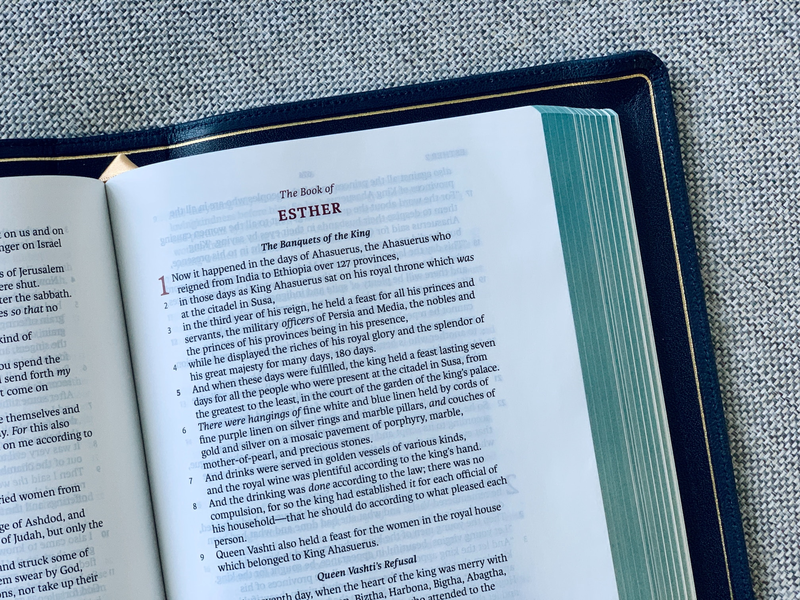
Esther

Esther: Historical & Chronological Comments (IV)

2. The Setting of the Book of Esther A. Xerxes (continued from previous issue) Ezra 6:14 says that the Jews finished building "according to the command of the God of Israel and the decree of Cyrus and Darius and Artaxerxes king of Persia." The problem with this verse is that…

by James B. JordanJune 28, 1996

ales-krivec-4mibe6zg5r0-unsplash
Acts

Jesus and Amalek

This essay goes with our previous study of the Amalek pattern back in Biblical Horizons No. 2. Since many do not have this essay, entitled "The Battle of Gog and Magog," let me cite the relevant paragraphs: Note in Genesis 12-15 that Abram moves into the land after escaping Pharaoh…

by James B. JordanJune 28, 1996
aaron-burden-1ebsmyrau-s-unsplash
Proverbs

The Strange Woman

Proverbs 7:6-23 is one of several passages early in the Proverbs in which Solomon warns his son about the wiles and dangers of the "strange woman." It is certainly quite proper to take these as straightforward warnings against sexual sins, and these are certainly warnings that need to be impressed…

by Peter LeithartJune 27, 1996
jan-kahanek-g3o5ztrk2e4-unsplash
Biblical Studies

Some Observations

1. In Luke 4:20 we read that after Jesus finished reading from Isaiah, "the eyes of all in the synagogue were fixed upon Him." This is usually taken in a psychological sense: They were amazed at Jesus somehow. I suggest that, as always, a merely psychological reading is a modern…

by James B. JordanMay 28, 1996
tim-wildsmith-j6jv-mkdzqs-unsplash
Esther

Esther: Historical & Chronological Comments (III)

2. The Setting of the Book of Esther Up to now we have assumed what we must prove, that the king in Esther is Darius the Great. While Biblical chronologists have usually taken this position, commentators on the book of Esther have often taken others as the king. One view,…

by James B. JordanMay 28, 1996

Showing page 265 of 309

See all

Showing page 34 of 43

See all
Theology

Purpose of Theology

Barth offers these wise words about the purpose of dogmatics (which consists, for Barth, of the correction, clarification, and criticism of church proclamation by measuring proclamation against the Word of God in the Bible): “Repetitive exposition according to the intentions of the theologians named will, of course, be indispensable for…

October 9, 2004

Translation, 1 Kings 9

And it was according to the finishing of Shlomoh to build the house of Yahweh And the house of the king And all the desire of Shlomoh which he took pleasure to do. And appeared Yahweh to Shlomoh a second time According as he appeared to him in Gibeon. And…

October 8, 2004

First Church of the Bitter

Ask any church planter, and he’ll tell you that one of the dangers of starting a new work is that it tends to attract all the people who are disaffected and discontented from the churches of the surrounding area. They have made an utter nuisance of themselves in their own…

October 8, 2004

Solomon and Pharaoh

As noted in my sermon outline earlier this week, there is an intriguing reversal going on with Solomon and Pharaoh in 1 Kings 9. Solomon does not wipe out the Canaanites (v. 20-21), but Pharaoh does (v. 16). On the other hand, Solomon is acting like a Pharaoh, not only…

October 8, 2004

Name and Presence

Yahweh’s “Name” must be His personal presence. He “consecrates” the temple by setting His name in the house (1 Ki 9:3, 7), and consecration is accomplished by the presence of Yahweh, particularly the presence of His glory (Ex 29:43). Name and glory must be coordinate if not identical realities. The…

October 8, 2004
Theology

Apostasy and Conversion

Though resting a theological case on a linguistic “accident” would be a mistake, it is intriguing that the Hebrew word for “convert” is the same as the Hebrew word for “go apostate.” The word in both cases is SHUB, “turn,” which means “turn away” or “turn toward” or “turn back”…

October 8, 2004

Showing page 2048 of 2212

Browse by Category

In Medias Res

Your weekly digest for all things Theopolis.

Donate

Theopolis is nearly 100% donor-supported. Consider joining us on our mission.