Theopolis Logo

Writing

Explore our collection of theological essays, biblical studies, and reflections on faith and culture.

See all
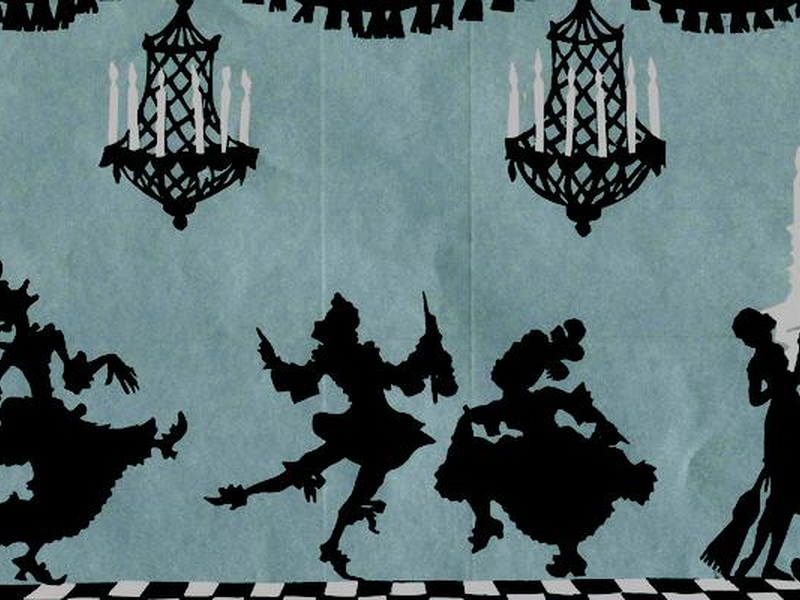
cinderella
C. S. Lewis

On Reading Fairy Tales

One of the main characters of That Hideous Strength by C. S. Lewis is Mark Studdock, who was a sociologist but his true passion was being a part of the so called “inner circle.” He wanted to belong to the elite that would bestow glory and power. On the other…

by Bogumil JarmulakMay 26, 2015

ceilingfromtheimmaculateconceptionchapel
Acts

By the Spirit

The first Pentecost meant many things, fulfilling many types, shadows, and prophecies from the Old Testament. Pentecost marked the beginning of a new creation, and a new humanity. Just as the Spirit hovered over the waters of the original formless and void creation to shape and fill it, so the…

by Peter LeithartMay 21, 2015
tim-marshall-k2u71wv2ei4-unsplash
Interview

Student Profile - Clint Hail

Clint Hail has had an exciting, varied life. A West Point graduate and a former infantry officer, he now serves as Community Transformation Director in Costa Rica for e3 Partners Ministries. Clint has also attended two Theopolis Institute courses. Clint recently told Theopolis about his experiences in the military, his…

by TheopolisMay 20, 2015
skyler-gerald-oygna91tfis-unsplash
Homosexuality

Music in Wartime

Before the summer is out, the US Supreme Court will hand down a decision in Obergefell v. Hodges , the same-sex marriage case. Every other week, ISIS releases a new video of masked fighters beheading Christians, and the rest of the Middle East is in chaos. Boko Haram terrorizes parts…

by Peter LeithartMay 19, 2015
banner
Theopolis News

New Theopolis Board Members

The Theopolis Institute Board added three new Board members at its semi-annual Board meeting on May 16: Dr. Roy Atwood, Pastor Uri Brito, and Rod Olps, Jr. Formerly President of New Saint Andrews College in Moscow, Idaho, Atwood was recently appointed Abraham Kuyper Distinguished Professor of Classics at Morthland College…

by TheopolisMay 18, 2015
peter-and-paul
Galatians

Galatian Temptations

The kingdom of God has come upon us, Jesus said. The justice of God is revealed in the gospel, Paul said. Whoever is in Christ, there is new creation. Isaiah's visions of lions and lambs and a peaceable kingdom are visions about the effect of the Messiah's first advent. If…

by Peter LeithartMay 14, 2015

Showing page 153 of 309

See all

Showing page 34 of 43

See all
Literature

Ibsen

Ibsen, Steiner argues, did not write tragedies. Ibsen wrote “dramatic rhetoric” calling society to reform. For real tragedy, there is no such “solution” to be found, there is no remedy, except destructive sacrifice and perhaps a deus ex machina. From this angle, tragedy is perhaps among the STOICHEIA that prepared…

January 7, 2004
Literature

More Quotations from Steiner

Some more quotations from Steiner’s Death of Tragedy : “We cannot understand the romantic movement if we do not perceive at the heart of it the impulse toward drama . . . . The romantic mode is neither an ordering nor a criticism of life; it is a dramatization. And…

January 7, 2004
Theology

NT Wright’s Rutherford House Lecture

Some thoughts on NT Wright’s Rutherford House Lecture, August 2003. I have little disagreement with much of the lecture, and it clarified a number of things for me. Wright’s views on justification, however, continue to puzzle me at a number of points. Here’s an attempt to clarify my (or NTW’s)…

January 7, 2004
Theology

NT Wright’s Rutherford House Lecture

Some thoughts on NT Wright’s Rutherford House Lecture, August 2003. I have little disagreement with much of the lecture, and it clarified a number of things for me. Wright’s views on justification, however, continue to puzzle me at a number of points. Here’s an attempt to clarify my (or NTW’s)…

January 7, 2004
Literature

European Drama

Steiner notes that, following the Renaissance, European drama operated under the shadows of neo-classical and Elizabethan dramatic practice, the former “closed” and rigidly adhering to Aristotelian criteria, the other open and experimental. He discusses the theory of Thomas Rymer (a neo-classicist) at some length, concluding that the controversies that Rymer…

January 6, 2004
Literature

Shakespearean Difference

George Steiner in his Death of Tragedy describes the “Shakespearean difference” as mainly due to Shakespeare’s avoidance of fascination with Hellenic models: “The neo-classic view [which rigidified Aristotelian conceptions of tragedy] expresses a growing perception of the miracle of Greek drama. This perception was fragmentary. There were few translations of…

January 6, 2004

Showing page 2141 of 2212

Browse by Category

In Medias Res

Your weekly digest for all things Theopolis.

Donate

Theopolis is nearly 100% donor-supported. Consider joining us on our mission.