Theopolis Logo

Writing

Explore our collection of theological essays, biblical studies, and reflections on faith and culture.

See all
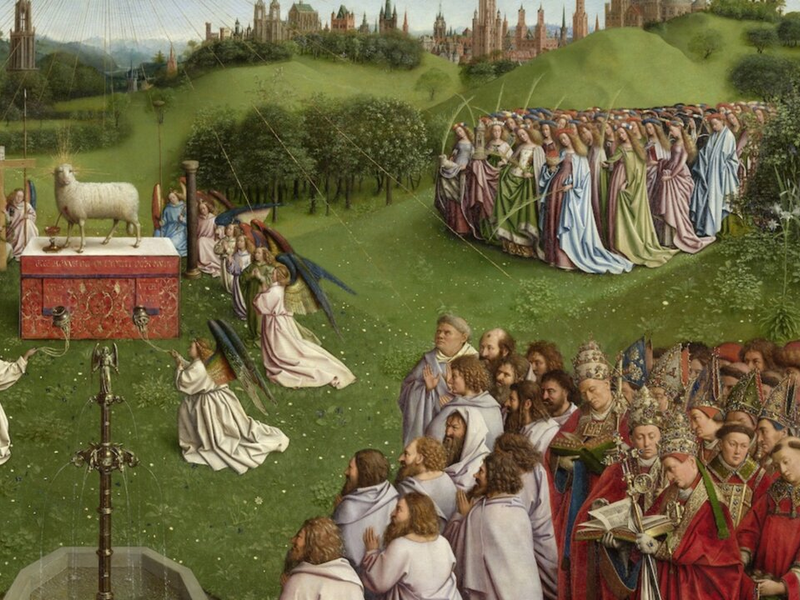
20_van-eyck_bavo-altar_adoration-of-the-lamb-copy-67f4f94b
Culture

An Introduction to the Sacred Music of Josquin

This essay is adapted from my articles in Theopolis’s In Medias Res as a series of Holy Week meditations. Like many celebrities such as Kanye or Beyoncé or Adele, Josquin des Prez (d. 1521) was often known only by his first name, in his own time as now. “Josquin” is…

by John AhernJuly 29, 2025
screenshot-2025-07-22-at-11-57-58-am
Numbers

Sight and Memory: Examining the Monuments of Numbers

Sight is a major theme in the scriptures. The church has long identified sight’s relationship to the future fulfillment of the eschaton. As Paul says, “For now we see only a reflection as in a mirror; then we shall see face to face” (1 Cor 13.12). Sight is associated with…

by Matthew DarbyJuly 22, 2025
tengyart-aaz5-as3io-unsplash
Biblical Theology

Yahweh’s Flame: the Gospel through Symbolism

What is the chief end of man? —yes, to glorify God and enjoy him forever. But how ought man–and all creation–so glorify him? I propose a Theopolitan addition to the catechism, question and answer number 1.5, begun in the last question and answered as follows: Earth’s inhabitants were created to…

by Ben LoveladyJuly 16, 2025
screenshot-2025-07-08-at-8-31-22-am
Culture

Morality and the Practice of Poetry

Naphtali is a hind let loose: he giveth goodly words. Genesis 49:21 Frederick Buechner once said, “We move into the extraordinary by way of the ordinary.” In poetry, this happens by way of a compressed code of analogs; often, two or more very ordinary things begin to reveal something that…

by Garrett SoucyJuly 8, 2025
screenshot-2025-07-03-at-9-26-50-am
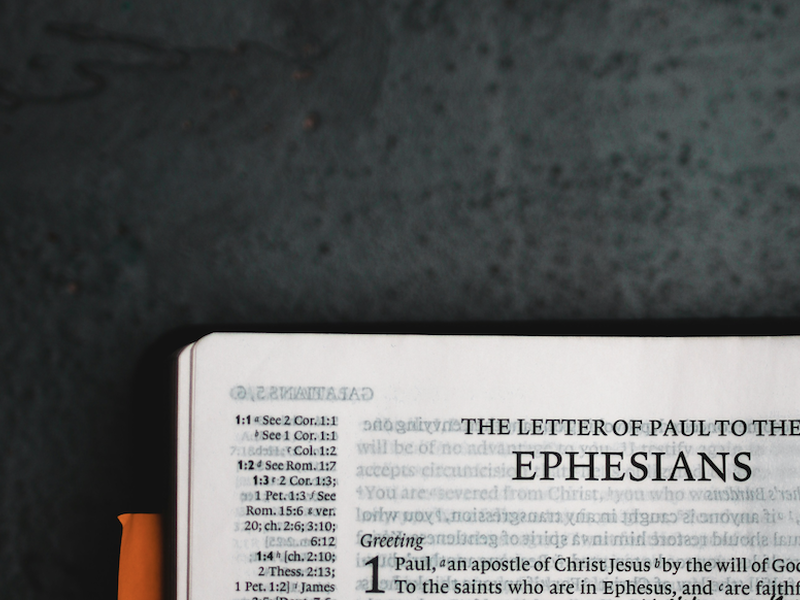
Ephesians

The Trinitarian Structure of Obedience

The evangelical milieu of America has often lost a vision of the fruit of repentance. We tend to simplify repentance by asking for forgiveness. After all, Jesus tells Peter to forgive 70 times 7. This verse must be paired with Paul’s scoffing at the question: why not sin more so…

by Matthew CoreyJuly 3, 2025
33255drsdl
Luke

The Hemorrhaging Woman, the Eucharist, and the Sermon

I. The hemorrhaging woman. En route to Jairus’ house, Jesus is touched by a woman with a hemorrhage of blood (Matt 9:18–26; Mk 5:21–34; Lk 8:40–48). The story is one that many of us know very well. She has been yoked to her illness for twelve years, all of her…

by Mark BriansJuly 1, 2025

Showing page 7 of 309

See all

Showing page 35 of 43

See all
History

Between Burckhardt and Baynes

H.A. Drake’s Constantine and the Bishops: The Politics of Intolerance (Ancient Society and History) is a remarkable piece of work. One of his opening moves is to show how, despite clear and overt differences, both Burckhardt’s pure-political Constantine and Baynes’s sincere-Christian Constantine share common assumptions about politics and religion. He…

May 27, 2009

Blessed are the poor

Niebuhr has this nice harmonization of the Matthean and Lukan beatitude to the poor: “Both versions are necessary to catch the full flavor of the beatitude. For the Lukan version alone would make poverty a guarantee of virtue, particularly of the virtue of humility, which it is not. The Matthean…

May 27, 2009
Theology

Christian irony

Niebuhr claims that irony is inherent in the Christian view of history: Christianity’s “interpretation of the nature of evil in human history is consistently ironic. This consistency is achieved on the basis of the belief that the whole drama of human history is under the scrutiny of a divine judge…

May 27, 2009
History

American idealism

Niebuhr ( Irony ) quotes an unnamed European statesman who expresses gratitude for America’s help in resisting tyranny, but fear “that we might become an American ally.” America’s idealism doesn’t reassure him: “The idealism does indeed prevent America from a gross abuse of its power. But it might well accentuate…

May 26, 2009
History

Having and Being Empire

Charles Maier’s comparative study Among Empires: American Ascendancy and Its Predecessors reaches the waffly but accurate conclusion that the “United States reveals many, but not all - at least not yet - of the traits that distinguished empires.” Early on, he makes the helpful distinction between “being” and “having” an…

May 26, 2009
Uncategorized

Demoting the Emperor

Van Dam ( Roman Revolution of Constantine ) suggests that Eusebius’s Life was simultaneously a political tract celebrating the elevation of a Christian emperor and a theological apology promoting Eusebius’s Christological subordinationism. The afterlife of Eusebius’s treatise, though, put the emperors in their place. Rufinus’s translation/paraphrase of Eusebius’s Church History…

May 26, 2009

Showing page 1377 of 2212

Browse by Category

In Medias Res

Your weekly digest for all things Theopolis.

Donate

Theopolis is nearly 100% donor-supported. Consider joining us on our mission.