Theopolis Logo

Writing

Explore our collection of theological essays, biblical studies, and reflections on faith and culture.

See all
or
Abortion

Political Hermeneutics: The Argument From Silence, Part 2

Click HERE for part 1. III This leads to a further question. I have argued that silence cannot by itself establish a Scriptural principle, but does Scripture’s silence carry any weight in itself? Does the fact that something is unbiblical in a weak sense tell us anything at all? In…

by Peter LeithartMarch 13, 1990

hebrew-manuscript-6
Biblical Chronology

Groping Through the Gaps

Although nowadays gap theories are associated with dispensationalism, it was not always so. In the nineteenth century, scholars from a variety of backgrounds (Anglican, Reformed, and proto-fundamentalist) seem to have become fascinated by gaps. If you are not familiar with what I am talking about, this newsletter will acquaint you…

by James B. JordanFebruary 26, 1990
or
Abortion

Political Hermeneutics: The Argument from Silence, Part 1

If the debate over Operation Rescue has proven anything, it has proven that there is absolutely no consensus among evangelicals in general, or among "reconstructionists" in particular, about how to use the Bible to judge political actions and movements. Each side of the debate claims biblical authority for its position,…

by Peter LeithartFebruary 13, 1990
49980-nicolas_poussin_-_the_judgment_of_solomon_-_wga18330-800w-tn
Biblical Studies

Advice From a Sojourner, Part 4

Two things I asked of Thee, Do not refuse me before I die: Keep deception and words of falsehood far from me, Give me neither poverty nor riches, Feed me with the food that it my portion, Lest I be full and deny Thee, And say, "Who is the LORD?"…

by James B. JordanFebruary 2, 1990
image-2
Biblical Horizons

Foucault’s Pendulum

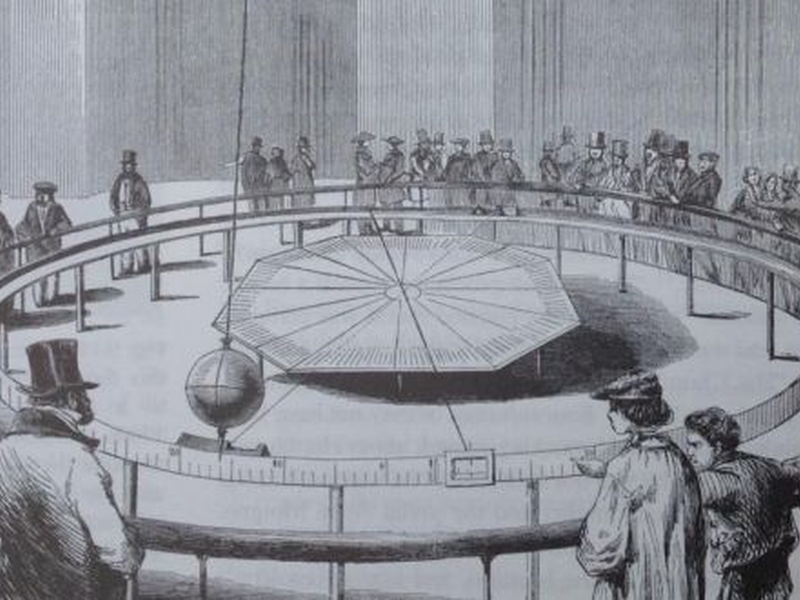
Umberto Eco’s "The Name of the Rose" was certainly one of the best literary works of the past decade, though the film version hardly measured up to it. Now Eco has given us a new novel, "Foucault’s Pendulum." Like Rose, Foucault’s Pendulum reflects on the limitations of human knowledge, and…

by James B. JordanJanuary 26, 1990
tanner-mardis-xuxghzhibn4-unsplash-1-2
Biblical Studies

What Is “Interpretive Maximalism”?

From time to time people ask me about "interpretive maximalism." They want to know what it is, and sometimes want to know if it represents some departure from the Reformed grammatico-historical, Biblico-theological approach to the Bible. I have something of a problem with these questions, because "interpretive maximalism" is not…

by James B. JordanJanuary 26, 1990

Showing page 305 of 309

See all

Showing page 35 of 43

See all
Theology

Privatio boni

Milbank makes a couple of interesting points regarding the import of an Augustinian view of evil. 1) Augustine’s view assumes the goodness of matter, in fact the goodness of all being. This, Milbank claims, seems to excuse evil - it’s some lack, a weakness or finitude, that makes for evil.…

July 11, 2007
Theology

Privatio boni and banal evil

In the view of many, the Holocaust belied the Augustinian description of evil as the privation of good. Something much more insidiously positive was at work in the death camps. Hannah Arendt, however, seems to confirm the Augustinian perspective in her treatment of the banality of evil. According to Milbank,…

July 10, 2007
Philosophy

Argue, or obey?

Kant bristles at the demand that he claims to hear “on all sides”: ” Don’t argue !” Officers tell us to obey, tax-officials to pay, clergy to pray in a certain way. But Kant wants to argue. Or does he? Maybe not: “in some affairs which affect the interests of…

July 10, 2007
Philosophy

The duty of enlightenment

Kant’s appeal in “What Is Enlightenment?” is not primarily intellectual but ethical. Enlightenment, Kant says, “is man’s emergence from his self-incurred immaturity.” Immaturity he defines as “the inability to use one’s own understanding without the guidance of another,” and this immaturity is “self-incurred” when the cause is “lack of resolution…

July 10, 2007
American Religion

Americanism

David Gelernter, Americanism: The Fourth Great Western Religion . New York: Doubleday, 2007. 229 pp. Hardback, $24.95. America, G. K. Chesterton said, is a nation with the soul of a church. David Gelernter, the polymathic computer scientist from Yale, suggests that this doesn’t quite go far enough. For many, both…

July 10, 2007

God’s Whimsy

Wiker and Witt suggest that God created pandas as “comic relief” in a blessed fit of “divine whimsy.” The suggestion is troubling even for Christians who defend creation, because, being engineers, they have swallowed the reductive notion that creation must be functional. Wiker and Witt offer this rejoinder: “To spurn…

July 9, 2007

Showing page 1658 of 2212

Browse by Category

In Medias Res

Your weekly digest for all things Theopolis.

Donate

Theopolis is nearly 100% donor-supported. Consider joining us on our mission.