Theopolis Logo

Writing

Explore our collection of theological essays, biblical studies, and reflections on faith and culture.

See all
or
Abortion

Political Hermeneutics: The Argument From Silence, Part 2

Click HERE for part 1. III This leads to a further question. I have argued that silence cannot by itself establish a Scriptural principle, but does Scripture’s silence carry any weight in itself? Does the fact that something is unbiblical in a weak sense tell us anything at all? In…

by Peter LeithartMarch 13, 1990

hebrew-manuscript-6
Biblical Chronology

Groping Through the Gaps

Although nowadays gap theories are associated with dispensationalism, it was not always so. In the nineteenth century, scholars from a variety of backgrounds (Anglican, Reformed, and proto-fundamentalist) seem to have become fascinated by gaps. If you are not familiar with what I am talking about, this newsletter will acquaint you…

by James B. JordanFebruary 26, 1990
or
Abortion

Political Hermeneutics: The Argument from Silence, Part 1

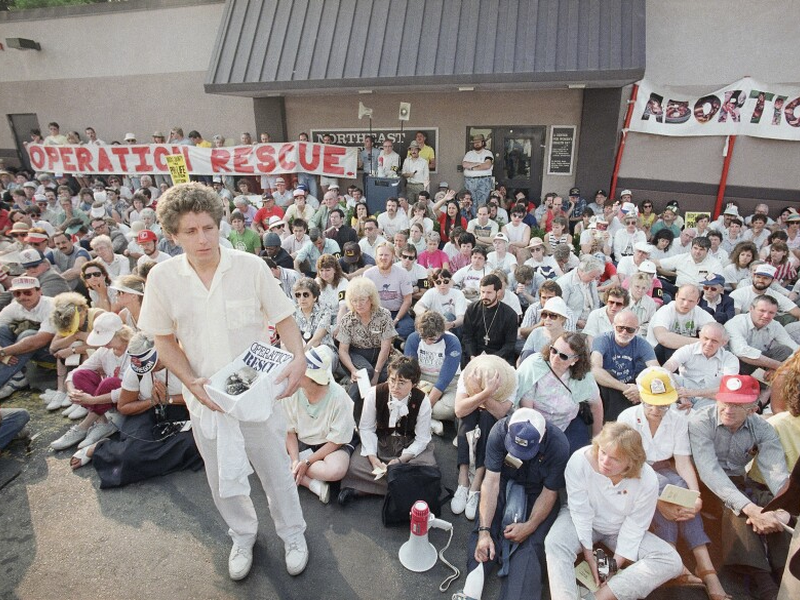
If the debate over Operation Rescue has proven anything, it has proven that there is absolutely no consensus among evangelicals in general, or among "reconstructionists" in particular, about how to use the Bible to judge political actions and movements. Each side of the debate claims biblical authority for its position,…

by Peter LeithartFebruary 13, 1990
49980-nicolas_poussin_-_the_judgment_of_solomon_-_wga18330-800w-tn
Biblical Studies

Advice From a Sojourner, Part 4

Two things I asked of Thee, Do not refuse me before I die: Keep deception and words of falsehood far from me, Give me neither poverty nor riches, Feed me with the food that it my portion, Lest I be full and deny Thee, And say, "Who is the LORD?"…

by James B. JordanFebruary 2, 1990
image-2
Biblical Horizons

Foucault’s Pendulum

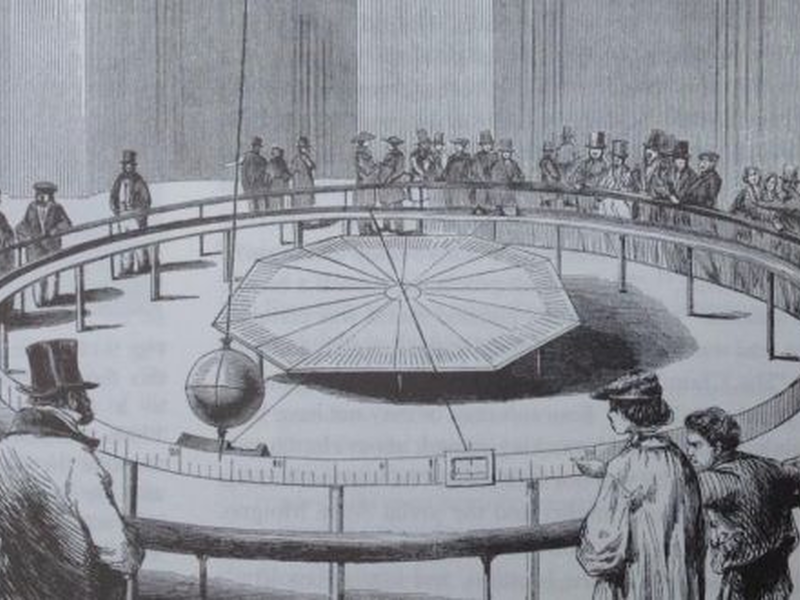
Umberto Eco’s "The Name of the Rose" was certainly one of the best literary works of the past decade, though the film version hardly measured up to it. Now Eco has given us a new novel, "Foucault’s Pendulum." Like Rose, Foucault’s Pendulum reflects on the limitations of human knowledge, and…

by James B. JordanJanuary 26, 1990
tanner-mardis-xuxghzhibn4-unsplash-1-2
Biblical Studies

What Is “Interpretive Maximalism”?

From time to time people ask me about "interpretive maximalism." They want to know what it is, and sometimes want to know if it represents some departure from the Reformed grammatico-historical, Biblico-theological approach to the Bible. I have something of a problem with these questions, because "interpretive maximalism" is not…

by James B. JordanJanuary 26, 1990

Showing page 305 of 309

See all

Showing page 35 of 43

See all

Paul and Israel

N. T. Wright’s views on Paul and justification will be misconstrued if they are examined outside the context of his views on Israel’s history and Jesus’ role in that history. That is, Wright’s work is of a piece – his historical Jesus studies are essential to a proper understanding of…

April 17, 2007

Sanders and Bultmann

To understand EP Sanders’s “revolution” in Pauline studies, it’s helpful to look at Bultmann’s understanding of Paul, against which Sanders and others are explicitly and implicitly reacting. (I’m following the superb summary in Stephen Westerholm’s Perspectives Old and New on Paul.) Bultmann’s starting point is anthropological. As a creature, man…

April 17, 2007
Literature

Troubadours and courtly love

In his book, The Reign of Chivalry , Richard Barber gives a very fine summary of the courtly love tradition and the romantic tradition that it produced. I reproduce here only some of the main points of his discussion of the lyric love poetry of the troubadours. 1) Courtly love,…

April 17, 2007

Sermon Outline, Second Sunday after Easter

INTRODUCTION Matthew’s gospel is organized to show that Jesus is the True Israel, reliving Israel’s history faithfully. But Matthew also shows that Jesus is Israel’s God, who is rejected by His own people but triumphs over their rejection. THE TEXT “The book of the genealogy of Jesus Christ, the Son…

April 16, 2007

Literal and spiritual senses

Early in the Summa theologiae , Thomas defends the fourfold interpretation of the Old Testament Scripture by saying that the words of Scripture refer univocally to things, and that God providentially uses those things to signify later things. In this, he was anticipated by Hugh of St. Victor. In his…

April 11, 2007
Theology

Place of theology

Roch Kereszty asks why, if “Scriptural formulas are the most accurate and the best suited for expressing christological doctrine,” we need “theological speculation.” He answers that theology exists to clarify and explain the Bible: “Systematic theologians . . . will follow the direction given in the New Testament itself (that…

April 11, 2007

Showing page 1693 of 2212

Browse by Category

In Medias Res

Your weekly digest for all things Theopolis.

Donate

Theopolis is nearly 100% donor-supported. Consider joining us on our mission.