Theopolis Logo

Writing

Explore our collection of theological essays, biblical studies, and reflections on faith and culture.

See all
tim-marshall-k2u71wv2ei4-unsplash
Modernity

Protestantism and the Postmodern self

Postmodernism has, we are told, “decentered” the modern self, that unified, sovereign, isolated, godlike “thinking thing” discovered by Rene Descartes. The postmodern self is not single but multiple; not sovereign but controlled by external forces; not isolated but “embedded” in the world and in relation; not godlike, but human, all…

by Peter LeithartMay 6, 2013

kiwihug-l4gw27xzn1i-unsplash
Matthew

Law and History: How to Read the Law of Moses (Part 8)

This is the eighth in a series of studies on Deuteronomy 22:30-23:8. And Jesus went out thence, and withdrew into the parts of Tyre and Sidon. And behold, a Canaanitish woman came out from those borders, and cried, saying, Have mercy on me, O Lord, thou son of David; my…

by Ralph Allan SmithMay 1, 2013
screen-shot-2023-09-20-at-7-04-07-am
Augustine

A Cusan Modernity?

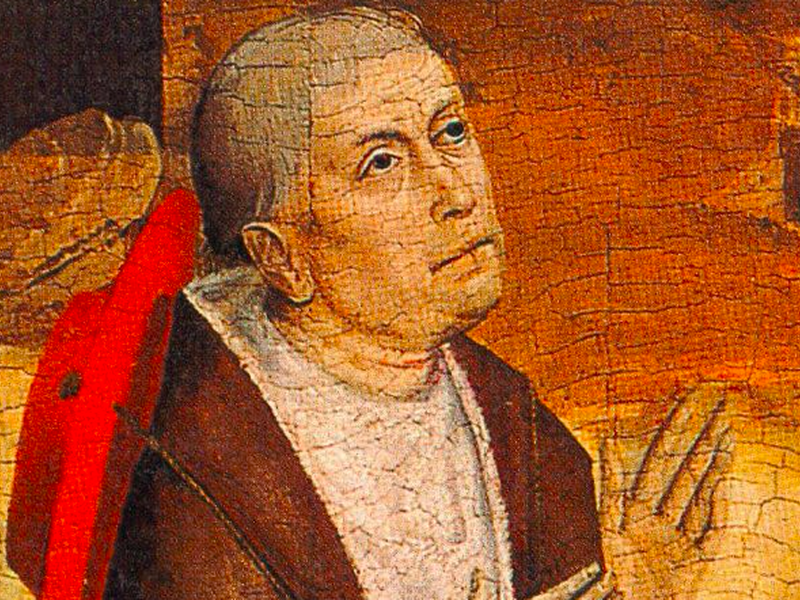
The fifteenth-century German Cardinal Nicholas of Cusa led a busy and wide-ranging life. Educated in liberal arts and law at Heidelberg and Padua, Nicholas was a leading figure in the Conciliarist movement, and later served as a papal legate to both Constantinople and throughout Germany. As Bishop of Brixen, he…

by Peter LeithartApril 29, 2013
screenshot-2023-07-27-at-10-25-35-am
Deuteronomy

Law and History: How to Read the Law of Moses (Part 7)

This is the seventh in a series of studies on Deuteronomy 22:30-23:8. Thou shalt not abhor an Edomite, for he is thy brother; thou shalt not abhor an Egyptian, because thou wast a sojourner in his land. The children of the third generation that are born unto them shall enter…

by Ralph Allan SmithApril 25, 2013
ivan-aleksic-16yxcjsoaek-unsplash
Romans

What Advantage the Jew?

A sermon on Romans 3:1-8. 1 Then what advantage has the Jew? Or what is the value of circumcision? 2 Much in every way. To begin with, the Jews were entrusted with the oracles of God. A lot of people speculate here about what kind of advantage Paul is talking…

by Mark HorneApril 22, 2013
screenshot-2023-07-27-at-10-25-35-am
Deuteronomy

Law and History: How to Read the Law of Moses (Part 6)

This is the sixth in a series of studies on Deuteronomy 22:30-23:8. An Ammonite or a Moabite shall not enter into the assembly of Yahweh; even to the tenth generation shall none belonging to them enter into the assembly of Yahweh forever: because they met you not with bread and…

by Ralph Allan SmithApril 17, 2013

Showing page 195 of 309

See all

Showing page 35 of 43

See all

Necessity of Incarnation

Would the Son have been incarnate if Adam had not sinned? 1 Corinthians 15:44-45 provides a prooftext for an affirmative answer. Verse 44 says that the “spiritual body” is implied by the existence of the “natural body.” Human beings were created in a natural state, but they were destined from…

August 12, 2006
Philosophy

Decentered Self of Modernity

Bishop Joseph Butler of Durham worried about the consequences of Locke’s empiricism: “That personality is not a permanent, but a transcient thing: that it lives and dies, begins and ends continually: that no one can any more remain one and the same person two moments together, than two successive moments…

August 12, 2006
History

Embedded mind

Modernity ignores the social, linguistic, and political context of thought, and the way interest shapes the mind; postmodernity foregrounds all this. Perhaps, but . . . . Descartes said that his travels demonstrates that “all those who hold notions strongly contrary to our own are not for that reason barbarians…

August 12, 2006
History

Self and World

For premoderns - ancients and medievals - there was a homology between the self and the world. Man was seen as microcosm, and, as Seigel puts it, they believed that “the world, like the self, is structured so as to fulfill intelligible moral ends.” The initial shift in early modernity,…

August 12, 2006
Philosophy

Birth of the Modern Self?

Seigel views with “considerable skepticism” the notion that Descartes constructed “a general theory of the human self and subject on the basis of the cogito .” In his treatise on the Passions of the Soul , Descartes claimed that the soul was linked with the body, which acts on the…

August 12, 2006
History

Purity

According to Seigel, “Descartes’s view of reason as most pure and solid when it was free of corruption by the world’s confusions implied nothing less than the attempt to break free of all social and cultural experience.” Not for the first time, I wish there were an anthropological history of…

August 12, 2006

Showing page 1812 of 2212

Browse by Category

In Medias Res

Your weekly digest for all things Theopolis.

Donate

Theopolis is nearly 100% donor-supported. Consider joining us on our mission.