Theopolis Logo

Writing

Explore our collection of theological essays, biblical studies, and reflections on faith and culture.

See all
or
Abortion

Political Hermeneutics: The Argument From Silence, Part 2

Click HERE for part 1. III This leads to a further question. I have argued that silence cannot by itself establish a Scriptural principle, but does Scripture’s silence carry any weight in itself? Does the fact that something is unbiblical in a weak sense tell us anything at all? In…

by Peter LeithartMarch 13, 1990

hebrew-manuscript-6
Biblical Chronology

Groping Through the Gaps

Although nowadays gap theories are associated with dispensationalism, it was not always so. In the nineteenth century, scholars from a variety of backgrounds (Anglican, Reformed, and proto-fundamentalist) seem to have become fascinated by gaps. If you are not familiar with what I am talking about, this newsletter will acquaint you…

by James B. JordanFebruary 26, 1990
or
Abortion

Political Hermeneutics: The Argument from Silence, Part 1

If the debate over Operation Rescue has proven anything, it has proven that there is absolutely no consensus among evangelicals in general, or among "reconstructionists" in particular, about how to use the Bible to judge political actions and movements. Each side of the debate claims biblical authority for its position,…

by Peter LeithartFebruary 13, 1990
49980-nicolas_poussin_-_the_judgment_of_solomon_-_wga18330-800w-tn
Biblical Studies

Advice From a Sojourner, Part 4

Two things I asked of Thee, Do not refuse me before I die: Keep deception and words of falsehood far from me, Give me neither poverty nor riches, Feed me with the food that it my portion, Lest I be full and deny Thee, And say, "Who is the LORD?"…

by James B. JordanFebruary 2, 1990
image-2
Biblical Horizons

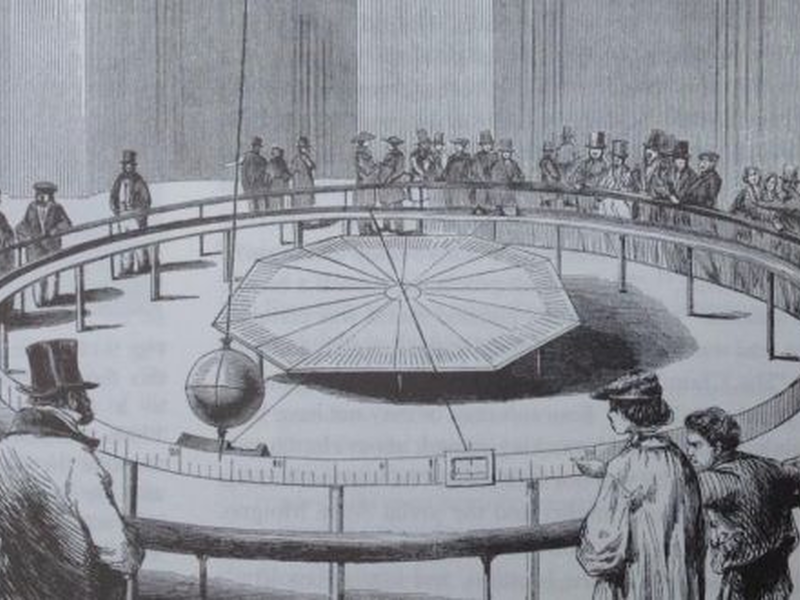
Foucault’s Pendulum

Umberto Eco’s "The Name of the Rose" was certainly one of the best literary works of the past decade, though the film version hardly measured up to it. Now Eco has given us a new novel, "Foucault’s Pendulum." Like Rose, Foucault’s Pendulum reflects on the limitations of human knowledge, and…

by James B. JordanJanuary 26, 1990
tanner-mardis-xuxghzhibn4-unsplash-1-2
Biblical Studies

What Is “Interpretive Maximalism”?

From time to time people ask me about "interpretive maximalism." They want to know what it is, and sometimes want to know if it represents some departure from the Reformed grammatico-historical, Biblico-theological approach to the Bible. I have something of a problem with these questions, because "interpretive maximalism" is not…

by James B. JordanJanuary 26, 1990

Showing page 305 of 309

See all

Showing page 35 of 43

See all

Alpha and Omega

Apringius Latin Commentaries on Revelation (Ancient Christian Texts) , 25-6) offers a fascinating numerological interpretation of Jesus’ declaration that He is Alpha and Omega. The numerical value of Omega is 800, and so is the Greek word peristera , “dove.” Alpha adds a 1 to this, and thus Jesus’ self-description…

May 10, 2013

Dating Revelation

From Irenaeus on, the vast majority of patristic and medieval commentators have claimed that Revelation was written during the reign of Domitian in the mid-90s AD. There have been a few dissidents, the most famous of which was Epiphanius of Salamis (fifth century), who may reflect an independent tradition in…

May 10, 2013

Status preaching

Julianus Pomerius, who directed a school in sixth-century Gaul, emphasized straightforward, unadorned preaching. “A teacher of the Church should not parade an elaborate style,” he writes in his The Contemplative Life , “lest he seem not to want to edify the Church of God but to reveal what great learning…

May 10, 2013

Primer on baptism

With my views on baptism again subject to scrutiny, I take a moment to summarize what I’ve written on the subject. There is nothing new here. It is what I wrote in my dissertation, The Priesthood of the Plebs: A Theology of Baptism , in my book, The Baptized Body…

May 8, 2013

Preaching Chronology

As Stephen recounts the history of Israel to his persecutors, he refers in passing to several chronological details. Abraham’s descendants were slaves for 400 years (Acts 7:6), God appeared to Moses after 40 years of sojourn in Midian (7:30), and another 40 years passed with Israel in the wilderness (7:36).…

May 8, 2013
Literature

Taming the Hunter

In a 2006 article in Studies in Philology , Sean Benson explores Shakespeare’s use of hawking imagery in romantic relations. Shakespeare “employs the gendered discourse of hawking language in order to make the interspecific leap from the falconer’s training of his female hawk to a husband’s training of his wife.…

May 8, 2013

Showing page 736 of 2212

Browse by Category

In Medias Res

Your weekly digest for all things Theopolis.

Donate

Theopolis is nearly 100% donor-supported. Consider joining us on our mission.