Theopolis Logo

Writing

Explore our collection of theological essays, biblical studies, and reflections on faith and culture.

See all
giammarco-zeh-ljawhtg-unsplash
Biblical Horizons

OPEN BOOK: Views and Reviews

Isaac E. Mozeson, The Word: The Dictionary that Reveals the Hebrew Sources of English (Northvale, NJ: Jacob Aaronson Inc., 1995), 310 pp. Reviewed by James B. Jordan. Once there was only one language in the world, the language God spoke to Adam. At the Tower of Babel, there came to…

by James B. JordanJune 28, 1996
tim-wildsmith-j6jv-mkdzqs-unsplash
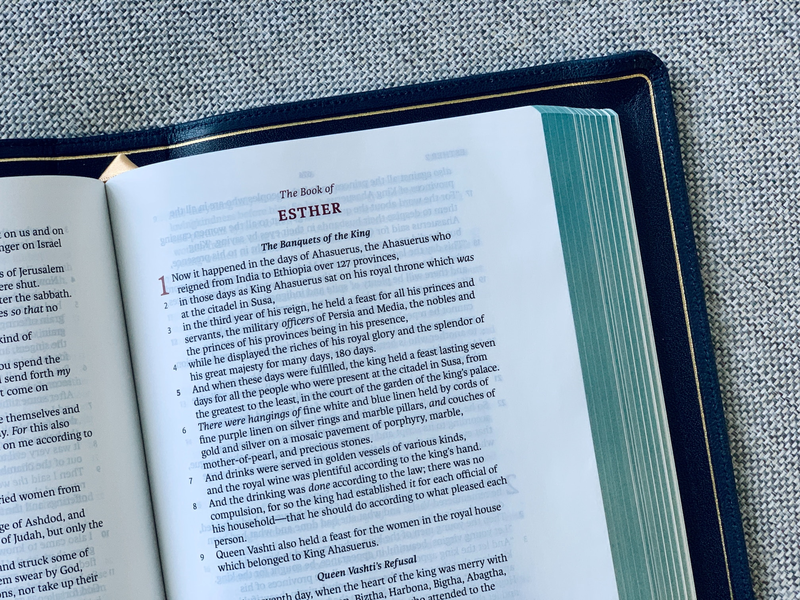
Esther

Esther: Historical & Chronological Comments (IV)

2. The Setting of the Book of Esther A. Xerxes (continued from previous issue) Ezra 6:14 says that the Jews finished building "according to the command of the God of Israel and the decree of Cyrus and Darius and Artaxerxes king of Persia." The problem with this verse is that…

by James B. JordanJune 28, 1996
ales-krivec-4mibe6zg5r0-unsplash
Acts

Jesus and Amalek

This essay goes with our previous study of the Amalek pattern back in Biblical Horizons No. 2. Since many do not have this essay, entitled "The Battle of Gog and Magog," let me cite the relevant paragraphs: Note in Genesis 12-15 that Abram moves into the land after escaping Pharaoh…

by James B. JordanJune 28, 1996
aaron-burden-1ebsmyrau-s-unsplash
Proverbs

The Strange Woman

Proverbs 7:6-23 is one of several passages early in the Proverbs in which Solomon warns his son about the wiles and dangers of the "strange woman." It is certainly quite proper to take these as straightforward warnings against sexual sins, and these are certainly warnings that need to be impressed…

by Peter LeithartJune 27, 1996
jan-kahanek-g3o5ztrk2e4-unsplash
Biblical Studies

Some Observations

1. In Luke 4:20 we read that after Jesus finished reading from Isaiah, "the eyes of all in the synagogue were fixed upon Him." This is usually taken in a psychological sense: They were amazed at Jesus somehow. I suggest that, as always, a merely psychological reading is a modern…

by James B. JordanMay 28, 1996
tim-wildsmith-j6jv-mkdzqs-unsplash
Esther

Esther: Historical & Chronological Comments (III)

2. The Setting of the Book of Esther Up to now we have assumed what we must prove, that the king in Esther is Darius the Great. While Biblical chronologists have usually taken this position, commentators on the book of Esther have often taken others as the king. One view,…

by James B. JordanMay 28, 1996

Showing page 265 of 309

See all

Showing page 36 of 43

See all

Conference

If you’re in the vicinity of Duke, you might be interested in a conference sponsored by the Center for Catholic and Evangelical Theology, in cooperation with the Duke Divinity School, on May 21-23, at Duke. The theme is “Preaching, Teaching, and Living the Bible.” Speakers include Robert Jenson, Rusty Reno,…

March 30, 2006
Literature

Garber on Merchant

Marjorie Garber has, as usual, some insightful things to say about Merchant of Venice: 1) She describes the play as “Shakespeare’s great play about difference,” pointing to the apparent stark contrasts of Christian and Jew, Venice and Belmont, male and female. Yet, she also notes that the play is busy…

March 29, 2006
Literature

Biblical echoes in Merchant of Venice

A.R. Braunmuller offers some suggestive comments in his introduction to the Merchant of Venice in the Pelican Shakespeare. Having summarized Portia’s speech (which he suggests might be a “setup that turns on a technicality” that “turns back on Shylock a legal rigidity he had been duped into demanding”), he notes…

March 29, 2006

Hypostatic union

Thomas argues that “if the human nature is not united to God the Word in person, it is not united to him in any way, and thus belief in the incarnation is altogether done away with, which subverts the entire Christian faith.” But since there is a union, it must…

March 29, 2006

Aquinas and Chalcedon

Frederick Bauerschmidt claims that “Aquinas is in fact the first medieval theologian in the West to quote directly from the Council of Chalcedon.” This is remarkable on all sorts of levels, not least because of the questions it raises about the authority of the ecumenical councils in medieval thought.

March 29, 2006
Theology

Gift and Gratitude in the Middle Ages

INTRODUCTION Seneca’s de Beneficiis was known to the Christian Middle Ages, as were some of the gift and gratitude customs of the Roman world. We’ll examine the use that Aquinas makes of Seneca when we get to the Summa later this week. But in addition to these ancient sources, medieval…

March 28, 2006

Showing page 1865 of 2212

Browse by Category

In Medias Res

Your weekly digest for all things Theopolis.

Donate

Theopolis is nearly 100% donor-supported. Consider joining us on our mission.