Theopolis Logo

Writing

Explore our collection of theological essays, biblical studies, and reflections on faith and culture.

See all
or
Abortion

Political Hermeneutics: The Argument From Silence, Part 2

Click HERE for part 1. III This leads to a further question. I have argued that silence cannot by itself establish a Scriptural principle, but does Scripture’s silence carry any weight in itself? Does the fact that something is unbiblical in a weak sense tell us anything at all? In…

by Peter LeithartMarch 13, 1990
hebrew-manuscript-6
Biblical Chronology

Groping Through the Gaps

Although nowadays gap theories are associated with dispensationalism, it was not always so. In the nineteenth century, scholars from a variety of backgrounds (Anglican, Reformed, and proto-fundamentalist) seem to have become fascinated by gaps. If you are not familiar with what I am talking about, this newsletter will acquaint you…

by James B. JordanFebruary 26, 1990
or
Abortion

Political Hermeneutics: The Argument from Silence, Part 1

If the debate over Operation Rescue has proven anything, it has proven that there is absolutely no consensus among evangelicals in general, or among "reconstructionists" in particular, about how to use the Bible to judge political actions and movements. Each side of the debate claims biblical authority for its position,…

by Peter LeithartFebruary 13, 1990
49980-nicolas_poussin_-_the_judgment_of_solomon_-_wga18330-800w-tn
Biblical Studies

Advice From a Sojourner, Part 4

Two things I asked of Thee, Do not refuse me before I die: Keep deception and words of falsehood far from me, Give me neither poverty nor riches, Feed me with the food that it my portion, Lest I be full and deny Thee, And say, "Who is the LORD?"…

by James B. JordanFebruary 2, 1990
image-2
Biblical Horizons

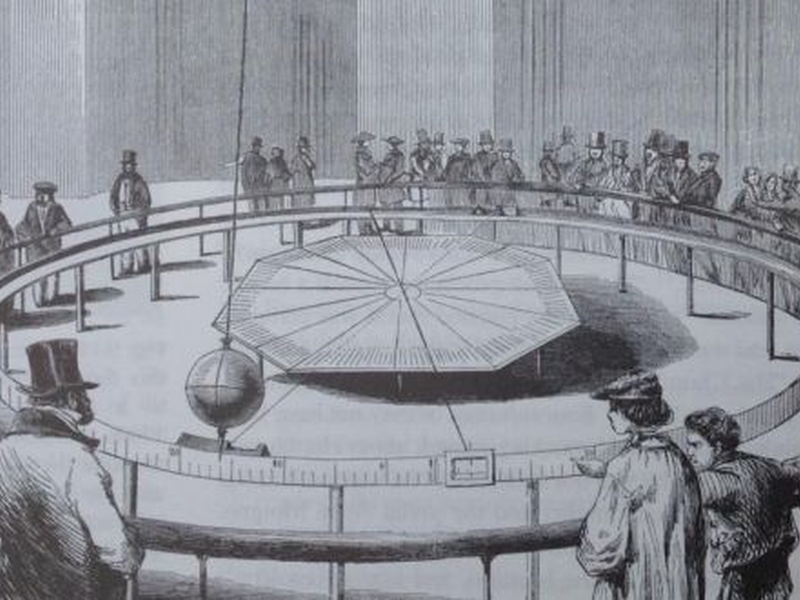
Foucault’s Pendulum

Umberto Eco’s "The Name of the Rose" was certainly one of the best literary works of the past decade, though the film version hardly measured up to it. Now Eco has given us a new novel, "Foucault’s Pendulum." Like Rose, Foucault’s Pendulum reflects on the limitations of human knowledge, and…

by James B. JordanJanuary 26, 1990
tanner-mardis-xuxghzhibn4-unsplash-1-2
Biblical Studies

What Is “Interpretive Maximalism”?

From time to time people ask me about "interpretive maximalism." They want to know what it is, and sometimes want to know if it represents some departure from the Reformed grammatico-historical, Biblico-theological approach to the Bible. I have something of a problem with these questions, because "interpretive maximalism" is not…

by James B. JordanJanuary 26, 1990

Showing page 305 of 309

See all

Showing page 36 of 43

See all

Sermon Outline

INTRODUCTION Joash’s story is an ironic tragedy of Shakespearean dimensions. His reign begins well, with a dramatic and surprising renewal of the Davidic line, and he pays his dues by repairing the temple. Before the end of his life, he loots the very temple he has repaired. THE TEXT “In…

February 13, 2006

Eucharistic meditation, Sixth Epiphany

2 Kings 11:1: When Athaliah the mother of Ahaziah saw that her son was dead, she rose and destroyed all the royal seed. At the beginning, the story of Athaliah appears to be the story of the destruction of the house of David. Athaliah kills all the royal seed, and…

February 12, 2006

Baptism Meditation, Sixth After Epiphany

2 Kings 11:3: So Joash was hidden with her in the house of Yahweh six years, while Athaliah was reigning over the land. The story in the sermon today is the story of two kingdoms, two rulers, two reigns. One is open, public, evident to everyone who reads the newspapers.…

February 12, 2006

Exhortation, Sixth After Epiphany

Athaliah, daughter of Ahab and Jezebel, knew she had to protect herself. She was related to the Davidic line only by marriage, and knew that many in Judah would be suspicious of her. A live Davidic prince could become the focal point for a revolt that would topple her from…

February 12, 2006
Literature

Shakespeare and Puritans

Jeffrey Knapp suggests that, though Shakespeare was probably raised a Catholic, he chose to conform to the established religion but without taking a high profile at church. In a comment that rings true, Knapp suggests that above all Shakespeare “deplored sectarianism. Shakespeare’s puritanical characters are typically divisive figures, longing for…

February 11, 2006

Eye for Eye

Athaliah the murderous mother is undone by Jehosheba the protective mother. To be specific: Athaliah renounces her blood ties with her grandchildren and slaughters the royal seed (2 Kings 11). Jehosheba renounces her blood ties with her own mother, Athaliah, and saves the royal seed. Wicked family disloyalty is undone…

February 11, 2006

Showing page 1886 of 2212

Browse by Category

In Medias Res

Your weekly digest for all things Theopolis.

Donate

Theopolis is nearly 100% donor-supported. Consider joining us on our mission.