Theopolis Logo

Writing

Explore our collection of theological essays, biblical studies, and reflections on faith and culture.

See all
max-kukurudziak-qbc3zmxw0g8-unsplash
History

Report from Ukraine

We lost Crimea. That is very clear. Putin proved he was not lying when he said he would place women and children ahead of his soldiers to storm Ukrainian military bases. Russian soldiers did exactly that with women (some who volunteered and some who were forced). Russia now occupies all…

by San SanychMarch 28, 2014

screenshot-2023-09-21-at-3-59-23-pm
Church Calendar

God Gone Silent

Sound is an indicator of life and energy. “Sound signals the present use of power, since sound must be in active production to exist at all.” Things don’t have to be alive to make themselves visible, and “a primitive hunter can see, feel, smell, and taste an elephant when the…

by Peter LeithartMarch 26, 2014
web-lead-image_final_dostoevsky
Books

Dostoevsky the Liberal

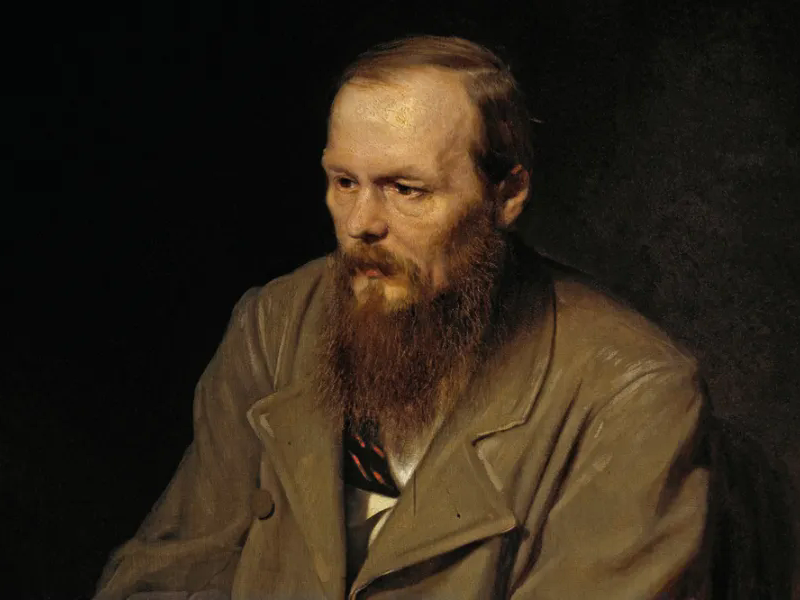
In the most famous section of his best-known novel, Dostoevsky’s Ivan Karamazov brings forward his case against God. He opens with a horrific litany of outrages against children. Turkish soldiers make a baby laugh and then shoot a pistol into his face. A little girl is beaten, thrashed, kicked by…

by Peter LeithartMarch 24, 2014
kelly-sikkema-ggs0_g6wi-i-unsplash
Epistemology

Subsidiary-Focal Integration and Liturgy

​At the heart of Esther Lightcap Meek's splendid ​Little Manual for Knowing is a concept she picked up from Michael Polanyi, "subsidiary-focal integration." The concept begins from the insight that all our knowing, all our experience, is double. We focus on something, but we are capable of "indwelling" that focal…

by Peter LeithartMarch 19, 2014
engin-akyurt-uz9qpvbol0e-unsplash
Revelation

White Stone

Jesus promises the overcomers of Pergamum "hidden manna" and a "white stone." The hidden manna is often linked with the manna stashed away in the ark of the covenant. The white stone has proved more elusive. Exodus tells us that manna was white (Exodus 16:31) and like bdellium (Numbers 11:7),…

by Peter LeithartMarch 17, 2014
226961fgsdl
Leviticus

A Theology of Festivity

Leviticus 23 begins with a reference to “Yahweh’s appointed times” ( mo’ade-YHWH ). Mo’ed is the common term for the feasts of Israel. A few dimensions to this term. First, it means “appointed time” or “designated time.” It is a time set by Yahweh. Yahweh has claimed certain times as…

by Peter LeithartMarch 12, 2014

Showing page 177 of 309

See all

Showing page 36 of 43

See all

David and Esau

Mark Biddle of the Baptist Theological Seminary in Richmond examines some of the intertextual connections between 1 Sam 25 and the Jacob narratives in Genesis ( JBL 121/4 [2002]). He discovers analogies between Nabal and Laban, Saul and Laban, and of course Nabal and Saul. Abigail is comparable to Rebekah…

June 16, 2004
History

Luther und Melanchthon

Timothy Wengert’s article in the Lutherjahrbuch 66 (1999) offers an analysis of the controverted relationship between Luther and Melanchthon. Wengert puts aside psychological assessments of the relationship, and does not focus on theological similarities and differences, which might have the effect of reducing the two men to their ideas. Instead,…

June 16, 2004

Ruth and Judges

In a 1989 article in the WTJ , Warren Gage, now of Knox Theological Seminary, explores the connections between the Gibeah incident recorded at the end of Judges and the story of Ruth. He argues that there are literary and thematic connections and contrasts between the two narratives. As usual,…

June 16, 2004
Literature

Hamlet

Edward Oakes offers a fascinating review of several new books on Shakespeare in the June/July issue of First Things . He gives this summary of the recent argument of Stephen Greenblatt concerning Shakespeare’s views on Purgatory: “Shakespeare’s choice of Wittenberg as the palce where Hamlet spent time as a student…

June 16, 2004
Media

In Praise of Censorship

David Bentley Hart offers a lively and wide-ranging defense of censorship in an article in the current issue of First Things . He savages the standard arguments against censorship: the slippery-slope argument (Hart: “Apparently, as a society, we are poised precariously upon the narrowest precipice of a sheer escarpment as…

June 16, 2004
Literature

Latin Limericks

According to the NB column in the May 28 TLS , the first recorded example of a limerick meter and rhyme occurs in a 13th-century prayer: Si vitiorum meorum evacuatio Concupiscentiae et libidinis exterminatio, Caritatis et patientiae, Humilitatis et obedientiae, Omniumque virtutum augmentatio . As NB goes on to say,…

June 16, 2004

Showing page 2083 of 2212

Browse by Category

In Medias Res

Your weekly digest for all things Theopolis.

Donate

Theopolis is nearly 100% donor-supported. Consider joining us on our mission.