Theopolis Logo

Writing

Explore our collection of theological essays, biblical studies, and reflections on faith and culture.

See all
tanner-mardis-xuxghzhibn4-unsplash-1-2
Biblical Studies

Tweets-turned-Notes on the Bible’s Chronology

Summary In what follows, I will consider the “year-stamps” employed in Scripture, i.e., statements of the form, “Such-and-such an event took place in the Xth year of Y.” In the process, I will suggest some ways in which the Biblical narrative might relate to events in the extra-Biblical world, though…

by James BejonJuly 16, 2019
durer-prodigal-son-2
Luke

Perspectives on the Prodigal, (Part 2)

In the first essay on the parable of the Prodigal Son, I suggested that the problems commentators and others encounter in interpreting Jesus three-part parable are not accidental. These are not just problems in our ignorance of cultural background. They are intentional features of the stories —stories designed to poke…

by Ralph Allan SmithJuly 11, 2019
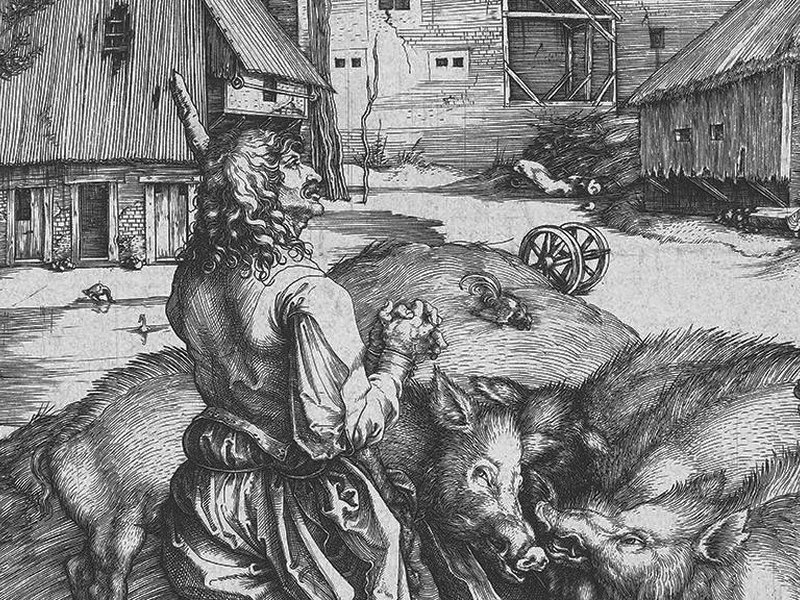
durer-prodigal-son-2
Luke

Perspectives on the Prodigal, (Part 1)

The story of the Prodigal Son is perhaps the most well-known story in the Bible. As others have observed, it may also be one of the most misunderstood. In two short essays, I will point out features of this story that are commonly neglected, aspects of Jesus’ parable that might…

by Ralph Allan SmithJuly 9, 2019
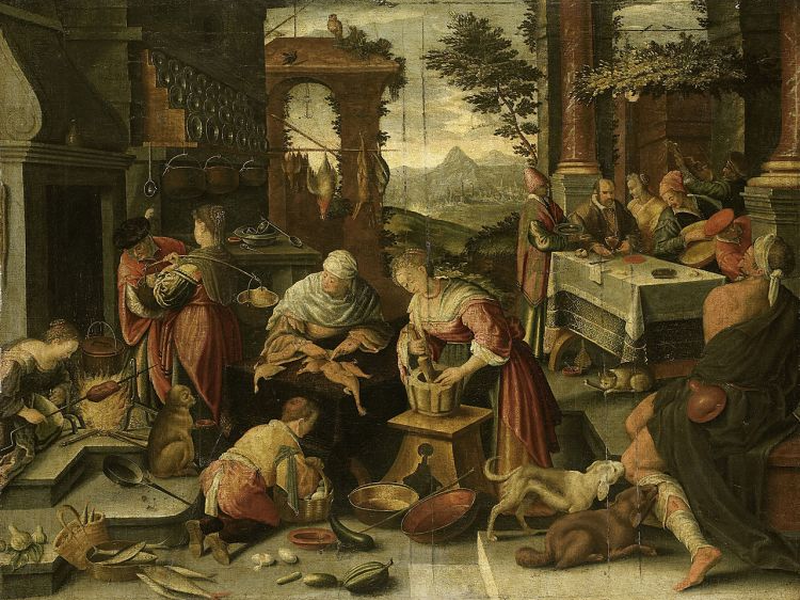
de-rijke-man-en-de-arme-lazarus-by-jacopo-da-ponte-16th-century
Luke

Lazarus and the Rich Man

The parable of Lazarus and the nameless rich man is not an independent story. It is part of a long context that begins in Luke 15:1, where Jesus is eating with tax collectors and sinners and the scribes and Pharisees grumble. In response to their hardheartedness, Jesus tells a three-part…

by Ralph Allan SmithJuly 4, 2019
aaron-burden-uynrnfdkjwg-unsplash
Luke

Everybody has Dropsy - Luke 14:1-24

The Bible is written so that even when a reader cannot pick up on what might be deeper or more detailed aspects of a text, there is virtually always a message to be heard. In the ancient world, where the “reader” of Scripture would likely be a church official facing…

by Ralph Allan SmithJuly 2, 2019
communion
Biblical Theology

Fruit Trees and Grain Plants

The distinction between garden (or vineyard) and field begins in Genesis 2. This relates to the ordering of the formless world. Plants of the field are contrasted with the garden planted by God in Genesis 2:5&8. Later on, under the Old Covenant the Israelites will be required to keep their…

by James B. JordanJune 27, 2019

Showing page 77 of 309

See all

Showing page 36 of 43

See all
Liberalism

The Limits of Subsidiarity

D.C. Schindler ( Communio , 2013, 600-1) argues that the Catholic appeal to subsidiarity isn't adequate on its own to meet the challenge of totalitarian liberalism. Subsidiarity assumes “a strong conception of what are referred to as ‘intermediate communities,' such as the family.” The problem that Schindler discerns is that…

September 9, 2016
Liberalism

Liberalism's Immodesty

Liberal polities claim to lack competency in religious matters, and so they leave them to private choice. It sounds modest. It isn't. If it were truly modest about its incompetency, it would seek guidance from the competent - that is, from religious organizations that can guide the state in deciding,…

September 9, 2016

Inside Out

A ll the rites of Israel’s sacrificial system move from outside in. When a priest offers a purification offering for himself or for all the people, he slaughters the animal in the courtyard before bringing its blood into the holy place (Leviticus 4). When the high priest performs the rites…

September 8, 2016

Hrothgar, Heorot, and Threats to Heroism

B eowulf revolves around three battles between the hero and threatening monsters—Grendel, Grendel's mother, and a dragon. The central focus of the first two fights is Heorot, the mead-hall of Hrothgar, king of Denmark. The mead-hall is the focus of a complex of imagery. As in the Odyssey and Macbeth…

September 8, 2016

Lest You Dash Your Feet

I n Matthew 4, the devil takes Jesus to the pinnacle of the temple and demands that he throw himself down, trusting His Father to send angels to keep Him from dashing His foot against a stone. Jesus replies by quoting Deuteronomy 6:16: “You shall not put the Lord your…

September 7, 2016

Entering the Oikoumene

I n his commentary on Hebrews , William Lane disputes the common view that Hebrews 1:6 refers to the incarnation when it says that God brought the “firstborn into the world.” The Greek word behind “world” is oikoumene , which, Lane argues, typically refers to “habitable land, in contrast to…

September 6, 2016

Showing page 256 of 2212

Browse by Category

In Medias Res

Your weekly digest for all things Theopolis.

Donate

Theopolis is nearly 100% donor-supported. Consider joining us on our mission.