
Theopolis Logo

Writing

Explore our collection of theological essays, biblical studies, and reflections on faith and culture.

See all
screen-shot-2022-08-04-at-9-36-57-am
John

How Jesus Saved the World, Part 1

We are too used to reading the Gospels’ stories of Jesus’ arrest, trial, condemnation, and death from a devotional perspective and so we miss a lot of what’s going on. We actually have a difficult time trying to figure out the meaning of the details of the story. Of course,…

by Jeff MeyersFebruary 21, 2013
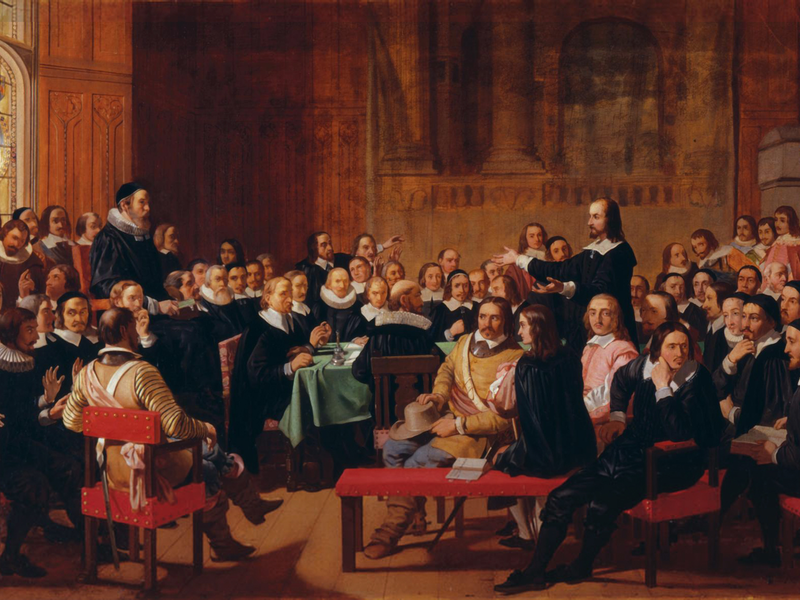
assertion_of_liberty_of_conscience_by_the_independents_of_the_westminster_assembly_of_divines_1644
Protestantism

The Forgotten Reformation?

This is the first in a series of essays on "Continuing the Reformation." Many different churches descend from the original Protestant Reformation, and those that are the most conservative are often insistent that they are largely if not completely true to the Reformation, or to the branch from which they…

by James B. JordanFebruary 19, 2013
markus-winkler-aid-xyrtlec-unsplash
Theopolis News

Reading the Bible

Trinity House fellow James B. Jordan will be teaching a one-day seminar on "How to Read the Bible for the First Time . . . Again" next Friday, February 22, in North London. The event is sponsored by Emmanuel Evangelical Church, Southgate, costs 20 pounds (10 for theology students) and…

by Peter LeithartFebruary 16, 2013
chris-leboutillier-be8mnfxzbgo-unsplash
Church Calendar

A Primer on Ash Wednesday

Audio Reading of this Post https://theopolis-blogcast.simplecast.com/episodes/a-primer-on-ash-wednesday What is Ash Wednesday? Ash Wednesday is the first day of Lent, a season focused on the sufferings and cross of Jesus. But Jesus’ death on the cross cannot be separated from the cross we are called to bear in union with him, so…

by Rich LuskFebruary 13, 2013
aaron-burden-qjdzyt_k8xg-unsplash
Theopolis News

Welcome

Welcome to the Trinity House web site. It’s unfinished, as you’ll soon discover, but it’s more finished than it was, and for that we are very grateful. Thanks to David Dalbey for the design, and to my son Sheffield for the execution. Trinity House exists to advance the reformation of…

by Peter LeithartFebruary 13, 2013
screen-shot-2022-05-12-at-12-07-23-pm
Biblical Horizons

More on the “Regeneration” Business

In our I hope brief blog-versation, Doug Wilson has posted a couple more things to think about. In one he asks who our father/Father is. We either have God or the devil as our father. Well, yes and no. I’m with Doug in what he’s getting at, I think, but…

by James B. JordanJune 23, 2012

Showing page 199 of 309

See all

Showing page 37 of 43

See all
Literature

The Politics of Playing

Plays might be promoted as a kind of opiate of the masses: Mass entertainment that keeps them from more violent entertainments like rioting and pillaging. This could be problematic, if the entertainments were too heady for most people to follow. Thomas Heywood (1612) suggested that playwrights should “ayme . .…

September 28, 2006
Literature

Shakespeare regulated

How regulated was Shakespeare’s own theater? And for what reasons? Patterson highlights various reasons for closing or permitting theaters: audience composition, including the fear that a large collection of workers might be distruptive; public health; economic concerns; religious and moral concerns, especially Sabbatarian; and “a shifting and elusive imperative to…

September 28, 2006
Literature

American Shakespeare

Shakespeare’s fortunes in the US were, understandably, different from in England. Initially, Shakespeare was America’s most popular playwright, appealing to a wide sector of the American populace. Patterson notes that “by the end of the nineteenth century ‘Shakespeare’ had become a cultural icon, the property only of the ‘legitimate theater,’…

September 28, 2006
Literature

Popular Shakespeare

Annabel Patterson notes ( Shakespeare and the Popular Voice ) that contemporary critics, whatever their own political outlook, assume that Shakespeare was an advocate of Elizabethan hierarchy. This view, however, is a product of the 19th century. Dryden, Johnson, and others criticize Shakespeare for violating the conventions of his genre,…

September 28, 2006
Literature

Courtly Shakespeare, IV

By the 18th century, acting styles also invested Shakespeare with “courtly” virtues of control, dignity, stateliness. Dobson writes, “Shakespearian acting . . . in the decades following Betterton’s death in 1710, seems to have settled into a grandiloquent vein of static declamation, best exemplified by the stout James Quin (1693-1766)…

September 28, 2006
Literature

Courtly Shakespeare, III

Dobson again: “after Charles II’s death in 1685 England would never again have another monarch with such an informed interest in the drama (or, mercifully, such a lascivious one), and deprived of royal patronage and protection the playhouses came under renewed attack from the moralists (led by the redoubtable clergyman…

September 28, 2006

Showing page 1785 of 2212

Browse by Category

In Medias Res

Your weekly digest for all things Theopolis.

Donate

Theopolis is nearly 100% donor-supported. Consider joining us on our mission.