Theopolis Logo

Writing

Explore our collection of theological essays, biblical studies, and reflections on faith and culture.

See all
screen-shot-2022-04-13-at-5-41-33-pm
Poetry

The Donkey

G.K. Chesterton assumes a surprising and memorable perspective from which to view the events of Palm Sunday (Matthew 21:1-11) The Donkey by: G.K. Chesterton When fishes flew and forests walked And figs grew upon thorn, Some moment when the moon was blood Then surely I was born. With monstrous head…

by Arthur KayApril 14, 2022

screen-shot-2022-04-12-at-7-14-44-am
Hermeneutics

The Tree, the Cross, and the Supper

There is a common biblical principle: you must give back what you steal. In the Bible, restitution is repayment with interest. If you rob someone of their money, you have to pay back double what you stole. A thief must pay back fourfold if he steals a sheep, and if…

by Kyle LammottApril 12, 2022
masaccio-christ-in-the-garden-of-gethsemane-detail
Isaiah

The King’s Cure

Identifying Isaiah’s suffering servant with the promised Messiah is unthinkable for a Jew because it combines the offices of humble priest and victorious king. While it is frustrating that Jews refuse to see the sufferings of Christ in Isaiah 53, the reluctance of Christians to interpret the passage in its…

by Mike BullApril 5, 2022
the-choir-lesson-auguste-joseph-trupheme-oil-painting
How to Worship

When Our Men Sing Again

Let everything that has breath praise the Lord! Praise the Lord! Psalm 150:6 (ESV) The command to praise God is pervasive throughout Scripture. In the verse above the Spirit calls all things with breath to praise the Lord. Song is also clearly featured all throughout Scripture and is a featured…

by Grant Van BrimmerMarch 29, 2022
kyle-a0kl1um0wba-unsplash
Culture

The Transgender Bait and Switch

“Gender is a social construct.” That’s shocking to people who have assumed that gender and sex were synonyms but at least since I was in college, in the ‘80s, we were taught that “gender” refers to the forms, the customs, the traditions that our culture teaches us to define what…

by John CarpenterMarch 22, 2022
jacob_blessing_his_sons
Biblical Studies

Israel, Judah, and the Narrative Flow of the Bible

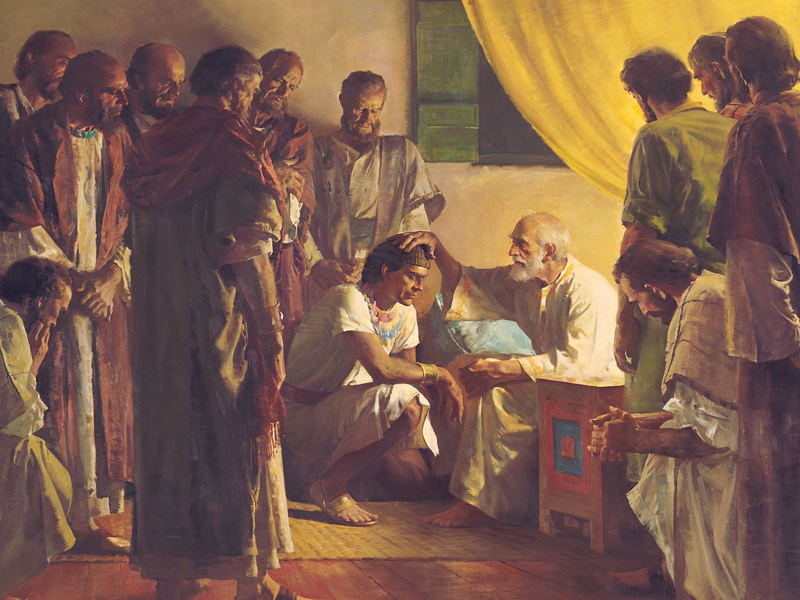
In Genesis 49, Jacob prophesies about (blesses and curses?) his twelve sons. The first three of them don’t fare well. Jacob recalls Reuben’s offense of taking his concubine (Genesis 35:22) and the murderous violence of Simeon’s and Levi against the Canaanite inhabitants of the city of Shechem (Genesis 34). He…

by Mark HorneMarch 17, 2022

Showing page 45 of 309

See all

Showing page 37 of 43

See all

Conveniens

Bauerschmidt notes that Aquinas frequently argues, especially when speaking of the incarnation, not for “proof” of doctrine but for its “fittingness.” Reason has the role of “manifesting how [the incarnation] fits together (convenire means literally ‘to come together’) with other things that Christians hold true about God.” Perhaps this can…

March 23, 2006

Extra-Augustinisticum

In Epistle 137, Augustine writes: “The Christian teaching nowhere holds that God was so poured into human flesh as either to desert or lose - or to transfer and, as it were, compress within this frail body - the care of governing the universe. This is the thought of people…

March 23, 2006

Thomas on Merit

Commenting on ST I-II, q. 109, Frederick Bauerschmidt says that Thomas uses the word “merit” analogically when we speak of God rewarding human action “since we can act in the first place only because God has given us the capacity to act.” This applies even to Jesus: “even when Thomas…

March 23, 2006

On Seneca, de Beneficiis, Books 1-2

Seneca suggests that ingratitude is the worst of vices, and nothing is more “harmful to society” than ingratitude (I.1). Later in Book I, he lists a series of moral ills that plague society – “homicides, tyrants, thieves, adulterers, ravishers, sacrilegious, traitors” – but concludes that “worse than all these is…

March 23, 2006
Literature

Prospero the Magus

I am grateful to Ralph Smith for references to Frances Yates’ work on Shakespeare’s plays. In an analysis of The Tempest, Frances Yates writes: “It is inevitable and unavoidable in thinking of Prospero to bring in the name of John Dee, the great mathematical magus of whom Shakespeare must have…

March 22, 2006
History

Elizabethan Magic

Educated Elizabethans lived in a world of similitudes. As EMW Tillyard argued, the Elizabethan world picture was constituted by a series of analogous chains of being. The social world manifested and was manifested by the natural world; the universe as a whole resembled human beings; there was a hierarchy among…

March 22, 2006

Showing page 1867 of 2212

Browse by Category

In Medias Res

Your weekly digest for all things Theopolis.

Donate

Theopolis is nearly 100% donor-supported. Consider joining us on our mission.