Theopolis Logo

Writing

Explore our collection of theological essays, biblical studies, and reflections on faith and culture.

See all
31-03-0213
Hermeneutics

Apocalyptic Eyes

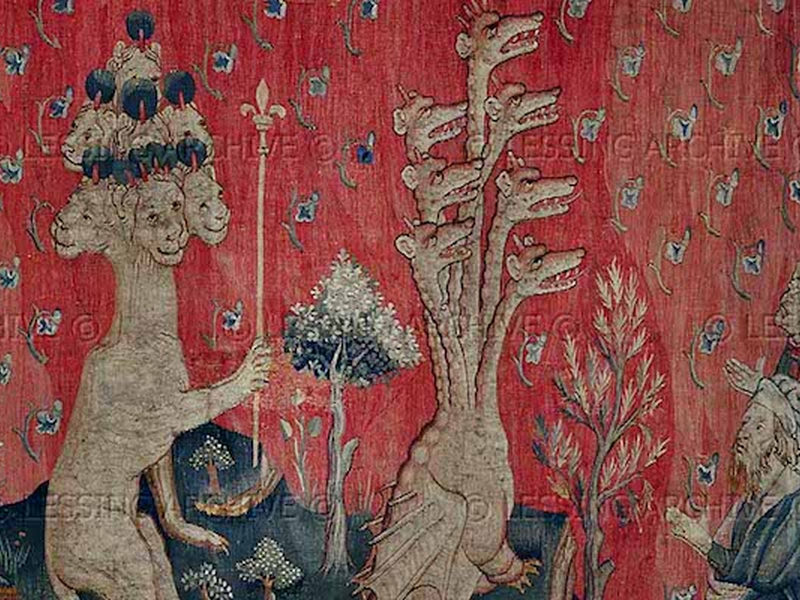
Flying scrolls. Red horses. Beasts coming out of the sea. Winged women. The list goes on. Apocalyptic literature in the Bible is like a cross between science fiction and Marvel comics. And the Bible has a fair bit of this sort of thing. Daniel sees visions in Babylon, Zechariah sees…

by Toby SumpterNovember 4, 2014

bhm-skyline-2
Theopolis News

New Name, New Look

Trinity House Institute has taken a new name, the Theopolis Institute. This striking new name expresses our unique vision and mission and captures the unified purpose behind all our specific programs and activities. We still have Bible, liturgy, and culture in our tagline. We still offer the same courses on…

by TheopolisNovember 4, 2014
istock_000012860926small
Atonement

Not Fearing the Devil

Adam Kotsko offers a socio-political variation on the Christus Victor atonement theory in his 2010 study, The Politics of Redemption: The Social Logic of Salvation . He does this by explaining "the devil" in terms of the Hegelian concept of "objective spirit," Geist . As Kotsko puts it, Geist "refers…

by Peter LeithartOctober 13, 2014
jez-timms-8muutamcwu4-unsplash
Leviticus

The Meaning of Sacrifice

Two factors keep Nahtali Meshel from discussing the meaning of sacrifice until late in his The "Grammar" of Sacrifice . The first has to do with the texts he draws from: "P says little about the meaning of its rituals" (174). The other has to do with the grammatical theory…

by Peter LeithartOctober 8, 2014
jez-timms-8muutamcwu4-unsplash
Leviticus

Praxemics

Chapter 5 of Naphtali Meshel's The "Grammar" of Sacrifice focuses on "praxemics," the physical actions of sacrificial ritual. Praxemes are constituted by six elements: an "atomact," an elementary physical act or gesture; an actor; an object that is acted up; a target for the action and often for the object…

by Peter LeithartOctober 6, 2014
markus-winkler-aid-xyrtlec-unsplash
Leviticus

Jugation and Hierarchy

Two chapters of Naphtali Meshel’s The “Grammar” of Sacrifice cover what he calls “jugation” and “hierarchies.” The first involves the addition of other materials to an animal offering. Jugates include wine, cereal, and oil that are added to the animals (zoemes) that are offered in sacrifice. Some jugates are coordinated…

by Peter LeithartOctober 1, 2014

Showing page 167 of 309

See all

Showing page 38 of 43

See all

Exhortation, Third Epiphany

According to what has become the “traditional” interpretation of the Constitution, every American woman has the right to kill her unborn baby. Since the Roe v. Wade decision in January of 1973, over 45 million babies have been killed, and, though the abortion rate has slowed since 1990, more than…

January 22, 2006
Philosophy

Same and Other

Evaluating Levinas and his criticisms of Husserl, Derrida probes the coherence of Levinas’ notion of “infinitely other.” Contrary to Levinas, who argues that we are incorrectly seduced by everyday life to think of the other as an “alter ego,” Derrida says: “The other as alter ego signifies the other as…

January 21, 2006
Media

Art for Art

Adorno points out in an essay on television that “it would be romanticizing to assume that formlerly art was entirely pure, that the creative artist thought only in terms of the inner consistency of the artifact and not also of its effect upon the spectators. Theatrical art, in particular, cannot…

January 20, 2006

Sermons and such

Auden said, “In my opinion sermons should be a) fewer b) longer c) more theologically instructive and less exhortatory. I must confess that in my life I have very seldom heard a sermon from which I derived any real spiritual benefit. Most of them told me that I should love…

January 20, 2006

Totality and Dialogue

In “Violence and Metaphysics,” Derrida says that no “logos as absolute knowledge can comprehend the dialogue and the trajectory toward the other” because “the other is the other” and “all speech is for the other.” For Derrida, “A total logos still, in order to be logos, would have to let…

January 19, 2006
Philosophy

Eros and epistemology

For Aquinas, knowledge begins with knowledge of the effects of a thing. When faced with those effects, we naturally have a “desire to know about the cause what it is. This desire is one of wonder and causes inquiry.” The inquiry ceases when we arrive at knowledge of the essence…

January 19, 2006

Showing page 1896 of 2212

Browse by Category

In Medias Res

Your weekly digest for all things Theopolis.

Donate

Theopolis is nearly 100% donor-supported. Consider joining us on our mission.