Theopolis Logo

Writing

Explore our collection of theological essays, biblical studies, and reflections on faith and culture.

See all
little-girl
Children

Honor God With Your Body

I am making a new rule in our house! We are actually kind of skimpy on the house rules. I try very hard to keep things simple: love God, love others, be joyful. It’s not complicated to avoid discipline here. But I have found myself repeating this new rule over…

by Lindsey TollefsonApril 9, 2015

giotto-noli-me-3
John

The Gardener and the Beloved, (Part 3)

Click HERE for Part 2 The voice of Jesus transforms and changes Mary when she hears him speak her name. This is her last “turning.” So also the woman in the Song of Songs longs to hear the voice of her beloved. Let me see your face, let me hear…

by Jeff MeyersApril 6, 2015
giotto-noli-me-2
John

The Gardener and the Beloved, (Part 2)

Click HERE for Part 1. The details of this story call the attentive reader back to the drama of Solomon’s Song of Songs. And the Song of Song’s alludes to, ties us into the story of Adam and Eve in the Garden and the promise of a coming Messiah that…

by Jeff MeyersApril 4, 2015
easter-term-2015-2
Theopolis News

Easter Term, 2015

“The course was a paradigm shift for me,” said Jonathan Sedlak, a Milwaukee electrical contractor who attended Theopolis’s course on Revelation. “I am left with a book that is far more practical than it has ever seemed before.” Jonathan Anderson of Louisville, Kentucky found the course “refreshing.” “I finished with…

by TheopolisApril 2, 2015
psalm-singing
Genesis

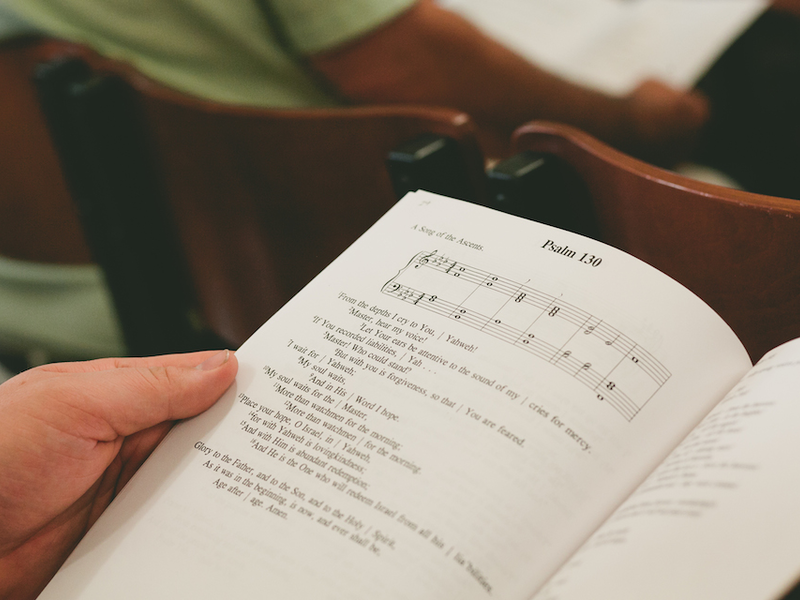
Worship as Response: Liturgical Logic, (Part 1)

“It is only by participation in a rational, practice-based community that one becomes rational.” – Alasdair MacIntyre It may be perfectly clear to a chef why adding unsifted powdered sugar to a hot frosting is a bad idea. But for an amateur cook, this may be the kind of rule…

by Jonathan BarlowApril 2, 2015
giotto-noli-me
John

The Gardener and the Beloved, (Part 1)

On a fresco in a chapel in Padua, Italy, there is a famous painting depicting the dramatic post-resurrection scene in John 20 with Mary and Jesus outside of the garden tomb. Giotto di Bondone painted it in the early 14th century. Jesus is striding from the tomb with a victor’s…

by Jeff MeyersApril 1, 2015

Showing page 156 of 309

See all

Showing page 38 of 43

See all
Literature

Ibsen

Ibsen, Steiner argues, did not write tragedies. Ibsen wrote “dramatic rhetoric” calling society to reform. For real tragedy, there is no such “solution” to be found, there is no remedy, except destructive sacrifice and perhaps a deus ex machina. From this angle, tragedy is perhaps among the STOICHEIA that prepared…

January 7, 2004
Literature

More Quotations from Steiner

Some more quotations from Steiner’s Death of Tragedy : “We cannot understand the romantic movement if we do not perceive at the heart of it the impulse toward drama . . . . The romantic mode is neither an ordering nor a criticism of life; it is a dramatization. And…

January 7, 2004
Theology

NT Wright’s Rutherford House Lecture

Some thoughts on NT Wright’s Rutherford House Lecture, August 2003. I have little disagreement with much of the lecture, and it clarified a number of things for me. Wright’s views on justification, however, continue to puzzle me at a number of points. Here’s an attempt to clarify my (or NTW’s)…

January 7, 2004
Theology

NT Wright’s Rutherford House Lecture

Some thoughts on NT Wright’s Rutherford House Lecture, August 2003. I have little disagreement with much of the lecture, and it clarified a number of things for me. Wright’s views on justification, however, continue to puzzle me at a number of points. Here’s an attempt to clarify my (or NTW’s)…

January 7, 2004
Literature

European Drama

Steiner notes that, following the Renaissance, European drama operated under the shadows of neo-classical and Elizabethan dramatic practice, the former “closed” and rigidly adhering to Aristotelian criteria, the other open and experimental. He discusses the theory of Thomas Rymer (a neo-classicist) at some length, concluding that the controversies that Rymer…

January 6, 2004
Literature

Shakespearean Difference

George Steiner in his Death of Tragedy describes the “Shakespearean difference” as mainly due to Shakespeare’s avoidance of fascination with Hellenic models: “The neo-classic view [which rigidified Aristotelian conceptions of tragedy] expresses a growing perception of the miracle of Greek drama. This perception was fragmentary. There were few translations of…

January 6, 2004

Showing page 2141 of 2212

Browse by Category

In Medias Res

Your weekly digest for all things Theopolis.

Donate

Theopolis is nearly 100% donor-supported. Consider joining us on our mission.