Theopolis Logo

Writing

Explore our collection of theological essays, biblical studies, and reflections on faith and culture.

See all
tanner-mardis-xuxghzhibn4-unsplash-1-2
Biblical Studies

Tweets-turned-Notes on the Bible’s Chronology

Summary In what follows, I will consider the “year-stamps” employed in Scripture, i.e., statements of the form, “Such-and-such an event took place in the Xth year of Y.” In the process, I will suggest some ways in which the Biblical narrative might relate to events in the extra-Biblical world, though…

by James BejonJuly 16, 2019
durer-prodigal-son-2
Luke

Perspectives on the Prodigal, (Part 2)

In the first essay on the parable of the Prodigal Son, I suggested that the problems commentators and others encounter in interpreting Jesus three-part parable are not accidental. These are not just problems in our ignorance of cultural background. They are intentional features of the stories —stories designed to poke…

by Ralph Allan SmithJuly 11, 2019
durer-prodigal-son-2
Luke

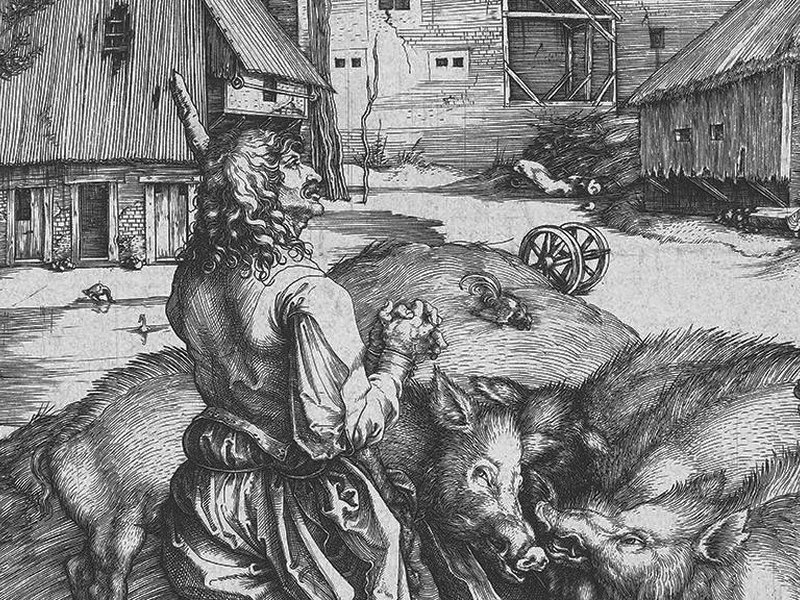
Perspectives on the Prodigal, (Part 1)

The story of the Prodigal Son is perhaps the most well-known story in the Bible. As others have observed, it may also be one of the most misunderstood. In two short essays, I will point out features of this story that are commonly neglected, aspects of Jesus’ parable that might…

by Ralph Allan SmithJuly 9, 2019
de-rijke-man-en-de-arme-lazarus-by-jacopo-da-ponte-16th-century
Luke

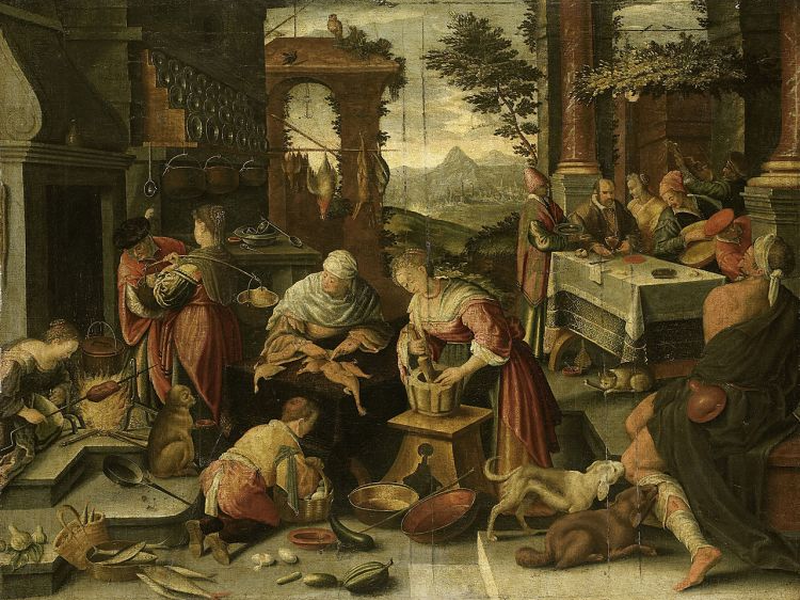
Lazarus and the Rich Man

The parable of Lazarus and the nameless rich man is not an independent story. It is part of a long context that begins in Luke 15:1, where Jesus is eating with tax collectors and sinners and the scribes and Pharisees grumble. In response to their hardheartedness, Jesus tells a three-part…

by Ralph Allan SmithJuly 4, 2019
aaron-burden-uynrnfdkjwg-unsplash
Luke

Everybody has Dropsy - Luke 14:1-24

The Bible is written so that even when a reader cannot pick up on what might be deeper or more detailed aspects of a text, there is virtually always a message to be heard. In the ancient world, where the “reader” of Scripture would likely be a church official facing…

by Ralph Allan SmithJuly 2, 2019
communion
Biblical Theology

Fruit Trees and Grain Plants

The distinction between garden (or vineyard) and field begins in Genesis 2. This relates to the ordering of the formless world. Plants of the field are contrasted with the garden planted by God in Genesis 2:5&8. Later on, under the Old Covenant the Israelites will be required to keep their…

by James B. JordanJune 27, 2019

Showing page 77 of 309

See all

Showing page 38 of 43

See all
Philosophy

Derrida on Plato on Writing

Derrida on Plato on writing says “In order for these contrary values (good/evil, true/false, essence/appearance, inside/outside, etc.) to be in opposition, each of the terms must be simply EXTERNAL to the other, which means that one of these oppositions (the opposition between inside and outside) must already be accredited as…

October 13, 2003

Baal is Antichrist

Baal is AntiChrist. Like Nabu, who usurps the place of his father Marduk in Babylonian mythology; like Thoth in Egyptian mythology, who substitutes and replaces Ra; like Zeus, who rebels against his father Chronos and takes his place as chief of the pantheon ?Eso Baal attacks and replaces his father…

October 13, 2003
Media

Archbishop Akinola

There’s a very moving piece on the Nigerian Anglican, Archbishop Peter Jasper Akinola in the current issue of the Atlantic Monthly , written by Philip Jenkins. It’s wonderful to see how the Lord is raising up sturdy Christian leaders from the Southern Hemisphere to challenge the decadent churches of the…

October 13, 2003

Eucharistic Meditation, October 12

Communion meditation for October 12: We all know that Paul teaches that the Supper tests and manifests what is on the heart. Some the Corinthians were weak and sick, Paul said, and some had fallen asleep because they took the Supper wrongly. But this idea did not originate with Paul.…

October 12, 2003
Philosophy

Babel

Babel has become a key image for postmodern Western thought. A number of years ago, Princeton’s Jeffrey Stout wrote Ethics After Babel , reacting to the Babelic move of some moral philosophers (such as MacIntyre and Hauerwas), who pointed to the difficulties of translation and even conversation across the boundaries…

October 12, 2003

Exhortation, October 12

Exhortation for October 12: In the section of Luke’s gospel that we are examining this morning, hospitality serves as a symbol for receiving Christ. To receive one of the messengers of Jesus is to receive Jesus and to receive Jesus is to receive the One who sent Jesus. Hospitality is…

October 12, 2003

Showing page 2184 of 2212

Browse by Category

In Medias Res

Your weekly digest for all things Theopolis.

Donate

Theopolis is nearly 100% donor-supported. Consider joining us on our mission.