Theopolis Logo

Writing

Explore our collection of theological essays, biblical studies, and reflections on faith and culture.

See all
kelly-sikkema-gpoh17dxqdm-unsplash
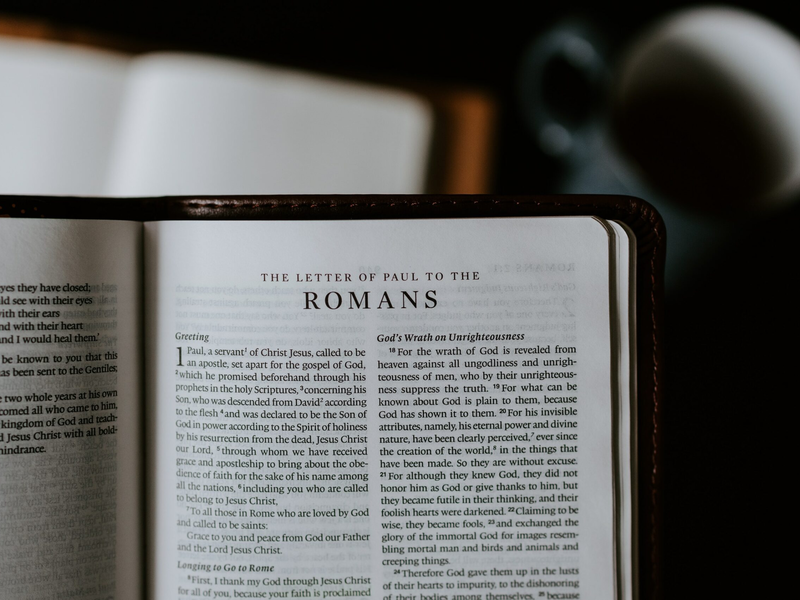
Romans

Paul’s Gospel & the Theme of Romans

Paul, a bond-servant of Christ Jesus, called as an apostle, set apart for the gospel of God, which He promised beforehand through His prophets in the holy Scriptures, concerning His Son, who was born of a descendant of David according to the flesh, who was declared the Son of God…

by Mark HorneJune 6, 2003

screenshot-2023-07-27-at-10-25-35-am
History

The Nelda Boswell Scroll: The Apostle Paul’s Town Hall Meeting in Iconium

With the surprising discovery of the Nelda Boswell scroll historians have deciphered its contents and concluded that the apostle Paul returned to the region of Galatia shortly after he wrote the letter that we call Galatians. The evidence suggests that a number of local pastors, elders, and deacons, along with…

by Jeff MeyersJune 6, 2003
aaron-burden-qjdzyt_k8xg-unsplash
Jonah

Jonah, the Judaizers, and the Gospel

Second Temple Judaism was a form of covenantal nomism, according to E. P. Sanders’ terminology. This means that Torah-observance was a way of expressing loyalty to the Lord of the covenant who had graciously elected Israel. I think Sanders’ view (taken up in bits and pieces and with some modifications…

by Rich LuskJune 6, 2003
Theologia

Gratitude or Faith?

We often hear that the key to Christian obedience is thankfulness for what God has done. But the Bible stresses faith and hope much more than gratitude. The Baptist pastor and author John Piper has written, “Nowhere in the Bible is gratitude connected explicitly with obedience as a motivation. We…

by Mark HorneJune 6, 2003
aaron-burden-qjdzyt_k8xg-unsplash
Federal Vision

God’s Righteousness & Our Justification

One of the questions that is commonly asked about Tom Wright regards his teaching about how Paul uses the term “the righteousness of God.” Since Wright’s interpretation of the term in Paul’s epistles is commonly mentioned in passing but rarely analyzed, it seems like a good idea to explicitly spell…

by Mark HorneJune 6, 2003
jordan-wozniak-xp_agmeea6s-unsplash
Genesis

Forever Means Forever: God’s Promises to the Jews

If God promised a certain land to the seed of Abraham, saying that it would be theirs “forever” (Gen. 13:15), why do Reformed churches teach that the Jews permanently lost their right to the land? What about all these Old Testament “forever” promises and prophesies made to the Jews? How…

by Jeff MeyersJune 6, 2003

Showing page 230 of 309

See all

Showing page 38 of 43

See all
Liberalism

The Limits of Subsidiarity

D.C. Schindler ( Communio , 2013, 600-1) argues that the Catholic appeal to subsidiarity isn't adequate on its own to meet the challenge of totalitarian liberalism. Subsidiarity assumes “a strong conception of what are referred to as ‘intermediate communities,' such as the family.” The problem that Schindler discerns is that…

September 9, 2016
Liberalism

Liberalism's Immodesty

Liberal polities claim to lack competency in religious matters, and so they leave them to private choice. It sounds modest. It isn't. If it were truly modest about its incompetency, it would seek guidance from the competent - that is, from religious organizations that can guide the state in deciding,…

September 9, 2016

Inside Out

A ll the rites of Israel’s sacrificial system move from outside in. When a priest offers a purification offering for himself or for all the people, he slaughters the animal in the courtyard before bringing its blood into the holy place (Leviticus 4). When the high priest performs the rites…

September 8, 2016

Hrothgar, Heorot, and Threats to Heroism

B eowulf revolves around three battles between the hero and threatening monsters—Grendel, Grendel's mother, and a dragon. The central focus of the first two fights is Heorot, the mead-hall of Hrothgar, king of Denmark. The mead-hall is the focus of a complex of imagery. As in the Odyssey and Macbeth…

September 8, 2016

Lest You Dash Your Feet

I n Matthew 4, the devil takes Jesus to the pinnacle of the temple and demands that he throw himself down, trusting His Father to send angels to keep Him from dashing His foot against a stone. Jesus replies by quoting Deuteronomy 6:16: “You shall not put the Lord your…

September 7, 2016

Entering the Oikoumene

I n his commentary on Hebrews , William Lane disputes the common view that Hebrews 1:6 refers to the incarnation when it says that God brought the “firstborn into the world.” The Greek word behind “world” is oikoumene , which, Lane argues, typically refers to “habitable land, in contrast to…

September 6, 2016

Showing page 256 of 2212

Browse by Category

In Medias Res

Your weekly digest for all things Theopolis.

Donate

Theopolis is nearly 100% donor-supported. Consider joining us on our mission.