
Theopolis Logo

Writing

Explore our collection of theological essays, biblical studies, and reflections on faith and culture.

See all
kiwihug-l4gw27xzn1i-unsplash
Hermeneutics

Beginning and New Beginning in Luke

Although the events are, of course, not perfectly parallel, Luke in his gospel intends us to connect Jesus’ birth from the womb and His re-birth from the tomb. Luke 1:27 introduces us to Joseph and in verse 30 we learn that his betrothed wife was named Mary. An angel appeared…

by James B. JordanDecember 28, 1996
screenshot-2023-08-30-at-11-50-23-am
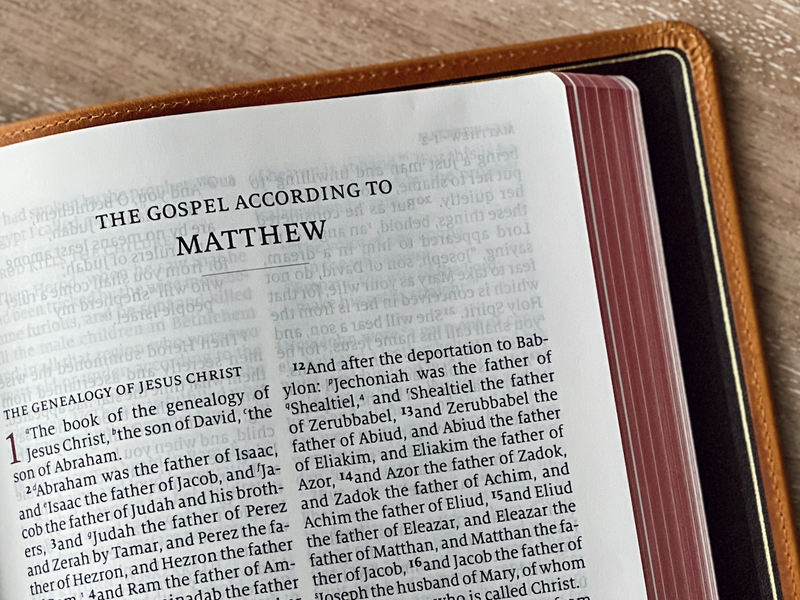
Matthew

A Note on Matthew

The apostle Matthew is also known as Levi son of Alphaeus. While not much is said about this man, the few things that are told us are significant. Matthew in Greek is Matthaios and comes from the Hebrew name Mattithiah, or Mattith-Yah, "Gift of Yah(weh)." Matthew’s other name is Levi,…

by James B. JordanDecember 28, 1996

aaron-burden-qjdzyt_k8xg-unsplash
Biblical Horizons

Twelve Fundamental Avenues of Revelation (Part 1)

Theologians often speak of "special" and "general" revelation, or of "natural" and "supernatural" revelation, or of "word" and "deed" revelation. While there are many worthwhile insights in these discussions, particularly in the discussions in Cornelius Van Til’s Introduction to Systematic Theology , I have not found any that satisfied my…

by James B. JordanDecember 28, 1996

jan-kahanek-g3o5ztrk2e4-unsplash
Ezekiel

Countdown to Exile IV: Ezekiel and the Structure of History

Ezekiel’s 430 Years In Ezekiel 4, the prophet is told to begin his ministry by setting up a model of Jerusalem and lying on his side and prophesying against it. He is to do this for 430 days, a day for a year. 390 days are against "Israel," and 40…

by James B. JordanDecember 28, 1996

img_7664
Biblical Horizons

The Oddness of the Feast of Booths

The Feast of Ingathering in the seventh month of the Sinaitic calendar is also called the Feast of Sukkoth, of Booths, also called Feast of Tabernacles. I have usually called it by that last phrase, and it is the most common today; but there is a problem: A tabernacle is…

by James B. JordanDecember 28, 1996

sixteen-miles-out-ki3hr9t8t7a-unsplash
Ezekiel

Countdown to Exile III: Warnings Against False Hopes

The End of Jehoiakim’s Reign We have seen that Jehoiakim rejected Jeremiah’s prophetic warnings at the beginning of his reign. Let us now make a year-by-year survey of his reign down to its end. In the spring of 605 BC, Nebuchadnezzar defeated the Egyptians at Carchemish. In the summer, he…

by James B. JordanNovember 28, 1996

Showing page 261 of 309

See all

Showing page 39 of 43

See all
History

Chinese and Hebraic thought

In his fascinating Faith of Our Fathers , Chan Kei Thong points to many biblical images embedded in Chinese characters. His argument could be made even stronger by looking at Hebrew terminology. For instance, he says of the character “zui,” which means sin, that “The top part is . .…

May 11, 2007
History

Chinese Creation

At the beginning of the Great Sacrifice performed by the Chinese emperor for centuries, singers sang the song of creation, addressed to the “Sovereign Lord” known as “Shang Di”: “Of old in the beginning, there was the great chaos, without form and dark. The five planets had not begun to…

May 11, 2007

Perichoretic imagination

One of the differences between those associated with “Federal Vision” theology and those opposed to it is a difference of theological imagination. The opponents operate with a theological imagination that distinguishes and clarifies; ontology is distinguished from relationality, nature from supernature, ecclesiology from soteriology. On the other side are theologians…

May 11, 2007
History

Bos and Bobos

According to Adolf Loos, a turn of the 20th-century Viennese architect and critic, modern style combines beauty and practicality. Both are necessary: “By beautiful, what we mean is that something has achieved fullness, completion. But no useless, impractical object can really be described as ‘full’ or ‘complete.’” One can imagine…

May 8, 2007

Kiuchi on Leviticus

Some initial observations on Nobuyoshi Kiuchi’s recent commentary on Leviticus in the Apollos series from IVP. 1) Kiuchi intriguingly translates hata and hatta’t , traditionally rendered in terms of “sin” or “purification” in terms of “hiding”: ” hata and hatta’t mean ‘to hide oneself’ and the condition of ‘hiding oneself,’…

May 8, 2007

The Spoken Son

A student points out that Hebrews 1-2:4 contains seven quotations from the Old Testament. Through these seven words, God speaks His Son as the new creation.

May 7, 2007

Showing page 1682 of 2212

Browse by Category

In Medias Res

Your weekly digest for all things Theopolis.

Donate

Theopolis is nearly 100% donor-supported. Consider joining us on our mission.