Theopolis Logo

Writing

Explore our collection of theological essays, biblical studies, and reflections on faith and culture.

See all
or
Abortion

Political Hermeneutics: The Argument From Silence, Part 2

Click HERE for part 1. III This leads to a further question. I have argued that silence cannot by itself establish a Scriptural principle, but does Scripture’s silence carry any weight in itself? Does the fact that something is unbiblical in a weak sense tell us anything at all? In…

by Peter LeithartMarch 13, 1990

hebrew-manuscript-6
Biblical Chronology

Groping Through the Gaps

Although nowadays gap theories are associated with dispensationalism, it was not always so. In the nineteenth century, scholars from a variety of backgrounds (Anglican, Reformed, and proto-fundamentalist) seem to have become fascinated by gaps. If you are not familiar with what I am talking about, this newsletter will acquaint you…

by James B. JordanFebruary 26, 1990
or
Abortion

Political Hermeneutics: The Argument from Silence, Part 1

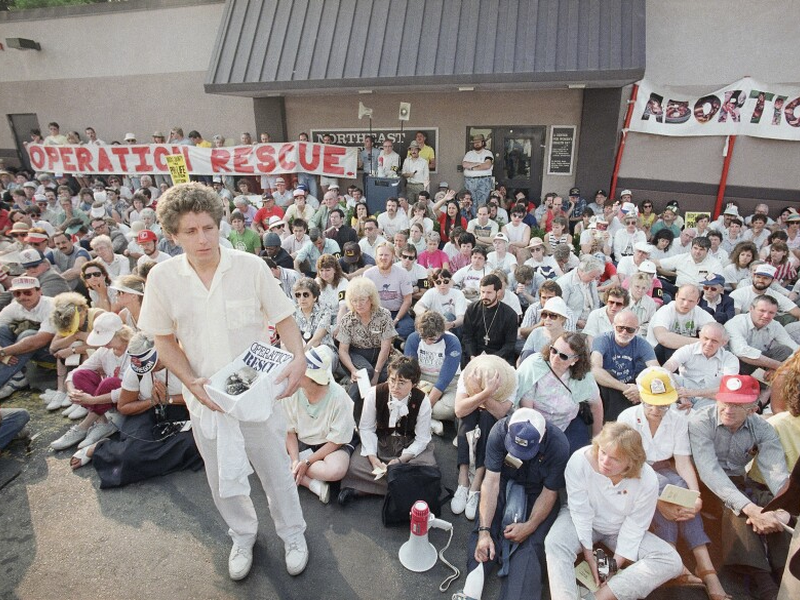
If the debate over Operation Rescue has proven anything, it has proven that there is absolutely no consensus among evangelicals in general, or among "reconstructionists" in particular, about how to use the Bible to judge political actions and movements. Each side of the debate claims biblical authority for its position,…

by Peter LeithartFebruary 13, 1990
49980-nicolas_poussin_-_the_judgment_of_solomon_-_wga18330-800w-tn
Biblical Studies

Advice From a Sojourner, Part 4

Two things I asked of Thee, Do not refuse me before I die: Keep deception and words of falsehood far from me, Give me neither poverty nor riches, Feed me with the food that it my portion, Lest I be full and deny Thee, And say, "Who is the LORD?"…

by James B. JordanFebruary 2, 1990
image-2
Biblical Horizons

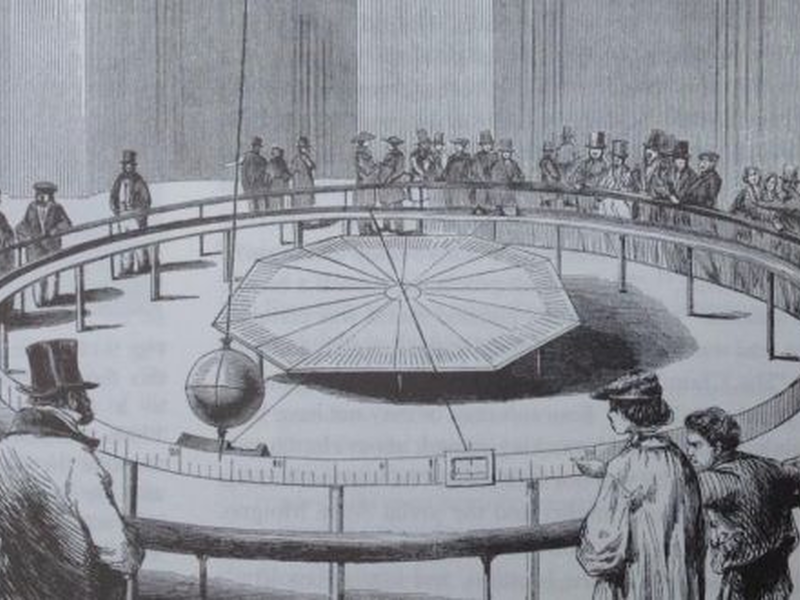
Foucault’s Pendulum

Umberto Eco’s "The Name of the Rose" was certainly one of the best literary works of the past decade, though the film version hardly measured up to it. Now Eco has given us a new novel, "Foucault’s Pendulum." Like Rose, Foucault’s Pendulum reflects on the limitations of human knowledge, and…

by James B. JordanJanuary 26, 1990
tanner-mardis-xuxghzhibn4-unsplash-1-2
Biblical Studies

What Is “Interpretive Maximalism”?

From time to time people ask me about "interpretive maximalism." They want to know what it is, and sometimes want to know if it represents some departure from the Reformed grammatico-historical, Biblico-theological approach to the Bible. I have something of a problem with these questions, because "interpretive maximalism" is not…

by James B. JordanJanuary 26, 1990

Showing page 305 of 309

See all

Showing page 39 of 43

See all
Biblical Studies

Critical Scholarship

One of the most annoying things about critical biblical scholarship is the way that every discussion has to contribute to questions of composition, authorship, historical setting, etc. Harrington gives a very intriguing paper on holiness in Ezra-Nehemiah, but the whole thing is part of a “larger” argument about the common…

November 19, 2006

Purity and holiness

Hannah Harrington gave a very fine presentation on the holiness and purity terminology in Ezra and Nehemiah. She showed that these post-exilic texts display an expansion of holy space to encompass the whole city as well as an expansion of the duties of Levites, a closing of the gap between…

November 19, 2006
Biblical Studies

Criterion of antiquity

John Milbank claims that the Wellhausen documentary hypothesis is shaped by what he calls the “liberal Protestant metanarrative,” the view that Christianity moved from a religion of inner simplicity to a religion of complex external ritual (JEDP traces this story). In his SBL presentation, Nick Perrin of Wheaton showed how…

November 18, 2006

Theopoiesis

Carl Mosser of Eastern College gave a superb presentation on deification at the ETS meeting. A large part of the presentation was a study of terminology. He noted that the Greek work THEOS (often thought to be equivalent to “God”) had a broader meaning, referring to powers that were immortal,…

November 18, 2006
History

More from Latour

A few further scattered comments from and on Latour. 1) He disputes the notion that the modern world is disenchanted, claiming that the claim of disenchantment is merely the reflex of the Constitution of modernity and its premise that We are completely different from Them. He also attributes the modern…

November 17, 2006

Remnant, Edom, AD 70

Some reflections based on an ETS talk by Edward Meadors on Romans 9-11. Meadors suggested that “Esau” in Romans 9 refers to Esau as the patriarch of Edom, well-known for its opposition to Israel throughout the centuries. That is Malachi’s focus in the passage Paul cites. And this is set…

November 17, 2006

Showing page 1761 of 2212

Browse by Category

In Medias Res

Your weekly digest for all things Theopolis.

Donate

Theopolis is nearly 100% donor-supported. Consider joining us on our mission.