Theopolis Logo

Writing

Explore our collection of theological essays, biblical studies, and reflections on faith and culture.

See all
aaron-burden-1ebsmyrau-s-unsplash
Biblical Horizons

The Sin of Ham and the Curse of Canaan, Part 1

The history of the sin of Ham and the curse of Canaan comes in the middle of the Generations of Noah, a section of Genesis that begins at Genesis 6:9 and extends to the closing notice, Genesis 11:9. To understand the story better, it is necessary to get in mind…

by James B. JordanJune 3, 1997

david-weber-f_nj26i9wyo-unsplash-1
Eucharist

You and Your Son and Daughter: Christ’s Communion with Young Children

This paper was written to persuade people who were members of the Presbyterian Church in America. It should be accessible to anyone who believes in baptizing infants–especially to those who consider themselves a part of the Reformation Tradition. References to “our Confession” or “our standards” invoke the Westmeinster Confession of…

by Mark HorneJune 3, 1997
screenshot-2023-07-27-at-10-25-35-am
Baptism

The Westminster Standards & Sacramental Efficacy

Version 1.2 I write this brief essay in order to address a problem I have encountered. I keep reading explanations of doctrine of the sacraments fundamentally empty of the content which was once held by virtually all Reformed confessions and formulations. Furthermore, I read explanations and commentaries on the Westminster…

by Mark HorneJune 3, 1997
aaron-burden-h8s0pf2rcqs-unsplash
Biblical Chronology

John Sailhamer Weighs In, Part 2

We continue our analysis of John Sailhamer’s book *Genesis Unbound: A Provocative New Look at the Creation Account* (Multnomah Books, 1996), which argues that Genesis 1:2ff. is not about the creation of the whole world, but about the preparation of the Land of Eden, which is also the Promised Land.…

by James B. JordanMay 31, 1997
screenshot-2023-08-30-at-11-50-23-am
Matthew

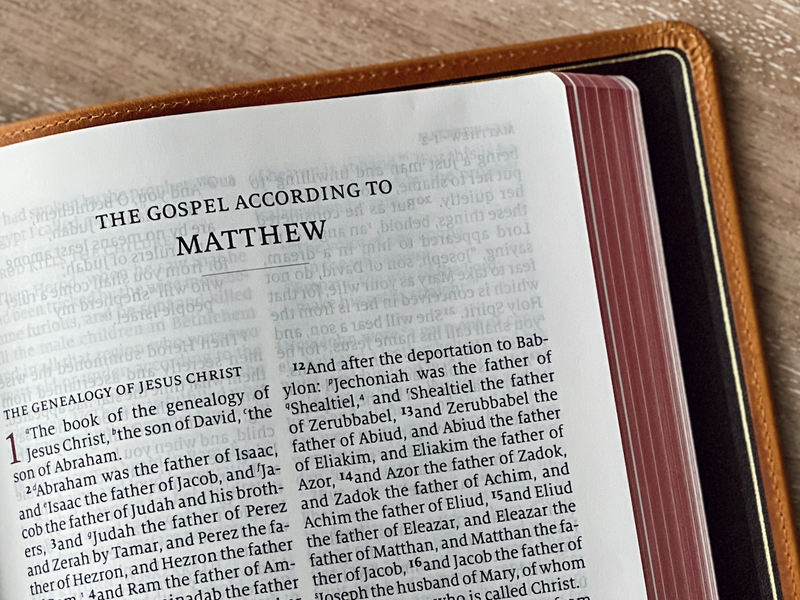
Toward a Chiastic Understanding of the Gospel According to Matthew, Part 2

III. Death of God’s Firstborn in the real Egypt: This huge chiasm has as its center the betrayal of Peter, as the leader of the disciples himself rejects Jesus. Peter holds an oficial position as high priest among the disciples of the incarnate Lord. His rejection of Jesus is the…

by James B. JordanMay 31, 1997
aaron-burden-qjdzyt_k8xg-unsplash
Eucharist

A Response to Rev. Bacon’s Argument that Manna was not a Sacrament

I wrote a response to Rev. Richard Bacon’s tract, What Mean Ye by This Service , a copy of which I borrowed from the library at Covenant Theological Seminary. However, I recently discovered that a new appendix was added to the version available on the Blue Banner’s web page. This…

by Mark HorneMay 29, 1997

Showing page 257 of 309

See all

Showing page 39 of 43

See all
History

Smokin’ like a Christian

English fairs in earlier centuries displayed wares and displays from all over the world. At one there was an animal described as “a noble creature, which much resembled a Wild Hairy man” whose main skill was to doff his hat and show “his respects to the Company, and smoaks a…

October 14, 2006
Literature

The Moral of Henry V

Much of the moral and political import of Shakespeare’s Henry V is left to the audience’s or reader’s judgment. Is Henry a “pig” or is he the mirror of Christian kings? Is his invasion of France fair or foul? Shakespeare doesn’t show his hand, or not much; and one is…

October 14, 2006
Literature

The climax of Coriolanus

George Barnam notes the careful structure of Act 5 of Shakespeare’s Coriolanus: “Shakespeare had used this scene structurally to build the tension toward the climactic moment when Volumnia should appeal to her son and prevail. Three appeals are made to Marcius, and Shakespeare’s presentation of them matches in structure the…

October 14, 2006
History

Sports and the sacred

A reader wrote to respond to my suggestion that high culture is “sacred” and pop culture “profane,” citing the example of sports. Here’s my response: A football game often is a quasi-religious experience, but I’m not sure we use the same language to describe it. If someone slashed da Vinci’s…

October 14, 2006
Literature

Desacralized drama

In their “cultural history” of English drama, Simon Shepherd and Peter Womack summarize the argument of Glynne Wickham concerning the divorce of stage and sacred: “The English stage - so the argument runs - was predominantly a religious one until Elizabethan Protestantism forced a separation between theatre and the central…

October 14, 2006
History

Civil war and criticism

As Marsden describes it, the growth of neoclassical literary sensibilities developed in part in reaction to the chaos and disorder of the English civil war - following in this regard the development of late 17th century political theory. Orderliness, definiteness, clarity became virtues, while ambiguity, double entendres, and inconclusiveness became…

October 13, 2006

Showing page 1777 of 2212

Browse by Category

In Medias Res

Your weekly digest for all things Theopolis.

Donate

Theopolis is nearly 100% donor-supported. Consider joining us on our mission.