Theopolis Logo

Writing

Explore our collection of theological essays, biblical studies, and reflections on faith and culture.

See all
306124rgsdl
Job

Job: The Baiting of Satan

Job appears in the Bible as a true story and it is regarded as such in other Scripture: As an example of suffering and patience, brothers, take the prophets who spoke in the name of the Lord. Behold, we consider those blessed who remained steadfast. You have heard of the…

by Mark HorneNovember 29, 2023

jed-owen-q6y8xr3soqa-unsplash
Feast

Gratitude is a Weapon

Thanksgiving is warfare. Gratitude is a weapon. Wield it well. Give thanks for the preparation. The hustle and bustle, the messy kitchen, the endless cleaning, the extra chairs, and stained tablecloths sing the song of hospitality. God desires that we prepare a place for friends and strangers, feasting and laughing,…

by Kyle LammottNovember 23, 2023
james-coleman-tcgu1vactdw-unsplash
Ecclesiastes

Notes on Ecclesiastes 2

We often hear that, along with Leviticus, Ecclesiastes is the “most peculiar book,” lurking in the Bible’s back alley. 1 But it is high time that we retire this old dirge. God has concealed much gold here, therefore much glory is ours if we are careful to read Solomon’s wisdom…

by Gage CrowderNovember 22, 2023
306124rgsdl
Job

Dominion Mandate Scorecard

1 Do you know when the mountain goats give birth? Do you observe the calving of the does? 2 Can you number the months that they fulfill, and do you know the time when they give birth? Job 39 We have and we do, Lord God. Spring is calving season.…

by Jonathan WhiteNovember 15, 2023
kelly-sikkema-ggs0_g6wi-i-unsplash
Exodus

The Christian Week is a Melody

For six days work may be done, but on the seventh day you shall have a holy day, a Sabbath of complete rest to Yahweh. - Exodus 35:2 The instructions for building the tabernacle end with a Sabbath command and the narrative about building begins with a Sabbath command, before…

by Peter LeithartNovember 8, 2023
giotto_-_scrovegni_-_-31-_-_kiss_of_judas
Sin

Simoniacs in the Bible

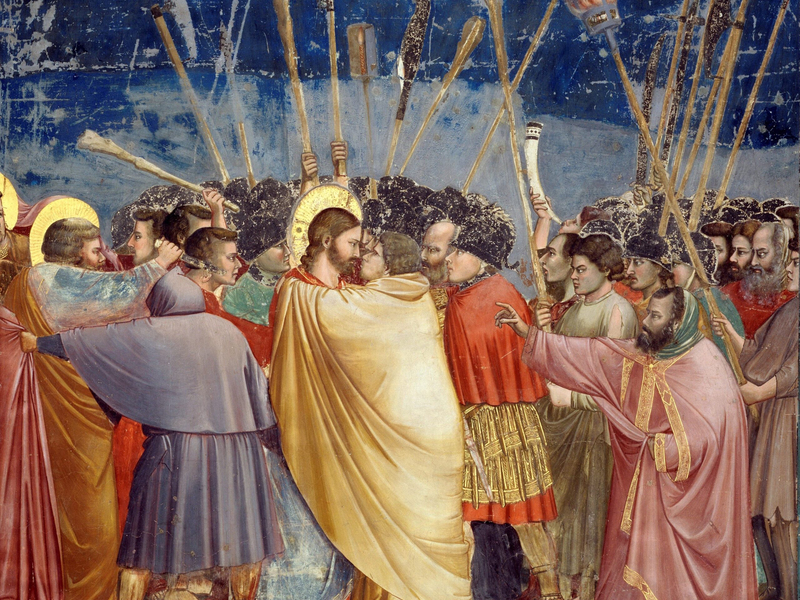
High in the list of now forgotten sins is simony. It was not always so: the medieval schoolmen believed simony to be the worst of ecclesiastical crimes and waged a centuries long campaign to purge the Church of this financial and spiritual corruption. As the schoolmen robustly defined it, “simony…

by Samuel KlumpenhouwerNovember 3, 2023

Showing page 26 of 309

See all

Showing page 39 of 43

See all
History

Smokin’ like a Christian

English fairs in earlier centuries displayed wares and displays from all over the world. At one there was an animal described as “a noble creature, which much resembled a Wild Hairy man” whose main skill was to doff his hat and show “his respects to the Company, and smoaks a…

October 14, 2006
Literature

The Moral of Henry V

Much of the moral and political import of Shakespeare’s Henry V is left to the audience’s or reader’s judgment. Is Henry a “pig” or is he the mirror of Christian kings? Is his invasion of France fair or foul? Shakespeare doesn’t show his hand, or not much; and one is…

October 14, 2006
Literature

The climax of Coriolanus

George Barnam notes the careful structure of Act 5 of Shakespeare’s Coriolanus: “Shakespeare had used this scene structurally to build the tension toward the climactic moment when Volumnia should appeal to her son and prevail. Three appeals are made to Marcius, and Shakespeare’s presentation of them matches in structure the…

October 14, 2006
History

Sports and the sacred

A reader wrote to respond to my suggestion that high culture is “sacred” and pop culture “profane,” citing the example of sports. Here’s my response: A football game often is a quasi-religious experience, but I’m not sure we use the same language to describe it. If someone slashed da Vinci’s…

October 14, 2006
Literature

Desacralized drama

In their “cultural history” of English drama, Simon Shepherd and Peter Womack summarize the argument of Glynne Wickham concerning the divorce of stage and sacred: “The English stage - so the argument runs - was predominantly a religious one until Elizabethan Protestantism forced a separation between theatre and the central…

October 14, 2006
History

Civil war and criticism

As Marsden describes it, the growth of neoclassical literary sensibilities developed in part in reaction to the chaos and disorder of the English civil war - following in this regard the development of late 17th century political theory. Orderliness, definiteness, clarity became virtues, while ambiguity, double entendres, and inconclusiveness became…

October 13, 2006

Showing page 1777 of 2212

Browse by Category

In Medias Res

Your weekly digest for all things Theopolis.

Donate

Theopolis is nearly 100% donor-supported. Consider joining us on our mission.