Theopolis Logo

Writing

Explore our collection of theological essays, biblical studies, and reflections on faith and culture.

See all
aaron-burden-1ebsmyrau-s-unsplash
John

Moses & Jesus: Friends or Foes?

A Look at John 1.17 For the law was given through Moses, but grace and truth came through Jesus Christ. The above quotation is John 1.17 and comes from the New King James Version of the Bible. It is quite similar to the original translation in the old King James…

by Mark HorneJune 6, 2002

ben-white-w8qqn1pmqh0-unsplash
Christology

Grace Apart From Sin

And the Child continued to grow and become strong, increasing in wisdom; and the grace of God was upon Him. There is nothing faulty in this translation (New American Standard Bible); Jesus was the recipient of the grace of God His Father from whom He is eternally begotten and with…

by Mark HorneJune 6, 2002
ivan-aleksic-16yxcjsoaek-unsplash
Philemon

Flesh and Lord: Philemon 15 & 16

When Paul wrote to Philemon asking him to forgive his runaway slave, Onesimus, he gave Philemon an interesting perspective on how God used Onesimus’ action to bring about his conversion: For perhaps he was for this reason parted from you for a while, that you should have him back forever,…

by Mark HorneJune 6, 2002
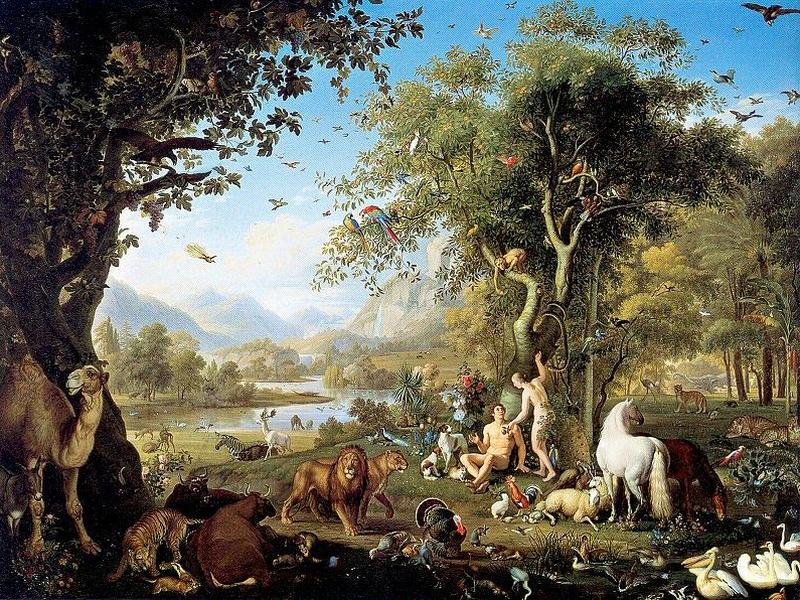
adam-and-eve-in-the-garden-of-eden-wenzel-peter
Covenant

Covenant of Works?

Adam’s good works were acceptable to God. He could do them and God would receive them. Our own “good” works, our very best works, require the forgiveness of God and the continual intercession of Jesus Christ due to their impurity. Thus, it is appropriate to describe God’s covenant with Adam…

by Mark HorneJune 6, 2002
sixteen-miles-out-al48tflf4e8-unsplash
Mark

Blasphemy Against the Holy Spirit?

In Mark’s Gospel we read: “And the scribes who came down from Jerusalem were saying, ‘He is possessed by Beelzebul,’ and ‘He casts out the demons by the ruler of the demons’” (3.22). Jesus replied in part, “Truly I say to you, all sins shall be forgiven the sons of…

by Mark HorneJune 6, 2002
e99a4713
Ecclesiology

A Visionary Ecclesiology

A Primer for Church Members on the Nature and Functions of the Body of Christ Introductory Note: I intend this paper to serve as something of a “user’s guide” for church members, though church leaders may also find it valuable in developing vision statements for their local bodies. I have…

by Rich LuskJune 5, 2002

Showing page 237 of 309

See all

Showing page 39 of 43

See all

Necessity of Incarnation

Would the Son have been incarnate if Adam had not sinned? 1 Corinthians 15:44-45 provides a prooftext for an affirmative answer. Verse 44 says that the “spiritual body” is implied by the existence of the “natural body.” Human beings were created in a natural state, but they were destined from…

August 12, 2006
Philosophy

Decentered Self of Modernity

Bishop Joseph Butler of Durham worried about the consequences of Locke’s empiricism: “That personality is not a permanent, but a transcient thing: that it lives and dies, begins and ends continually: that no one can any more remain one and the same person two moments together, than two successive moments…

August 12, 2006
History

Embedded mind

Modernity ignores the social, linguistic, and political context of thought, and the way interest shapes the mind; postmodernity foregrounds all this. Perhaps, but . . . . Descartes said that his travels demonstrates that “all those who hold notions strongly contrary to our own are not for that reason barbarians…

August 12, 2006
History

Self and World

For premoderns - ancients and medievals - there was a homology between the self and the world. Man was seen as microcosm, and, as Seigel puts it, they believed that “the world, like the self, is structured so as to fulfill intelligible moral ends.” The initial shift in early modernity,…

August 12, 2006
Philosophy

Birth of the Modern Self?

Seigel views with “considerable skepticism” the notion that Descartes constructed “a general theory of the human self and subject on the basis of the cogito .” In his treatise on the Passions of the Soul , Descartes claimed that the soul was linked with the body, which acts on the…

August 12, 2006
History

Purity

According to Seigel, “Descartes’s view of reason as most pure and solid when it was free of corruption by the world’s confusions implied nothing less than the attempt to break free of all social and cultural experience.” Not for the first time, I wish there were an anthropological history of…

August 12, 2006

Showing page 1812 of 2212

Browse by Category

In Medias Res

Your weekly digest for all things Theopolis.

Donate

Theopolis is nearly 100% donor-supported. Consider joining us on our mission.