Theopolis Logo

Writing

Explore our collection of theological essays, biblical studies, and reflections on faith and culture.

See all
stalker
Advent

Why Stalker Should be Added to Your Christmas Watchlist

Stalker is a Soviet-era film by Andrei Tarkovsky in which an enigmatic location comes into existence either through an alien crash or a nuclear disaster; the film never makes it clear, but knowing Tarkovsky’s criticism of the spectacle nature of the alien motif after his own filming of Solaris and…

by Garrett SoucyDecember 19, 2023

jessica-rockowitz-5nlcaz2wjxe-unsplash
Motherhood

A Greater Capacity

I was scrolling through Instagram on the night of Thanksgiving, the only one awake (as usual), coming down from my extrovert-high after all the conversation and merriment of the day, when I came across a post that stopped me in my tracks. The post contained a picture-perfect image of some…

by Lindsey MurphyDecember 18, 2023
screen-shot-2020-12-03-at-1-47-33-pm
Theopolis News

The 2024 James B. Jordan Prize

The Theopolis Institute is pleased to announce the fourth round of the James B. Jordan Prize to honor outstanding doctoral dissertations in biblical theology. James Jordan is one of the most insightful biblical scholars of our time. The Jordan Prize exists to encourage more of the deep Scriptural investigation of…

by Peter LeithartDecember 15, 2023
screenshot-2023-12-12-at-10-36-28-am-2
Eschatology

What Kind of Story Is History?

Suppose I were to write three versions of a story. In every version, the first half of the book looks forward to the coming of the king. There are promises about him and about how glorious his kingdom will be, about how his kingdom will fill the earth with peace…

by John BarachDecember 12, 2023
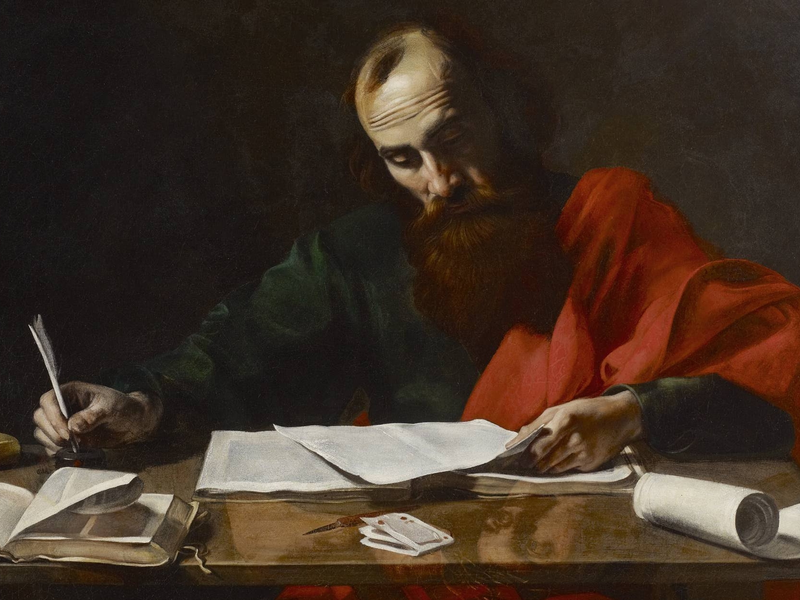
13071-probablyvalentindeboulogne-saintpaulwritinghi-1
Galatians

Re-Considering Doug Wilson's "Covenant with Hagar"

Introduction Doug Wilson’s American Milk and Honey is now available. There’s a great deal in the book worth commenting on, and I anticipate engaging with that material more broadly in the near future. In the lead up to its release, however, Moscow has not been silent concerning Israel, the Jews,…

by Gabe HarderDecember 11, 2023
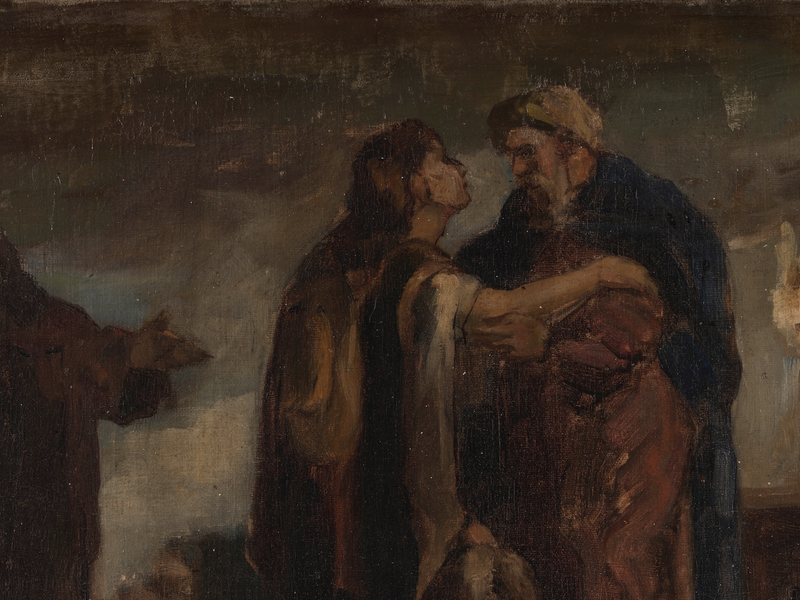
screenshot-2023-12-05-at-5-51-01-pm
Parables

The Older Son

Our telling of the Prodigal Son parable usually (and rightly) focuses on the runaway younger brother: the lost son returns, and his father joyfully and graciously receives him. But the full story has an additional element: an angry older brother. Jesus uses the older brother to rebuke the religious leaders…

by Tim NicholsDecember 6, 2023

Showing page 25 of 309

See all

Showing page 39 of 43

See all

Conveniens

Bauerschmidt notes that Aquinas frequently argues, especially when speaking of the incarnation, not for “proof” of doctrine but for its “fittingness.” Reason has the role of “manifesting how [the incarnation] fits together (convenire means literally ‘to come together’) with other things that Christians hold true about God.” Perhaps this can…

March 23, 2006

Extra-Augustinisticum

In Epistle 137, Augustine writes: “The Christian teaching nowhere holds that God was so poured into human flesh as either to desert or lose - or to transfer and, as it were, compress within this frail body - the care of governing the universe. This is the thought of people…

March 23, 2006

Thomas on Merit

Commenting on ST I-II, q. 109, Frederick Bauerschmidt says that Thomas uses the word “merit” analogically when we speak of God rewarding human action “since we can act in the first place only because God has given us the capacity to act.” This applies even to Jesus: “even when Thomas…

March 23, 2006

On Seneca, de Beneficiis, Books 1-2

Seneca suggests that ingratitude is the worst of vices, and nothing is more “harmful to society” than ingratitude (I.1). Later in Book I, he lists a series of moral ills that plague society – “homicides, tyrants, thieves, adulterers, ravishers, sacrilegious, traitors” – but concludes that “worse than all these is…

March 23, 2006
Literature

Prospero the Magus

I am grateful to Ralph Smith for references to Frances Yates’ work on Shakespeare’s plays. In an analysis of The Tempest, Frances Yates writes: “It is inevitable and unavoidable in thinking of Prospero to bring in the name of John Dee, the great mathematical magus of whom Shakespeare must have…

March 22, 2006
History

Elizabethan Magic

Educated Elizabethans lived in a world of similitudes. As EMW Tillyard argued, the Elizabethan world picture was constituted by a series of analogous chains of being. The social world manifested and was manifested by the natural world; the universe as a whole resembled human beings; there was a hierarchy among…

March 22, 2006

Showing page 1867 of 2212

Browse by Category

In Medias Res

Your weekly digest for all things Theopolis.

Donate

Theopolis is nearly 100% donor-supported. Consider joining us on our mission.