Theopolis Logo

Writing

Explore our collection of theological essays, biblical studies, and reflections on faith and culture.

See all
screen-shot-2020-03-05-at-9-00-10-am
Motherhood

Raising Children in a Gender Confused World

Raising children in a world that is increasingly rebellious against God-given gender is quite a challenge. I believe that every generation has their own unique challenges to face, and LGBTQ is ours. It is the movement that steals our terminology (love, kindness, community) and our symbol of promise (the rainbow)…

by Lindsey TollefsonJune 29, 2021
herode-tissot-crop
2 Thessalonians

The Lawless Man: When Christ Exposed a Conspiracy

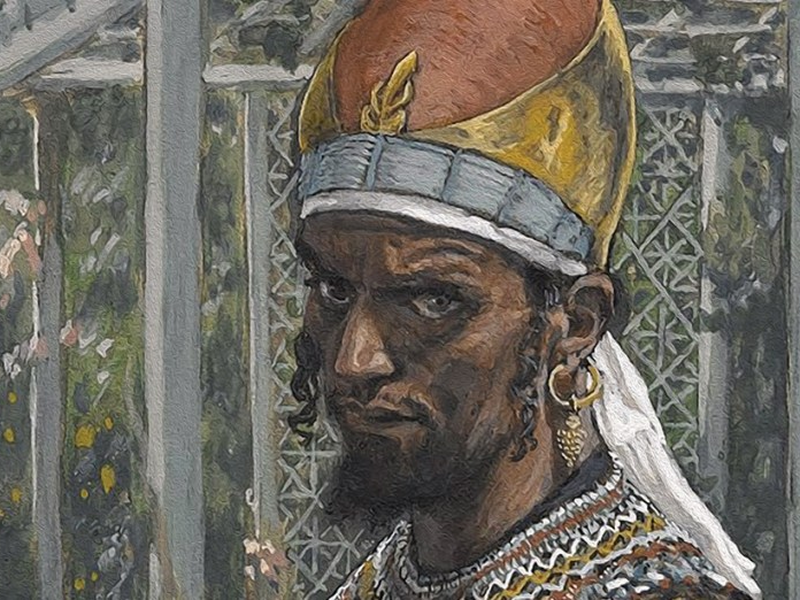
While there are many tricky verses in the Bible, it’s clear that some of them were never intended to give us so much trouble. Paul’s mysterious mention of the “restrainer” in 2 Thessalonians 2 is a perfect example, but perhaps we have been looking at it the wrong way. Reading…

by Mike BullJune 22, 2021
mark-rabe-p0gsveiycqu-unsplash
Christian Nationalism

Catholicity, the Church, and Christian Nationalism?

A common assumption of those most critical of “Christian nationalism” is that such a conception is inherently racist and opposed to the universal nature of the Christian faith. Many argue that Christian nationalism undermines a catholic sensibility by tethering Christianity to the particularities of the nation, and usually to a…

by James WoodJune 17, 2021
paul-the-apostle-epistle-prison-ephesians
Galatians

Ahab in Galatia

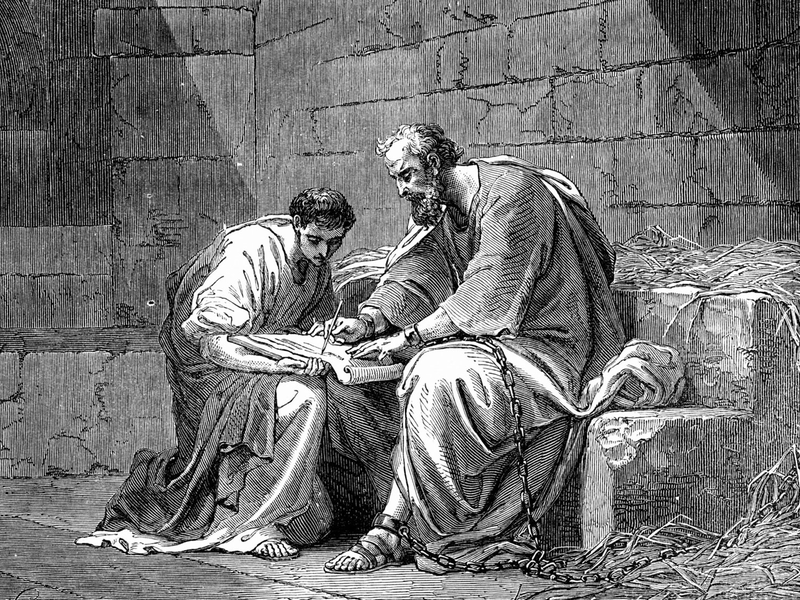
In his letter to the Galatians, Paul speaks of those who “trouble” their congregations: “[T]here are some who trouble you and want to distort the gospel of Christ” (1:7). 1 The word “trouble” caught my attention here, because in 1 Kings 18:17, King Ahab refers to Elijah the prophet as…

by Daniel HoffmanJune 15, 2021
margaux-bellott-r5tmusupjwa-unsplash
American Culture

What To Do When Your Boss Encourages You To Support The Moral Revolution

Many Christians find themselves working for businesses or corporations that encourage compliance with the moral revolution. Perhaps their company wants them to participate in gay pride month. Perhaps they require employees to use the preferred gender pronouns of their co-workers. Or maybe they require them to sign a statement affirming…

by Jason CherryJune 11, 2021
tim-marshall-k2u71wv2ei4-unsplash-1
Matthew

Masculinity in Jesus and John

“For John came neither eating nor drinking, and they say, He hath a devil. The Son of man came eating and drinking, and they say, Behold a man gluttonous, and a winebibber, a friend of publicans and sinners. But wisdom is justified of her children.” – Matthew 11:18-19 When conservative…

by Matthew CarpenterJune 10, 2021

Showing page 54 of 309

See all

Showing page 39 of 43

See all

Conveniens

Bauerschmidt notes that Aquinas frequently argues, especially when speaking of the incarnation, not for “proof” of doctrine but for its “fittingness.” Reason has the role of “manifesting how [the incarnation] fits together (convenire means literally ‘to come together’) with other things that Christians hold true about God.” Perhaps this can…

March 23, 2006

Extra-Augustinisticum

In Epistle 137, Augustine writes: “The Christian teaching nowhere holds that God was so poured into human flesh as either to desert or lose - or to transfer and, as it were, compress within this frail body - the care of governing the universe. This is the thought of people…

March 23, 2006

Thomas on Merit

Commenting on ST I-II, q. 109, Frederick Bauerschmidt says that Thomas uses the word “merit” analogically when we speak of God rewarding human action “since we can act in the first place only because God has given us the capacity to act.” This applies even to Jesus: “even when Thomas…

March 23, 2006

On Seneca, de Beneficiis, Books 1-2

Seneca suggests that ingratitude is the worst of vices, and nothing is more “harmful to society” than ingratitude (I.1). Later in Book I, he lists a series of moral ills that plague society – “homicides, tyrants, thieves, adulterers, ravishers, sacrilegious, traitors” – but concludes that “worse than all these is…

March 23, 2006
Literature

Prospero the Magus

I am grateful to Ralph Smith for references to Frances Yates’ work on Shakespeare’s plays. In an analysis of The Tempest, Frances Yates writes: “It is inevitable and unavoidable in thinking of Prospero to bring in the name of John Dee, the great mathematical magus of whom Shakespeare must have…

March 22, 2006
History

Elizabethan Magic

Educated Elizabethans lived in a world of similitudes. As EMW Tillyard argued, the Elizabethan world picture was constituted by a series of analogous chains of being. The social world manifested and was manifested by the natural world; the universe as a whole resembled human beings; there was a hierarchy among…

March 22, 2006

Showing page 1867 of 2212

Browse by Category

In Medias Res

Your weekly digest for all things Theopolis.

Donate

Theopolis is nearly 100% donor-supported. Consider joining us on our mission.