Theopolis Logo

Writing

Explore our collection of theological essays, biblical studies, and reflections on faith and culture.

See all
tanner-mardis-xuxghzhibn4-unsplash-1-2
Biblical Studies

Tweets-turned-Notes on the Bible’s Chronology

Summary In what follows, I will consider the “year-stamps” employed in Scripture, i.e., statements of the form, “Such-and-such an event took place in the Xth year of Y.” In the process, I will suggest some ways in which the Biblical narrative might relate to events in the extra-Biblical world, though…

by James BejonJuly 16, 2019
durer-prodigal-son-2
Luke

Perspectives on the Prodigal, (Part 2)

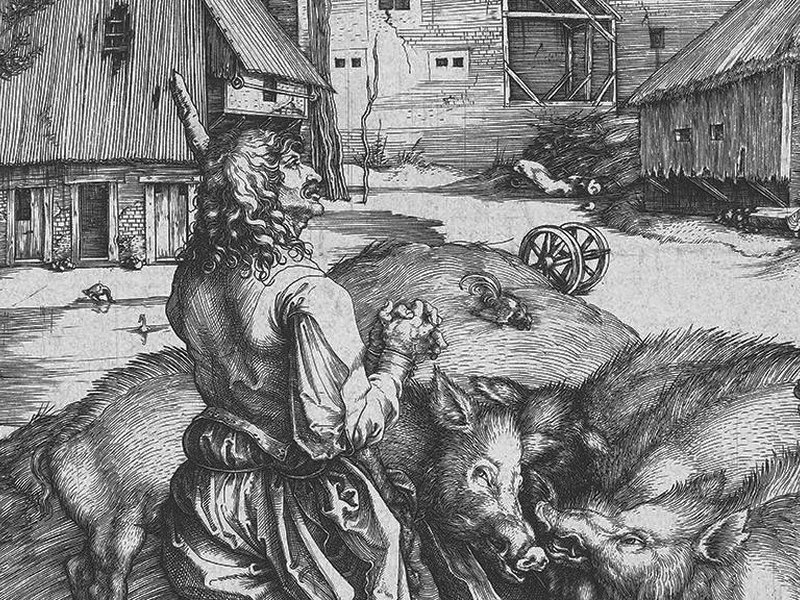
In the first essay on the parable of the Prodigal Son, I suggested that the problems commentators and others encounter in interpreting Jesus three-part parable are not accidental. These are not just problems in our ignorance of cultural background. They are intentional features of the stories —stories designed to poke…

by Ralph Allan SmithJuly 11, 2019
durer-prodigal-son-2
Luke

Perspectives on the Prodigal, (Part 1)

The story of the Prodigal Son is perhaps the most well-known story in the Bible. As others have observed, it may also be one of the most misunderstood. In two short essays, I will point out features of this story that are commonly neglected, aspects of Jesus’ parable that might…

by Ralph Allan SmithJuly 9, 2019
de-rijke-man-en-de-arme-lazarus-by-jacopo-da-ponte-16th-century
Luke

Lazarus and the Rich Man

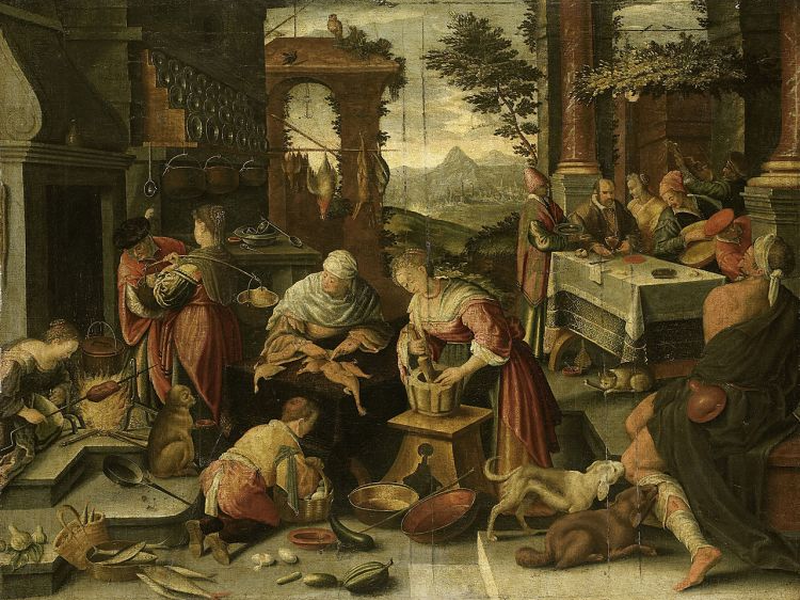
The parable of Lazarus and the nameless rich man is not an independent story. It is part of a long context that begins in Luke 15:1, where Jesus is eating with tax collectors and sinners and the scribes and Pharisees grumble. In response to their hardheartedness, Jesus tells a three-part…

by Ralph Allan SmithJuly 4, 2019
aaron-burden-uynrnfdkjwg-unsplash
Luke

Everybody has Dropsy - Luke 14:1-24

The Bible is written so that even when a reader cannot pick up on what might be deeper or more detailed aspects of a text, there is virtually always a message to be heard. In the ancient world, where the “reader” of Scripture would likely be a church official facing…

by Ralph Allan SmithJuly 2, 2019
communion
Biblical Theology

Fruit Trees and Grain Plants

The distinction between garden (or vineyard) and field begins in Genesis 2. This relates to the ordering of the formless world. Plants of the field are contrasted with the garden planted by God in Genesis 2:5&8. Later on, under the Old Covenant the Israelites will be required to keep their…

by James B. JordanJune 27, 2019

Showing page 77 of 309

See all

Showing page 39 of 43

See all

Just Quitting

One day, Henry just quit. He had soldered wires for he didn’t know what in the back room of the Magnavox plant for thirteen years, and enough was enough. His eyes itched, the watery coffee from the machine was bitter, the pinups in the maintenance room never changed, and he…

November 24, 2005

Sermon Outline, First Advent

INTRODUCTION When Christians speak of the “holy family,” they normally have in mind Jesus’ “nuclear family,” Joseph and Mary and his siblings. But Matthew begins with Jesus’ larger family, tracing his descent from Abraham and David. THE TEXT “The book of the genealogy of Jesus Christ, the Son of David,…

November 24, 2005
Philosophy

A word for Scotus

Jonathan McIntosh, a student at the University of Dallas, challenges Vanhoozer’s (and Radical Orthodoxy’s) reading of Scotus that I summarized in a previous post, arguing that Scotus does not deny analogy. He has a point. The following discussion of Scotus’ understanding of the univocity of being is taken largely from…

November 24, 2005
History

History of the Sentence

Ian Robinson’s The Establishment of Modern English Prose in the Reformation and the Enlightenment (Cambridge, 1998) is a fascinating discussion of the history of the sentence and of English punctuation, and, despite its heavy-handed title, is a delight to read. Does the sentence have a history? Robinson shows that it…

November 24, 2005
Philosophy

Postmodern Theology

Kevin Vanhoozer has done a great service by editing the Cambridge Companion to Postmodern Theology (2003). Though the authors of the various articles differ among themselves, they are all well-informed about postmodern thought and culture and are making an effort to respond from the stance of Christian theology. In his…

November 24, 2005
Theology

Images of God

In the Summa theologiae (1.1.9), Thomas argues that “it is more fitting that divine matters should be conveyed under the figure of lowly bodies than of noble bodies.” Rocks are better figures for God than ideal forms. Thomas gives three reasons for this preference: First, if “lowly” bodies provide the…

November 24, 2005

Showing page 1921 of 2212

Browse by Category

In Medias Res

Your weekly digest for all things Theopolis.

Donate

Theopolis is nearly 100% donor-supported. Consider joining us on our mission.