
Theopolis Logo

Writing

Explore our collection of theological essays, biblical studies, and reflections on faith and culture.

See all
giammarco-zeh-ljawhtg-unsplash
Biblical Horizons

OPEN BOOK: Views and Reviews

Isaac E. Mozeson, The Word: The Dictionary that Reveals the Hebrew Sources of English (Northvale, NJ: Jacob Aaronson Inc., 1995), 310 pp. Reviewed by James B. Jordan. Once there was only one language in the world, the language God spoke to Adam. At the Tower of Babel, there came to…

by James B. JordanJune 28, 1996
tim-wildsmith-j6jv-mkdzqs-unsplash
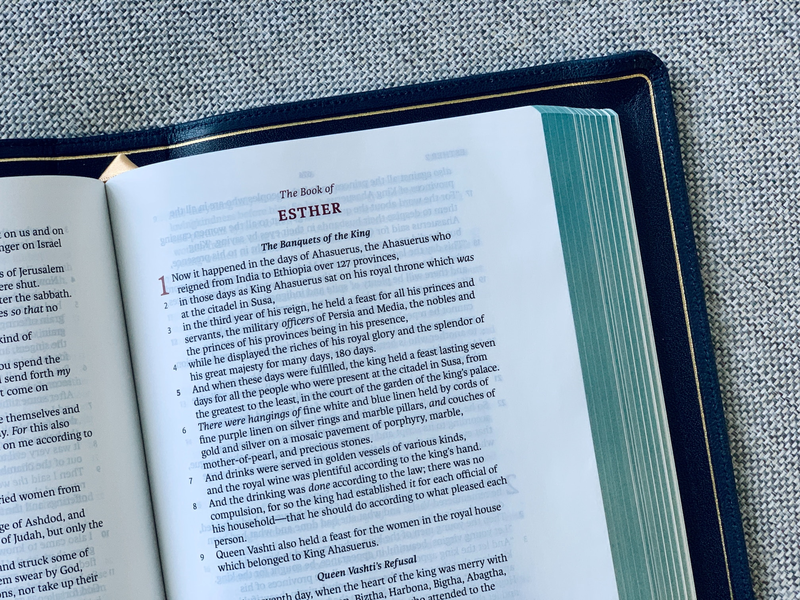
Esther

Esther: Historical & Chronological Comments (IV)

2. The Setting of the Book of Esther A. Xerxes (continued from previous issue) Ezra 6:14 says that the Jews finished building "according to the command of the God of Israel and the decree of Cyrus and Darius and Artaxerxes king of Persia." The problem with this verse is that…

by James B. JordanJune 28, 1996
ales-krivec-4mibe6zg5r0-unsplash
Acts

Jesus and Amalek

This essay goes with our previous study of the Amalek pattern back in Biblical Horizons No. 2. Since many do not have this essay, entitled "The Battle of Gog and Magog," let me cite the relevant paragraphs: Note in Genesis 12-15 that Abram moves into the land after escaping Pharaoh…

by James B. JordanJune 28, 1996
aaron-burden-1ebsmyrau-s-unsplash
Proverbs

The Strange Woman

Proverbs 7:6-23 is one of several passages early in the Proverbs in which Solomon warns his son about the wiles and dangers of the "strange woman." It is certainly quite proper to take these as straightforward warnings against sexual sins, and these are certainly warnings that need to be impressed…

by Peter LeithartJune 27, 1996
jan-kahanek-g3o5ztrk2e4-unsplash
Biblical Studies

Some Observations

1. In Luke 4:20 we read that after Jesus finished reading from Isaiah, "the eyes of all in the synagogue were fixed upon Him." This is usually taken in a psychological sense: They were amazed at Jesus somehow. I suggest that, as always, a merely psychological reading is a modern…

by James B. JordanMay 28, 1996
tim-wildsmith-j6jv-mkdzqs-unsplash
Esther

Esther: Historical & Chronological Comments (III)

2. The Setting of the Book of Esther Up to now we have assumed what we must prove, that the king in Esther is Darius the Great. While Biblical chronologists have usually taken this position, commentators on the book of Esther have often taken others as the king. One view,…

by James B. JordanMay 28, 1996

Showing page 265 of 309

See all

Showing page 39 of 43

See all

Translation, 2 Kings 10

Now to ‘Achav [were] seventy sons in Shomron And wrote Jehu’ scrolls And he sent [to] Shomron to the princes of Yizre’e’l, the elders And to the trustees of ‘Achav, saying, “Now you yourselves according to the entering of this scroll to you And with you [are] the sons of…

June 30, 2005

Anthropology and soteriology

Explaining the meaning of the image of God, Calvin writes, “there is no solidity in Augustine’s speculation, that the soul is a mirror of the Trinity, inasmuch as it comprehends within itself, intellect, will, and memory. Nor is there any probability in the opinion of those who place likeness to…

June 29, 2005
History

Delayed Globalization

In his account of the beginning of World War I, Europe’s Last Summer , David Fromkin notes that globalization was already well underway prior to 1914, and in fact was in some ways more advanced than at any time since: “You could go to practically anywhere in the world without…

June 29, 2005

Modernity thesis revisited

I have been deeply skeptical about the arguments of Jacques Ellul and others concerning our enslavement to technology, as well as the arguments of Peter Berger about the “heretical imperative” that modernity imposes on us. Technological modernity tempts us, as Craig Gay has argued, to act as if God does…

June 29, 2005

High Context Societies

Ronald Simkins has distinguished between “high context” and “low context” societies. In the former, the members of the society share many cultural assumptions and meanings; in the latter, the shared meanings are much thinner and more sporadic. Of course, the distinction is not absolute, since within a relatively “low context”…

June 28, 2005

Eucharistic meditation, June 26

2 Kings 5:17: Naaman said to Elisha, “Your servant will no more offer burnt offering nor will he sacrifice to other gods, but to Yahweh.” Naaman, we noted in the exhortation, was a baptized Gentile convert. That baptism in the Jordan healed him of his leprosy. That baptism was an…

June 26, 2005

Showing page 1967 of 2212

Browse by Category

In Medias Res

Your weekly digest for all things Theopolis.

Donate

Theopolis is nearly 100% donor-supported. Consider joining us on our mission.