Theopolis Logo

Writing

Explore our collection of theological essays, biblical studies, and reflections on faith and culture.

See all
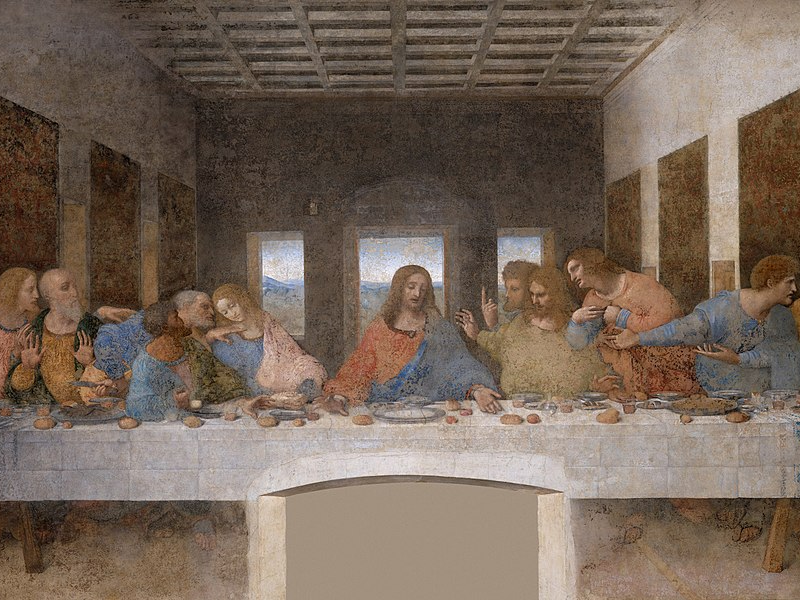
the_last_supper_-_leonardo_da_vinci_-_high_resolution_32x16-2
Biblical Horizons

Was the Last Supper a Passover?

Some readers of my essay, “ Strange and Glorious New Rites ,” have written to object that I have strained a gnat and swallowed a camel. I have strained out the gnat of a possible link to the memorial bread of the minchah (Lev. 2), while overlooking the camel that…

by James B. JordanMarch 22, 2011

screenshot-2023-09-19-at-10-48-12-am
Biblical Horizons

Planetary Judgments

In his lectures on Comparative Religion, Eugen Rosenstock-Huessy points to five fundamental gods that were over ancient man and still can dominate us today, and which must be respected. When we sin, we respect these gods more than we respect the Creator, disobeying the First Word: “You will have no…

by James B. JordanMarch 22, 2011

timothy-eberly-djj49s6ud2o-unsplash
Biblical Studies

Notes on the Book of Judges

A. Israel’s failure to hold land against the Canaanites. Progressive compromise, leading to judgment. 1:1–2:5. B. Israel’s idolatry, the cycle of judges, and war as God’s chastisement. 2:6–3:6. C. Northern Gentiles (Mesopotamia), and Othniel. 3:7-11. D. Lot: Moab, and Ehud. 3:12-13. E. Minor judge: Shamgar. 3:31. F. Canaanites opposed. Women…

by James B. JordanMarch 21, 2011
briana-tozour-mrfapsuyy8a-unsplash
Biblical Horizons

Principalities and Powers, (Part 2)

The great question for the emerging East, for Asia and other awakening third world areas, for an emerging nation like China is, “what fate awaits them?” They are now emerging from an analogous paganism that the West emerged from centuries ago. Here an amazing quotation from David Aikman, the Time…

by Richard BledsoeMarch 15, 2011
sinitta-leunen-dvibhmzsy8e-unsplash
Colossians

The Principalities and Powers, Part I

Paul contends that with the death of Christ on the Cross, there was an overcoming of the Principalities and the Powers (Col. 2:15). A great deal has been written on this subject over the last 60 years. What was for a long time either ignored, or regarded by liberal scholars…

by Richard BledsoeMarch 10, 2011
jimpreaching
Biblical Horizons

Eating and Drinking Together

One of the odd customs that has arisen in the 20th century is that many evangelical churches warp the rites of the Lord’s Supper by insisting that everyone wait so that they eat and drink together. Supposedly this is to emphasize the unity of the Church. This practice has no…

by James B. JordanMarch 3, 2011

Showing page 205 of 309

See all

Showing page 39 of 43

See all
Literature

Ibsen

Ibsen, Steiner argues, did not write tragedies. Ibsen wrote “dramatic rhetoric” calling society to reform. For real tragedy, there is no such “solution” to be found, there is no remedy, except destructive sacrifice and perhaps a deus ex machina. From this angle, tragedy is perhaps among the STOICHEIA that prepared…

January 7, 2004
Literature

More Quotations from Steiner

Some more quotations from Steiner’s Death of Tragedy : “We cannot understand the romantic movement if we do not perceive at the heart of it the impulse toward drama . . . . The romantic mode is neither an ordering nor a criticism of life; it is a dramatization. And…

January 7, 2004
Theology

NT Wright’s Rutherford House Lecture

Some thoughts on NT Wright’s Rutherford House Lecture, August 2003. I have little disagreement with much of the lecture, and it clarified a number of things for me. Wright’s views on justification, however, continue to puzzle me at a number of points. Here’s an attempt to clarify my (or NTW’s)…

January 7, 2004
Theology

NT Wright’s Rutherford House Lecture

Some thoughts on NT Wright’s Rutherford House Lecture, August 2003. I have little disagreement with much of the lecture, and it clarified a number of things for me. Wright’s views on justification, however, continue to puzzle me at a number of points. Here’s an attempt to clarify my (or NTW’s)…

January 7, 2004
Literature

European Drama

Steiner notes that, following the Renaissance, European drama operated under the shadows of neo-classical and Elizabethan dramatic practice, the former “closed” and rigidly adhering to Aristotelian criteria, the other open and experimental. He discusses the theory of Thomas Rymer (a neo-classicist) at some length, concluding that the controversies that Rymer…

January 6, 2004
Literature

Shakespearean Difference

George Steiner in his Death of Tragedy describes the “Shakespearean difference” as mainly due to Shakespeare’s avoidance of fascination with Hellenic models: “The neo-classic view [which rigidified Aristotelian conceptions of tragedy] expresses a growing perception of the miracle of Greek drama. This perception was fragmentary. There were few translations of…

January 6, 2004

Showing page 2141 of 2212

Browse by Category

In Medias Res

Your weekly digest for all things Theopolis.

Donate

Theopolis is nearly 100% donor-supported. Consider joining us on our mission.