Theopolis Logo

Writing

Explore our collection of theological essays, biblical studies, and reflections on faith and culture.

See all
cloister

Gatekeepers

1 Chronicles 9:1 seems to bring the genealogies of 1 Chronicles to an end. The Chronicler has recorded the genealogy of the human race from Adam, focusing on the descendants of Abraham through Jacob. Summing it all up, he says, “So all Israel was enrolled by genealogies; and behold, they…

by Peter LeithartJune 21, 2016
trinity-1-2
Trinity

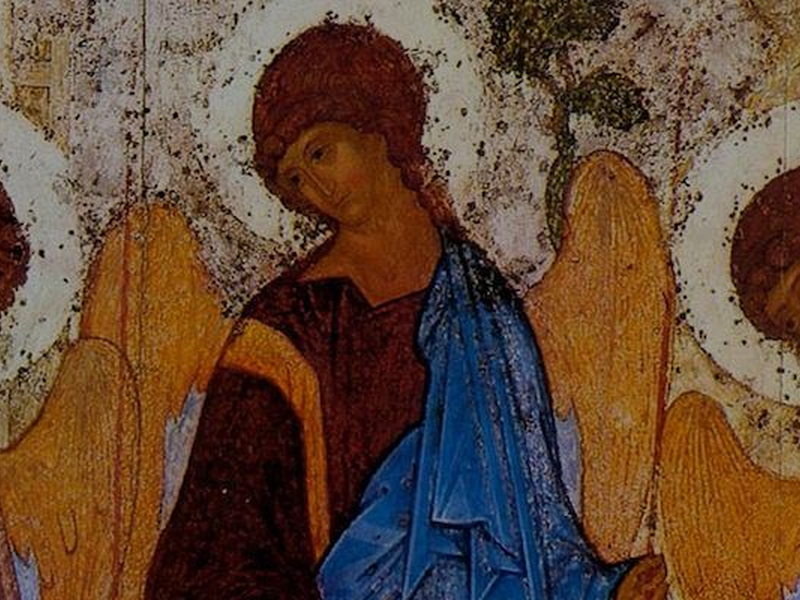
Are the Divine Persons Persons?

The “personalist” understanding of the Trinity, articulated most influentially in the work of John Zizioulas, has fallen on hard times. Recent scholars have attacked Zizioulas’s idea that Cappadocian Trinitarianism represented an ontological revolution, hammering on the distinction between divine and human personhood. Michel Barnes’s conclusion is the most drastic of…

by Peter LeithartJune 16, 2016
img_4660-2
Architecture

On Biblical Theology

Biblical Theology is often defined as the historical unfolding of God’s revelation, or of God’s revelation and of the history of his covenantal redemption and transformation of humanity and the world. In practice, Biblical Theology is usually broader than this, and also includes the study of literary structure and of…

by James B. JordanJune 14, 2016
laughing_statue_by_xxbobbiie-d5f0meh-2
Humor

Wise Laughter

We are made to be happy. Created to enter into the eternal joy of God, our whole being inclines to that end, but the fallen world has put forth barriers and by our own sin we bar ourselves from that endless delight, and death blinds us to that reality. Yet…

by Remy WilkinsJune 7, 2016
img_7664
Liturgy

Why Theopolis? Take Two

At the end of Revelation, John sees the heavenly city descending to earth. The city shines with the brilliance of God's glory, which lightens the nations, so that kings bring their glory to the city. This is not a vision of the final new heaven and new earth. It's a…

by Peter LeithartJune 2, 2016
trinity-1-2
Attributes of God

How Can We Talk About God?

“No one has ever seen God,” writes John (John 1:18). If this is the case, then how can we speak about God? Some people say we actually cannot. Or at least we cannot speak about God positively, i.e. who He is. We can only say who or what God is…

by Bogumil JarmulakMay 31, 2016

Showing page 130 of 309

See all

Showing page 39 of 43

See all
skyler-gerald-akljfvj5ym4-unsplash-2
LukeSermon Outline

Sermon Outline, September 14

Sermon outline for this coming Sunday: A House That Stands, Luke 6:12-49 INTRODUCTION The Pharisees sought to renew Israel by applying principles of holiness and separation in every detail of life, such as table manners and how you spent your time on the Sabbath. Jesus agreed that Torah had to…

September 10, 2003
aaron-burden-qjdzyt_k8xg-unsplash
Theology

Barth’s Actualism Again

Here’s the same problem elsewhere in Barth (again relying on Hunsinger’s treatment): This encounter with God, he argued, was mediated, not immediate, and was given by grace, not by nature. The encounter was objectively mediated by Jesus Christ, and given only by the free decision of God. The condition for…

September 9, 2003
aaron-burden-qjdzyt_k8xg-unsplash
Theology

Hunsinger on Barth’s Actualism

George Hunsinger describes one of the implications of Barth’s “actualism” in this way: Negatively [actualism] means that we human beings have no ahistorical relationship to God, and that we also have no capacity in and of ourselves to enter into fellowship with God. An ahistorical relationship would be a denial…

September 9, 2003
eyasu-etsub-hn7scs05pju-unsplash
Postmodernism

Animals

Joel Garver of LaSalle provided me with the following quotation from Jorge Luis Borges, a quotation that Joel read in a series of lectures on postmodernism this summer: Borges refers to a ‘certain Chinese encylopaedia’ in which it is written that ‘animals are divided into: (a) belonging to the Emperor,…

September 9, 2003
sixteen-miles-out-d40gdcd_-he-unsplash-2
TheologyTrinity

God’s Attributes

I work on the assumption that all the attributes of God are Trinitarian, relational attributes. How does this work with an attribute like “holiness,” which, by most definitions, describes God as wholly un-related? The key is to notice that the language of holiness in Scripture describes things and persons claimed…

September 9, 2003
national-cancer-institute-zofbft0m_bu-unsplash
Science

Biology and the Cell

Why does biology start with the cell and work upwards? Why explain biological phenomena in terms of cell activity, rather than cell activity in terms of the activity of larger systems? No doubt there is experimental evidence to support this approach, but I find it prima facie doubtful. In many…

September 9, 2003

Showing page 2201 of 2212

Browse by Category

In Medias Res

Your weekly digest for all things Theopolis.

Donate

Theopolis is nearly 100% donor-supported. Consider joining us on our mission.