Theopolis Logo

Writing

Explore our collection of theological essays, biblical studies, and reflections on faith and culture.

See all
31-03-0213
Hermeneutics

Apocalyptic Eyes

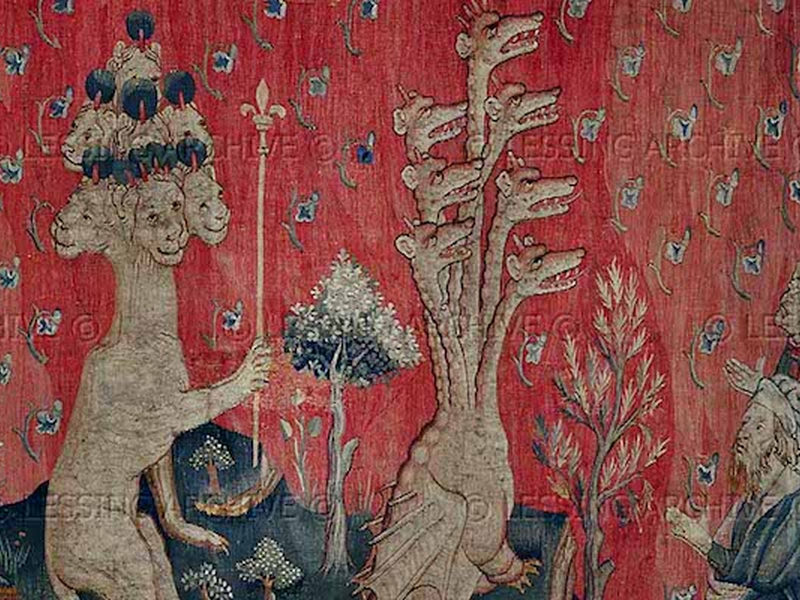
Flying scrolls. Red horses. Beasts coming out of the sea. Winged women. The list goes on. Apocalyptic literature in the Bible is like a cross between science fiction and Marvel comics. And the Bible has a fair bit of this sort of thing. Daniel sees visions in Babylon, Zechariah sees…

by Toby SumpterNovember 4, 2014

bhm-skyline-2
Theopolis News

New Name, New Look

Trinity House Institute has taken a new name, the Theopolis Institute. This striking new name expresses our unique vision and mission and captures the unified purpose behind all our specific programs and activities. We still have Bible, liturgy, and culture in our tagline. We still offer the same courses on…

by TheopolisNovember 4, 2014
istock_000012860926small
Atonement

Not Fearing the Devil

Adam Kotsko offers a socio-political variation on the Christus Victor atonement theory in his 2010 study, The Politics of Redemption: The Social Logic of Salvation . He does this by explaining "the devil" in terms of the Hegelian concept of "objective spirit," Geist . As Kotsko puts it, Geist "refers…

by Peter LeithartOctober 13, 2014
jez-timms-8muutamcwu4-unsplash
Leviticus

The Meaning of Sacrifice

Two factors keep Nahtali Meshel from discussing the meaning of sacrifice until late in his The "Grammar" of Sacrifice . The first has to do with the texts he draws from: "P says little about the meaning of its rituals" (174). The other has to do with the grammatical theory…

by Peter LeithartOctober 8, 2014
jez-timms-8muutamcwu4-unsplash
Leviticus

Praxemics

Chapter 5 of Naphtali Meshel's The "Grammar" of Sacrifice focuses on "praxemics," the physical actions of sacrificial ritual. Praxemes are constituted by six elements: an "atomact," an elementary physical act or gesture; an actor; an object that is acted up; a target for the action and often for the object…

by Peter LeithartOctober 6, 2014
markus-winkler-aid-xyrtlec-unsplash
Leviticus

Jugation and Hierarchy

Two chapters of Naphtali Meshel’s The “Grammar” of Sacrifice cover what he calls “jugation” and “hierarchies.” The first involves the addition of other materials to an animal offering. Jugates include wine, cereal, and oil that are added to the animals (zoemes) that are offered in sacrifice. Some jugates are coordinated…

by Peter LeithartOctober 1, 2014

Showing page 167 of 309

See all

Showing page 39 of 43

See all
Shakespeare

The Trap of Law

M arjorie Garber ( Shakespeare After All , 300–2) nicely captures the Pauline resonances of the trial scene in Merchant of Venice : “Shylock will provide a scale to weigh the pound of flesh, but not a surgeon to staunch the wound. He will, that is, provide the emblem of…

October 21, 2016

2 + 2 = Apples

I n a 1911 article on “The Ant Colony as Organism,” William Morton Wheeler argued that an ant colony was not only organism-like but an actual organism: “Like a cell or the person, it behaves as a unitary whole, maintaining its identity in space, resisting dissolution...neither a thing nor a…

October 21, 2016

Under Which Altar?

I an Boxall gets a lot right in his commentary on Revelation 6:9–11 (in his excellent The Revelation of Saint John , 113). He knows that the blood of a purification offering is poured out at the base of the altar, the very position where the souls of the martyrs…

October 21, 2016

View from Patmos

W riting in 1888, J. Theodore Bent described a visit to Patmos, during which he read the Apocalypse. One day, he recounted, “I stood by the sea looking south-west, I distinctly saw Thera, as it was anciently called, rising out of the sea. This island is now also called Thera…

October 21, 2016

Sons of the Right Hand

Bede ( Latin Commentaries on Revelation , 133-5) interprets the list of Israel's tribes in Revelation 7 by etymologizing the names. The list forms a sequence, from Judah to Benjamin. Judah means “confession or praise” and is placed first because “before the beginning of confession, no one attains the heights…

October 21, 2016

Notes on Usury

V iolent malice can be directed against God, the self, and the neighbor, Virgil tells Dante ( Inferno 11) as they huddle under the lid of one of the tombs in the sixth circle of hell. Virgil takes a moment to explain the moral theology that organizes hell. He explicates…

October 20, 2016

Showing page 241 of 2212

Browse by Category

In Medias Res

Your weekly digest for all things Theopolis.

Donate

Theopolis is nearly 100% donor-supported. Consider joining us on our mission.