Theopolis Logo

Writing

Explore our collection of theological essays, biblical studies, and reflections on faith and culture.

See all
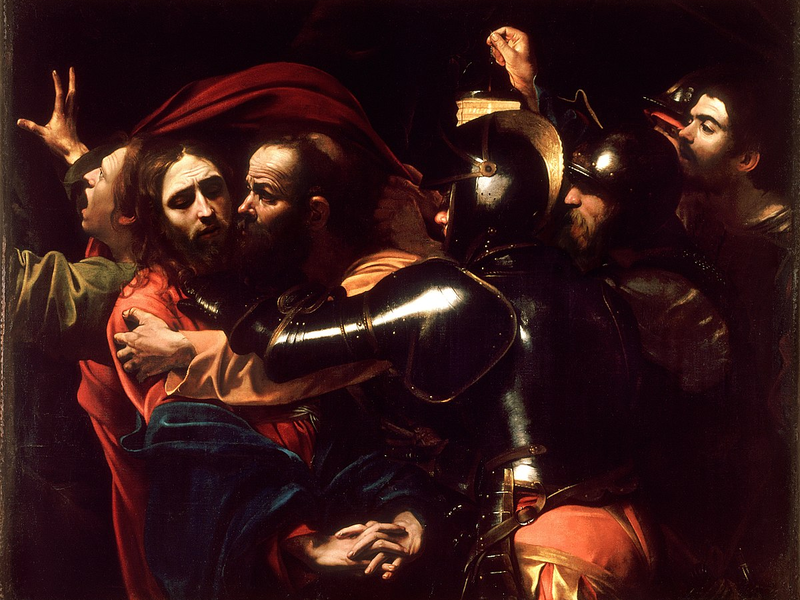
1200px-the_taking_of_christ-caravaggio_c-1602
John

Jesus, David, Adam: A Reading of John 18:1-11

John 18:1-11 appears on the surface to be a straightforward, if somewhat unusual, narrative of Jesus’ arrest by officers of the chief priests and Pharisees accompanied by an apparently large group of Roman soldiers, all of them led by the betrayer, Judas. But there is much more here than what…

by Ralph Allan SmithJuly 3, 2013

taylor-brandon-y8r0rtnriwm-unsplash
American Politics

Not So Special

Why is the US embroiled in the Middle East? There are two primary answers: Oil and Israel. Both are fairly intractable problems, the latter in significant part because of the unique convergence of theology and politics that has forged American policy in the region. Dispensationalists insist that we must bless…

by Peter LeithartJuly 1, 2013
screenshot-2023-09-20-at-11-21-06-am
Hermeneutics

Raven of the Gospel

There’s a common theme that arises in the study of theologians James B. Jordan and Peter Leithart. It is this: Context matters. Details matter. This is God’s Word. The details are not arbitrary “filler” hiding the kernel of truth in the husk of the text. The husk and the kernel…

by Troy GreeneJune 26, 2013
zoriana-stakhniv-puvghybgzn8-unsplash
Anxiety

Marriage and Betrayal

Perhaps the most fearful of all possibilities in the world is the possibility of betrayal on the part of someone who is in a “position of trust.” This, unfortunately, is the first block in what ought to be the foundation of every marriage in the world. Every woman has a…

by Richard BledsoeJune 24, 2013
markus-winkler-aid-xyrtlec-unsplash
Theopolis News

One More Week

Only one more week to register to the Trinity Term class on "How to Read the Bible," taught by James Jordan and Peter Leithart. Sign up today!

by Peter LeithartJune 24, 2013
korney-violin-b6ihcrsxnke-unsplash
Homosexuality

Reorienting our Sex Talk

The way we talk about the world matters. Our doctrine of creation tells us that words do not simply reflect reality. They also shape it and the way we inhabit it. Among the world’s many language groups, the Church is distinct. She is called to name things with Scriptural language,…

by Matthew MasonJune 19, 2013

Showing page 192 of 309

See all
See all
Literature

Living in fictions

In a discussion of King Lear , David Bevington suggests that Edgar saves his father at the cliffs of Dover by constructing a cosmology in which the gods are merciful and perform miracles: “Edgar stages his fiction in this particular way because he knows his father well enough to realize…

December 27, 2006
Literature

Tyranny of gratitude

Many of Shakespeare’s plays explore the moral and political consequences of ingratitude, but Shakespeare is also cognizant of the tyrannical uses to which the demand for gratitude may be put. Lear is certainly about ingratitude, the “marble-hearted fiend” that infects and distorts the monsters of ingratitude Goneril and Regan, as…

December 27, 2006
Theology

In praise of Pietism

Friedrich Oetinger was a leading German pietist intellectual and theologian, deeply interested in the science of his day. And critical of science and rationalist philosophy as well. Against thinkers who placed a primacy on reason, Oetinger argued that sheer logical clarity is insufficient “for living knowledge.” Living knowledge takes form…

December 26, 2006

Communion in humor

I tell a joke, and you get it. I include a veiled allusion to, say, Faust in a casual conversation; you catch it; and we exchange a mental wink. Humor provides a pathway into the hermeneutics of texts and communication. It also seems to provide a pathway into the sociology…

December 26, 2006

Keeping in mind

Gadamer notes the ambiguity of “keeping something in mind.” We sometimes hold something in our mental “gaze” in order to knock into it head on. We watch it carefully until we can grab it. But keeping in mind can also be a form of forgetfulness. We might also keep something…

December 26, 2006
History

Mysticism and culture

Gadamer notes that the concept of Bildung (culture) has its origins in medieval and baroque mysticism, and continues to carry a mystical connotation when it begins to be used of the cultivated humanness. Von Humboldt, for instance, says “when in our language we say Bildung, we mean something both higher…

December 26, 2006

Showing page 1747 of 2212

Browse by Category

In Medias Res

Your weekly digest for all things Theopolis.

Donate

Theopolis is nearly 100% donor-supported. Consider joining us on our mission.