Theopolis Logo

Writing

Explore our collection of theological essays, biblical studies, and reflections on faith and culture.

See all
31-03-0213
Hermeneutics

Apocalyptic Eyes

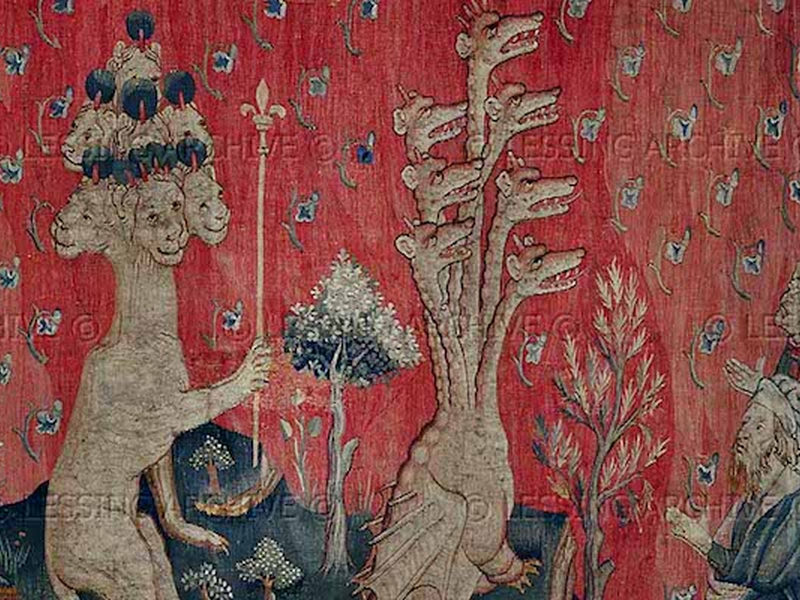
Flying scrolls. Red horses. Beasts coming out of the sea. Winged women. The list goes on. Apocalyptic literature in the Bible is like a cross between science fiction and Marvel comics. And the Bible has a fair bit of this sort of thing. Daniel sees visions in Babylon, Zechariah sees…

by Toby SumpterNovember 4, 2014

bhm-skyline-2
Theopolis News

New Name, New Look

Trinity House Institute has taken a new name, the Theopolis Institute. This striking new name expresses our unique vision and mission and captures the unified purpose behind all our specific programs and activities. We still have Bible, liturgy, and culture in our tagline. We still offer the same courses on…

by TheopolisNovember 4, 2014
istock_000012860926small
Atonement

Not Fearing the Devil

Adam Kotsko offers a socio-political variation on the Christus Victor atonement theory in his 2010 study, The Politics of Redemption: The Social Logic of Salvation . He does this by explaining "the devil" in terms of the Hegelian concept of "objective spirit," Geist . As Kotsko puts it, Geist "refers…

by Peter LeithartOctober 13, 2014
jez-timms-8muutamcwu4-unsplash
Leviticus

The Meaning of Sacrifice

Two factors keep Nahtali Meshel from discussing the meaning of sacrifice until late in his The "Grammar" of Sacrifice . The first has to do with the texts he draws from: "P says little about the meaning of its rituals" (174). The other has to do with the grammatical theory…

by Peter LeithartOctober 8, 2014
jez-timms-8muutamcwu4-unsplash
Leviticus

Praxemics

Chapter 5 of Naphtali Meshel's The "Grammar" of Sacrifice focuses on "praxemics," the physical actions of sacrificial ritual. Praxemes are constituted by six elements: an "atomact," an elementary physical act or gesture; an actor; an object that is acted up; a target for the action and often for the object…

by Peter LeithartOctober 6, 2014
markus-winkler-aid-xyrtlec-unsplash
Leviticus

Jugation and Hierarchy

Two chapters of Naphtali Meshel’s The “Grammar” of Sacrifice cover what he calls “jugation” and “hierarchies.” The first involves the addition of other materials to an animal offering. Jugates include wine, cereal, and oil that are added to the animals (zoemes) that are offered in sacrifice. Some jugates are coordinated…

by Peter LeithartOctober 1, 2014

Showing page 167 of 309

See all
See all

Just Quitting

One day, Henry just quit. He had soldered wires for he didn’t know what in the back room of the Magnavox plant for thirteen years, and enough was enough. His eyes itched, the watery coffee from the machine was bitter, the pinups in the maintenance room never changed, and he…

November 24, 2005

Sermon Outline, First Advent

INTRODUCTION When Christians speak of the “holy family,” they normally have in mind Jesus’ “nuclear family,” Joseph and Mary and his siblings. But Matthew begins with Jesus’ larger family, tracing his descent from Abraham and David. THE TEXT “The book of the genealogy of Jesus Christ, the Son of David,…

November 24, 2005
Philosophy

A word for Scotus

Jonathan McIntosh, a student at the University of Dallas, challenges Vanhoozer’s (and Radical Orthodoxy’s) reading of Scotus that I summarized in a previous post, arguing that Scotus does not deny analogy. He has a point. The following discussion of Scotus’ understanding of the univocity of being is taken largely from…

November 24, 2005
History

History of the Sentence

Ian Robinson’s The Establishment of Modern English Prose in the Reformation and the Enlightenment (Cambridge, 1998) is a fascinating discussion of the history of the sentence and of English punctuation, and, despite its heavy-handed title, is a delight to read. Does the sentence have a history? Robinson shows that it…

November 24, 2005
Philosophy

Postmodern Theology

Kevin Vanhoozer has done a great service by editing the Cambridge Companion to Postmodern Theology (2003). Though the authors of the various articles differ among themselves, they are all well-informed about postmodern thought and culture and are making an effort to respond from the stance of Christian theology. In his…

November 24, 2005
Theology

Images of God

In the Summa theologiae (1.1.9), Thomas argues that “it is more fitting that divine matters should be conveyed under the figure of lowly bodies than of noble bodies.” Rocks are better figures for God than ideal forms. Thomas gives three reasons for this preference: First, if “lowly” bodies provide the…

November 24, 2005

Showing page 1921 of 2212

Browse by Category

In Medias Res

Your weekly digest for all things Theopolis.

Donate

Theopolis is nearly 100% donor-supported. Consider joining us on our mission.