Theopolis Logo

Writing

Explore our collection of theological essays, biblical studies, and reflections on faith and culture.

See all
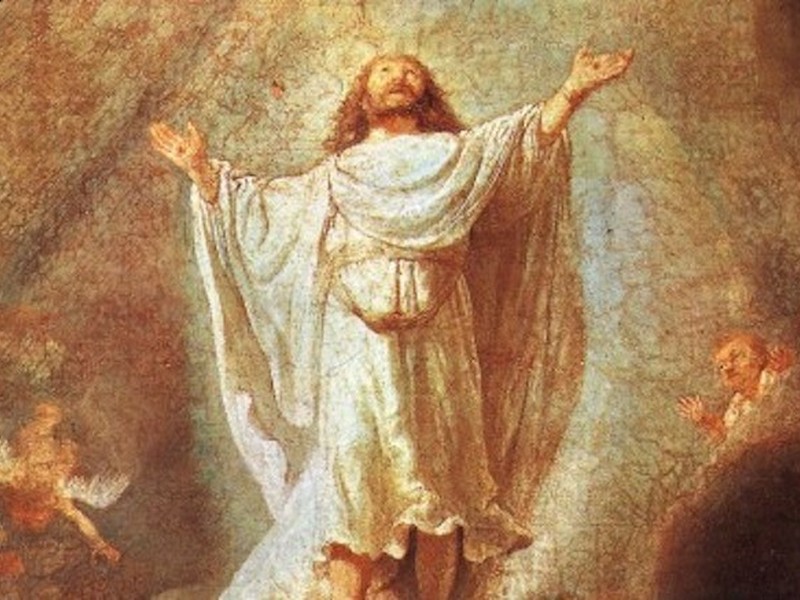
ascension-rembrandt
Ascension

Ascension and Eucharist

It’s a simple point, obviously biblical and creedal: Jesus of Nazareth ascended into heaven as the God-man, and He remains the God-man in all his specific particularity from now to the end. He is Jesus the Christ, the same yesterday, today, and forever. Duh! But Douglas Farrow shows in his…

by Peter LeithartMay 27, 2013

markus-winkler-aid-xyrtlec-unsplash
Theopolis News

Register for Trinity Term Class

You can now register for the very first Trinity House intensive class, "How to Read the Bible," taught by James Jordan and Peter Leithart. There will be a kick-off welcome for students on the evening of Sunday, August 25, and the class will be held at Trinity Presbyterian Church ,…

by Peter LeithartMay 22, 2013
chris-bair-ndczc5739ck-unsplash
Deuteronomy

Deuteronomy as Narrative-Law

This series of essays will address the food laws in Deuteronomy 14:1-21. To some, this may seem like a work of supererogation. After all, why should a Christian be interested in outdated “laws” from the book of Deuteronomy? I hope to show that meditation on this portion of Scripture is…

by Ralph Allan SmithMay 20, 2013
venice-la-distruzione-del-tempio-di-gerusalemme-francesco-hayez-gallerie-accademia-venice
Isaiah

Apocalyptic Patience

This essay was first published in 2011 in Credenda/Agenda . Isaiah 24 begins the section of Isaiah known as the “little apocalypse.” It’s a good name for this chapter. It’s a text of terror. The world is coming apart at the seams. The earth is emptied; and not only that,…

by Peter LeithartMay 15, 2013
sixteen-miles-out-al48tflf4e8-unsplash
Biblical Studies

Anti Anti-Supercessionism

This article was first published in 2010 in Credenda/Agenda . In recent years, mainstream theology has begun to recognize the disaster that followed from the Marcionism of classical liberalism. R. Kendall Soulen is a leading figure in efforts to restore the importance of the Old Testament to Christian theology. In…

by Peter LeithartMay 13, 2013
skyler-gerald-akljfvj5ym4-unsplash
Deuteronomy

Law and History: How to Read the Law of Moses

This is the last in a series of studies on Deuteronomy 22:30-23:8. In this series, I have offered an interpretation of Deuteronomy 22:30-23:8 which suggests that a simple surface reading of the text does not do justice to Moses’ or God’s intention, that the larger historical and legal context in…

by Ralph Allan SmithMay 8, 2013

Showing page 194 of 309

See all
See all
History

“Ecumenical History”

In a 1985 Presidential address to the American Historical Society, William H. McNeill has advocated a form of historical writing that he calls ?mythistory,?Ewhich, in McNeill?s view, should take the form of ?ecumenical history.?EScientific models of history, McNeill argues, are no longer persuasive. Indeed, not even science could live up…

January 5, 2005

Liturgy and Mere Symbolism

Since we adopted a new liturgy in Advent, a number of church members have, quite reasonably, raised the question about our identity. What kind of church did we just become? The very fact that changes in our liturgical practices can have this effect is intriguing. Many in the modern world,…

January 2, 2005

Eucharistic Meditation, January 2

Luke 22:19: And Jesus took bread, gave thanks and broke it, and gave it to them, saying, ?This is My body which is given for you. Do this in remembrance of Me.?E In this morning?s sermon, we considered how the liturgical changes that we have made are rooted in Scripture.…

January 2, 2005

Exhortation, January 2

God is a communicative being. He doesn?t just use words; He is the Word. He made us in His image and likeness, as communicative beings. Even if we keep our mouths firmly shut, we cannot avoid saying something; we cannot not communicate. Suppose you want to spend an airplane flight…

January 2, 2005

Sermon Outline, January 9

INTRODUCTION Solomon?s marriages led him into idolatry, but the consequences were not confined to Solomon?s own life. Because of his sins, Yahweh raised up adversaries to oppose him and the entire kingdom was torn in pieces. The sins of the king ?Ethe sins of any leaders ?Ehave consequences for the…

January 2, 2005

Showing page 2021 of 2212

Browse by Category

In Medias Res

Your weekly digest for all things Theopolis.

Donate

Theopolis is nearly 100% donor-supported. Consider joining us on our mission.









