Theopolis Logo

Writing

Explore our collection of theological essays, biblical studies, and reflections on faith and culture.

See all
g-_k-_chesterton_at_work
Books

Interpreting "The Man Who Was Thursday"

I just finished re-reading G. K. Chesterton’s The Man Who Was Thursday . I have in the past had the temerity to say that I believe it to be the best novel of the 20th century. Be that as it may, I still maintain that it is at least one…

by Richard BledsoeJanuary 7, 2022
10779-istockgetty-images-plusredletterw
Hebrews

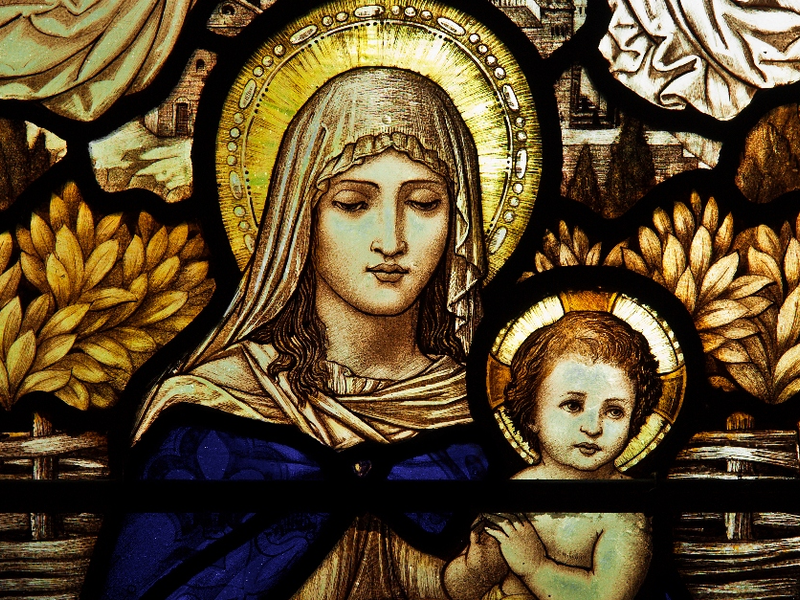
The Universality of Mary’s Wound

And Simeon blessed them and said to Mary his mother, “Behold, this child is set for the fall and rising of many in Israel, and for a sign that is spoken against and a sword will pierce through your own soul also, that thoughts out of many hearts may be…

by Garrett SoucyJanuary 4, 2022
heartierhymnals-stockimage
Music

An Argument for Heartier Hymnals

I was inspired to write this article after reading John Ahern’s The Case for Shorter Hymnals first published on Theopolis Institute’s website on November 16, 2021. Mr. Ahern and I are writing with different audiences and emphases in mind. I am thankful we both share a mutual desire to see…

by Jarrod RicheyDecember 30, 2021
tim-marshall-k2u71wv2ei4-unsplash-1
Biblical Studies

Image of God

If you’ve spent any time in the social-media galaxy of Christian cultural commentators, you have almost definitely run across the Latin phrase Imago Dei . It means image of God . Why they usually say it in Latin, I couldn’t tell you. We saw it in the wake of the…

by Daniel HoffmanDecember 28, 2021
annunciation
Advent

He Comes to Make His Blessings Known: "Son of David" and "Son of Abraham" in Matthew 1:1

The Gospel of Matthew—indeed, the New Testament—begins with a list of names, and that list of names is introduced by this heading: “The book of the generations of Jesus Christ, the son of David, the son of Abraham.” Why start like this? Why “the son of David” and “the son…

by Josh JensenDecember 23, 2021
49980-nicolas_poussin_-_the_judgment_of_solomon_-_wga18330-800w-tn
Biblical Studies

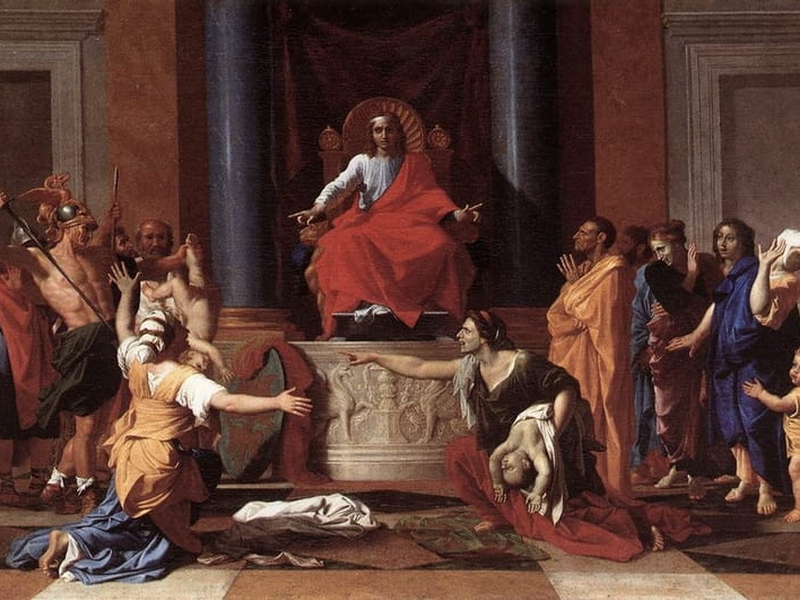
On Not Needing to Cut the Baby in Half

A blade is raised. A child wails. But the brow under the crown is untroubled. Solomon knows that the raising of the sword will reveal the true parent and the identity of the son. But how did he know this? Abraham’s willingness to sacrifice Isaac certainly bears some of the…

by Jonathan WhiteDecember 21, 2021

Showing page 48 of 309

See all
See all

David and Esau

Mark Biddle of the Baptist Theological Seminary in Richmond examines some of the intertextual connections between 1 Sam 25 and the Jacob narratives in Genesis ( JBL 121/4 [2002]). He discovers analogies between Nabal and Laban, Saul and Laban, and of course Nabal and Saul. Abigail is comparable to Rebekah…

June 16, 2004
History

Luther und Melanchthon

Timothy Wengert’s article in the Lutherjahrbuch 66 (1999) offers an analysis of the controverted relationship between Luther and Melanchthon. Wengert puts aside psychological assessments of the relationship, and does not focus on theological similarities and differences, which might have the effect of reducing the two men to their ideas. Instead,…

June 16, 2004

Ruth and Judges

In a 1989 article in the WTJ , Warren Gage, now of Knox Theological Seminary, explores the connections between the Gibeah incident recorded at the end of Judges and the story of Ruth. He argues that there are literary and thematic connections and contrasts between the two narratives. As usual,…

June 16, 2004
Literature

Hamlet

Edward Oakes offers a fascinating review of several new books on Shakespeare in the June/July issue of First Things . He gives this summary of the recent argument of Stephen Greenblatt concerning Shakespeare’s views on Purgatory: “Shakespeare’s choice of Wittenberg as the palce where Hamlet spent time as a student…

June 16, 2004
Media

In Praise of Censorship

David Bentley Hart offers a lively and wide-ranging defense of censorship in an article in the current issue of First Things . He savages the standard arguments against censorship: the slippery-slope argument (Hart: “Apparently, as a society, we are poised precariously upon the narrowest precipice of a sheer escarpment as…

June 16, 2004
Literature

Latin Limericks

According to the NB column in the May 28 TLS , the first recorded example of a limerick meter and rhyme occurs in a 13th-century prayer: Si vitiorum meorum evacuatio Concupiscentiae et libidinis exterminatio, Caritatis et patientiae, Humilitatis et obedientiae, Omniumque virtutum augmentatio . As NB goes on to say,…

June 16, 2004

Showing page 2083 of 2212

Browse by Category

In Medias Res

Your weekly digest for all things Theopolis.

Donate

Theopolis is nearly 100% donor-supported. Consider joining us on our mission.