Theopolis Logo

Writing

Explore our collection of theological essays, biblical studies, and reflections on faith and culture.

See all
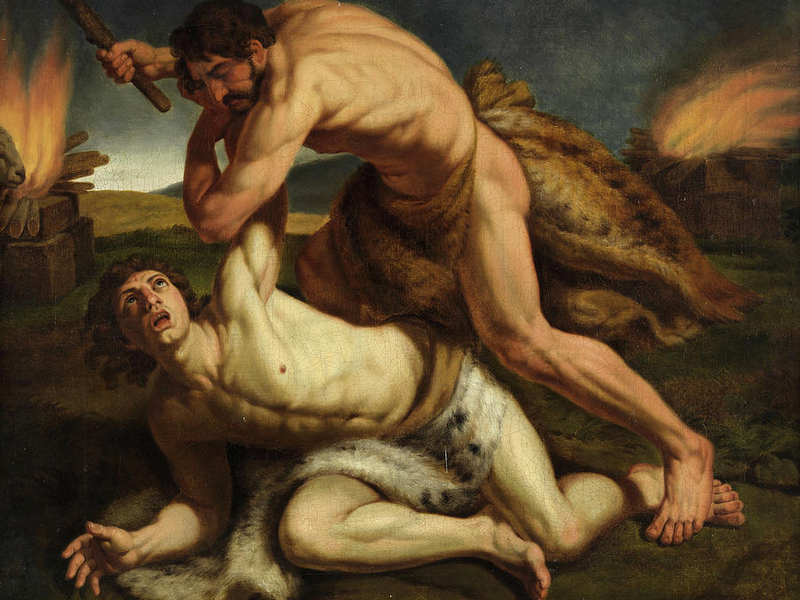
cain-killing-abel-unknown-19th-century
Biblical Theology

The Gospel of Genealogy

Genesis 3 ends on a decisive, and decisively negative, note. Yahweh “drove the man out” of the garden, and, in addition, “at the east of the garden of Eden He stationed the cherubim, and the flaming sword which turned every direction, to guard the way to the tree of life.”…

by Peter LeithartJuly 15, 2014

screen-shot-2017-08-16-at-11-40-48
Books

Catholic Novelist

When she died in 2005 at the age of 72, Anna Haycraft, the author who published under the name Alice Thomas Ellis, was a celebrated writer in Great Britain. While working at Duckworth Publishers(which her husband owned), she produced a dozen novels, a collection of short stories, a cookbook, volumes…

by Peter LeithartJuly 9, 2014
523501ldsdl
History

Postmodernism and Me

Some have suggested recently that my "project" is postmodern. To clarify my views on postmodernism, I'm re-posting something I wrote in 2005, with a few modifications. For a fuller discussion, you can check out my Solomon among the Postmoderns (Canon, 2008). First, it is helpful to distinguish, as many writers…

by Peter LeithartJuly 8, 2014
306571rgsdl
Ezekiel

Holy City

Calling Jerusalem the "holy city" comes so naturally to Christians that it comes as something of a surprise to realize how infrequently the phrase is used in Scripture. Not only is Jerusalem rarely called holy, but in the Old Testament this classification is found only in texts that refer to…

by Peter LeithartJuly 3, 2014
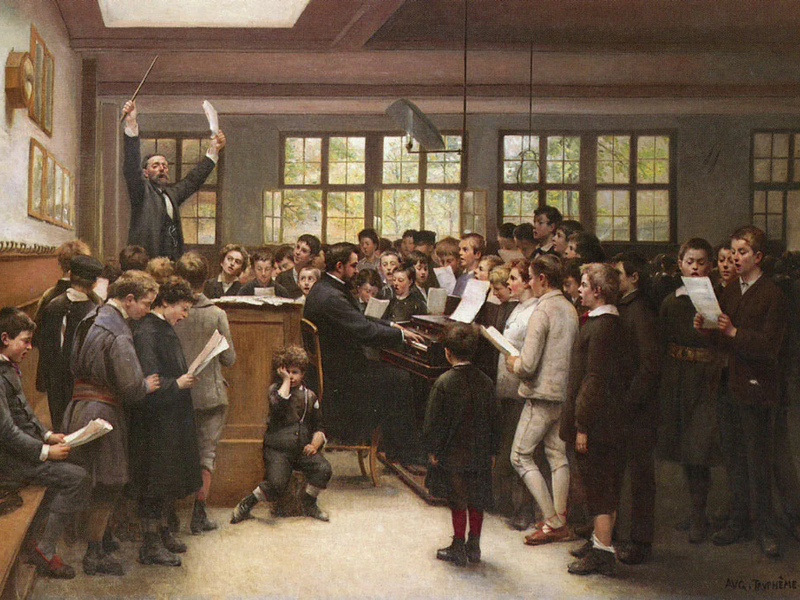
the-choir-lesson-auguste-joseph-trupheme-oil-painting
How to Worship

The Lame Can't Dance

Asking why the church doesn’t sing hymns or even why men don’t sing in church is a bit like lamenting over the lame man who can’t waltz on the dance floor. While it is a valid question, the more immediate question would seem to be, “why doesn’t the lame man…

by Jarrod RicheyJune 30, 2014
ben-white-w8qqn1pmqh0-unsplash
Heresy

Heretics in the Latter Days: The Theme of 1 Timothy

The theme of 1 Timothy is the distinction between the true children in the Household of God and false children who really belong to the household of Satan. This is seen in the fact that in the chiastic structure of the Epistle, heresy is the subject in the center (…

by Joseph NorrisJune 18, 2014

Showing page 172 of 309

See all
See all

Stuhlmacher on Hilasterion (Rom. 3:25)

Peter Stuhlmacher interprets HILASTERION in Rom 3:25 as the KAPPORET of the ark of the covenant, the place where atonement is made. From the cross on, the place of atonement was no longer in the temple but in Jesus. He links this with the critique of the temple and temple…

January 25, 2004

Chiasm in Romans 3:27-30

There looks to be some chiastic action going on in Romans 3:27-30: A. Where is boasting? Excluded B. By law of works? C. No: Law of faith C. justification is by faith B. not by works of law (reversing word order of previous verse) A. God is God of Jews…

January 24, 2004

Romans 3:21-31

Most commentaries I’ve examined assume that Paul’s discussion of the work of Jesus in Romans 3:21-31 centers in the cross. The reference to blood and to propitiation (or propitiating sacrifice) in v 25 justifies this, but this doesn’t mean that Paul’s focus is exclusively on the cross. Several things support…

January 24, 2004

Paul on God’s Righteousness

Romans 3:21 begins a section where Paul expounds, for the first time in Romans, on the revelation of the righteousness of God. One of the ways to characterize current debates about this passage, and about the righteousness of God and justification in general, is to ask whether this is about…

January 22, 2004

Paul on God’s Righteousness

Romans 3:21 begins a section where Paul expounds, for the first time in Romans, on the revelation of the righteousness of God. One of the ways to characterize current debates about this passage, and about the righteousness of God and justification in general, is to ask whether this is about…

January 22, 2004
Literature

Kelly on Tragedy

Henry Ansgar Kelly’s Ideas and Forms of Tragedy from Aristotle to the Middle Ages (Cambridge, 1993) is a careful and useful study of the use of the word “tragedy” from the ancients through the 14th century. He narrowly focuses on the uses of the word-group itself, and shows that the…

January 22, 2004

Showing page 2133 of 2212

Browse by Category

In Medias Res

Your weekly digest for all things Theopolis.

Donate

Theopolis is nearly 100% donor-supported. Consider joining us on our mission.