Theopolis Logo

Writing

Explore our collection of theological essays, biblical studies, and reflections on faith and culture.

See all
nativity
Advent

The Rough Places Plain

“What’s the fastest route” he asks me as we quickly come to a stop behind a sea of red brake lights. I pull out my phone and map all the options. Every way is red with traffic backed up. Deep down I must be a small town girl because traffic…

by Lindsey TollefsonDecember 24, 2015

markus-winkler-aid-xyrtlec-unsplash
Theopolis News

2015 Letter from the President

Dear Friend of Theopolis, I have signed a stack of documents in the years since we started Theopolis, but my heart jumped a few beats as I looked at the thick lease contract. “This is real,” I thought. “This makes it really real.” Theopolis has been real for nearly three…

by Brian MoatsDecember 23, 2015
trinity-1-3
Books

Headship of Christ and Queens

In the Edenic world of Perelandra, from C.S. Lewis’s Space Trilogy, Ransom notices something about how the Green Lady treats the animals: [1] “There was in her face an authority, in her caresses a condescension, [2] which by taking seriously the inferiority of her adorers made them somehow less inferior…

by Remy WilkinsDecember 22, 2015
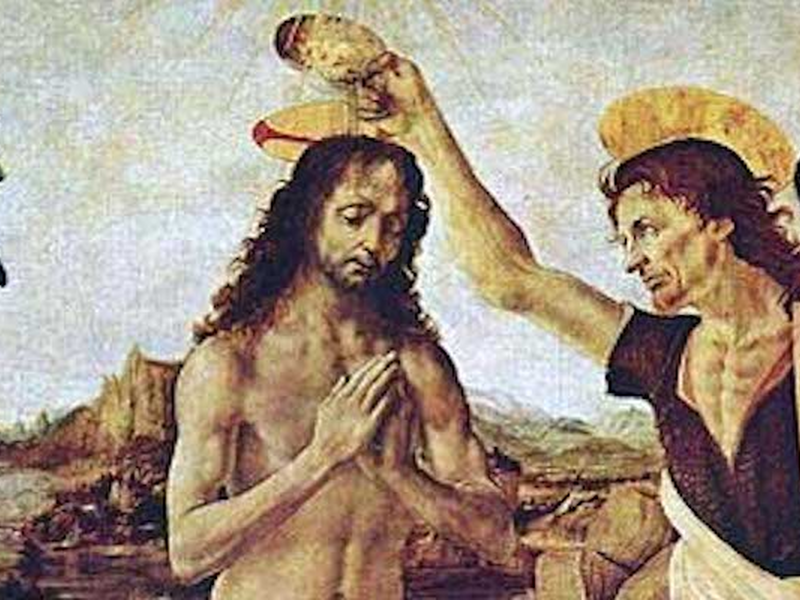
baptism-of-christ
Baptism

Embracing Embodiment: Baptism and the Nuptial Meaning of the Body

In my previous two articles, I argued for the significance of the fact that baptism addresses our bodies in their objectivity. In the body, the self has an existence that runs deeper than our consciousness, decision, self-expression, and action. In washing our passive bodies, baptism seals us with an anticipatory…

by Alastair RobertsDecember 17, 2015
holy-family
Advent

A Child Is Born

Judah is a sinful nation, weighed down with iniquity. They are not the seed of Abraham, but the seed of iniquity. Their worship is abominable to Yahweh, because their hands are covered with innocent blood. They have not done good, or sought justice, or reproved the ruthless, or defended the…

by Peter LeithartDecember 15, 2015
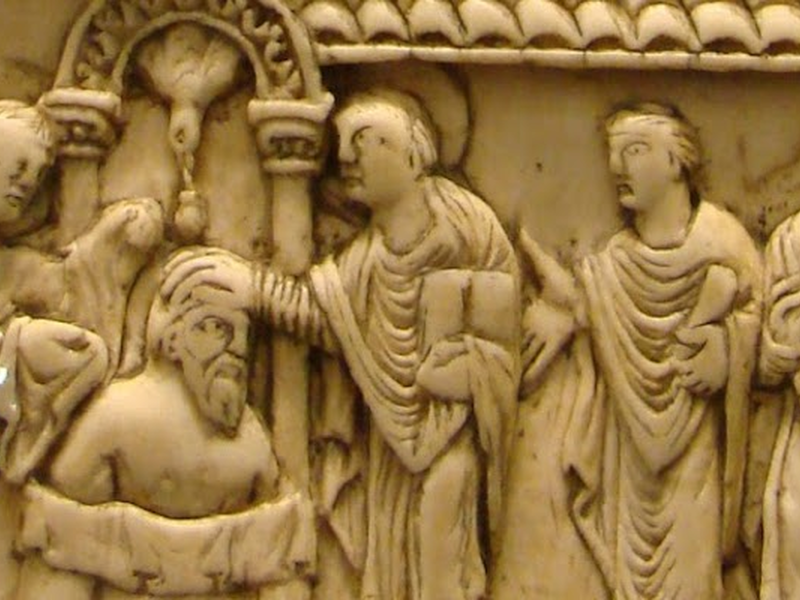
baptism-2
Baptism

Presenting Limbs and Organs: Baptism and Sacrificial Ethics

Although we tend to define ourselves by our subjectivity —our perceptions, thoughts, feelings, decisions, actions—we are frequently forgetful of the objectivity of the self as body, the reality of the self that underlies and precedes all of our subjectivity. The body is the site of our ‘givenness’, where we are…

by Alastair RobertsDecember 10, 2015

Showing page 139 of 309

See all
See all
Literature

Ibsen

Ibsen, Steiner argues, did not write tragedies. Ibsen wrote “dramatic rhetoric” calling society to reform. For real tragedy, there is no such “solution” to be found, there is no remedy, except destructive sacrifice and perhaps a deus ex machina. From this angle, tragedy is perhaps among the STOICHEIA that prepared…

January 7, 2004
Literature

More Quotations from Steiner

Some more quotations from Steiner’s Death of Tragedy : “We cannot understand the romantic movement if we do not perceive at the heart of it the impulse toward drama . . . . The romantic mode is neither an ordering nor a criticism of life; it is a dramatization. And…

January 7, 2004
Theology

NT Wright’s Rutherford House Lecture

Some thoughts on NT Wright’s Rutherford House Lecture, August 2003. I have little disagreement with much of the lecture, and it clarified a number of things for me. Wright’s views on justification, however, continue to puzzle me at a number of points. Here’s an attempt to clarify my (or NTW’s)…

January 7, 2004
Literature

European Drama

Steiner notes that, following the Renaissance, European drama operated under the shadows of neo-classical and Elizabethan dramatic practice, the former “closed” and rigidly adhering to Aristotelian criteria, the other open and experimental. He discusses the theory of Thomas Rymer (a neo-classicist) at some length, concluding that the controversies that Rymer…

January 6, 2004
Literature

Shakespearean Difference

George Steiner in his Death of Tragedy describes the “Shakespearean difference” as mainly due to Shakespeare’s avoidance of fascination with Hellenic models: “The neo-classic view [which rigidified Aristotelian conceptions of tragedy] expresses a growing perception of the miracle of Greek drama. This perception was fragmentary. There were few translations of…

January 6, 2004

Showing page 2141 of 2212

Browse by Category

In Medias Res

Your weekly digest for all things Theopolis.

Donate

Theopolis is nearly 100% donor-supported. Consider joining us on our mission.