Theopolis Logo

Writing

Explore our collection of theological essays, biblical studies, and reflections on faith and culture.

See all
ross-sneddon-zstkmnvmwsq-unsplash-2
Acts

No One Dared Join Them

And through the hands of the apostles many signs and wonders were done among the people. And they were all with one accord in Solomon's Porch. Yet none of the rest dared join them, but the people esteemed them highly. Acts 5:12-13 When Grandma needed healing, her children knew the…

by Tim NicholsAugust 31, 2021

james-coleman-heksmrnfajk-unsplash
How to Worship

Why Sacraments?

Like certain kinds of music, the unchanging rhythm of Aquinas's Summa gets into your bones. Read a few sections and it begins to run through your head. You start drumming your fingers, humming, swaying gently to the rhythm of Videtur-Sed Contra-Responsio, Videtur-Sed Contra-Responsio, “It seems-On the contrary-I answer.” The only…

by Peter LeithartAugust 26, 2021
alex-guillaume-2k4du3r1giy-unsplash
Biblical Chronology

The Embarrassment of Biblical Chronology

And Arpachshad lived thirty-five years, and became the father of Shelah . . . And Shelah lived thirty years, and became the father of Eber . . . and Eber lived thirty-four years and became the father of Peleg . . . and Peleg lived thirty years, and became the…

by James B. JordanAugust 24, 2021
screen-shot-2021-08-19-at-1-03-26-pm
Hermeneutics

The Fall of Satan

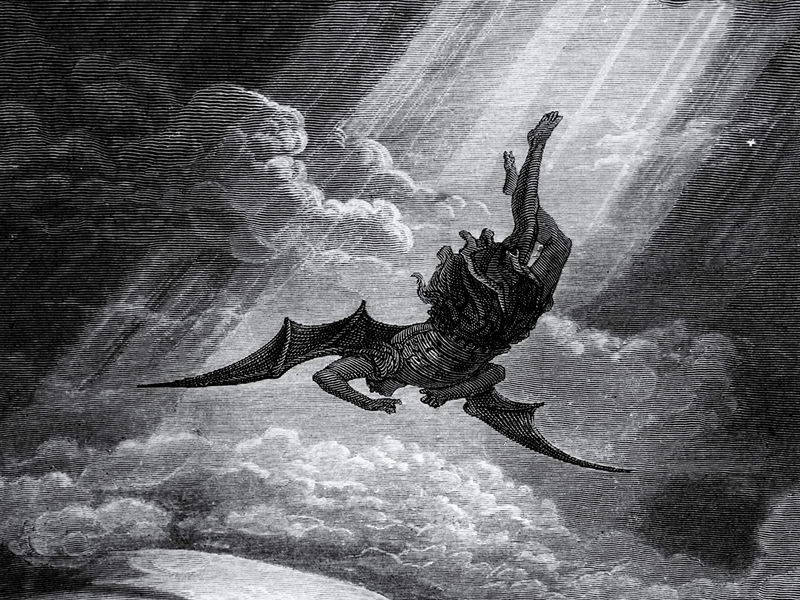
Of course, the title should be something like, “The Fall of the Angel Who Came to be Satan,” but that and other more accurate titles are too cumbersome. The question is: who is Satan, and when and how did he become “Satan” (Adversary, Accuser) and the “devil” (slanderer)? By my…

by Ralph Allan SmithAugust 19, 2021
harshit-sharma-wertrhhtz4s-unsplash
Baptism

Baptismal Rain and the Feast of Booths

In The Oddness of the Feast of Booths , we saw that the Feast of Booths is a commemoration of the first encampment of Israel at Sukkoth (Booths) in Exodus 12:37, almost certainly the first celebration of the week of Unleavened Bread after the first Passover. The Feast of Booths…

by James B. JordanAugust 17, 2021
screen-shot-2021-08-12-at-2-57-54-pm
Proverbs

An Antidote for Yuppie Postmillennialism

This piece was originally published in 1989. 1. The Blessed Hope "Looking for the blessed hope and the appearing of the glory of our great God and Savior, Christ Jesus." Titus 2:13 I was recently asked how I as a postmillennialist would preach on "The Blessed Hope." This is often…

by James B. JordanAugust 12, 2021

Showing page 52 of 309

See all
See all
Literature

Ibsen

Ibsen, Steiner argues, did not write tragedies. Ibsen wrote “dramatic rhetoric” calling society to reform. For real tragedy, there is no such “solution” to be found, there is no remedy, except destructive sacrifice and perhaps a deus ex machina. From this angle, tragedy is perhaps among the STOICHEIA that prepared…

January 7, 2004
Literature

More Quotations from Steiner

Some more quotations from Steiner’s Death of Tragedy : “We cannot understand the romantic movement if we do not perceive at the heart of it the impulse toward drama . . . . The romantic mode is neither an ordering nor a criticism of life; it is a dramatization. And…

January 7, 2004
Theology

NT Wright’s Rutherford House Lecture

Some thoughts on NT Wright’s Rutherford House Lecture, August 2003. I have little disagreement with much of the lecture, and it clarified a number of things for me. Wright’s views on justification, however, continue to puzzle me at a number of points. Here’s an attempt to clarify my (or NTW’s)…

January 7, 2004
Theology

NT Wright’s Rutherford House Lecture

Some thoughts on NT Wright’s Rutherford House Lecture, August 2003. I have little disagreement with much of the lecture, and it clarified a number of things for me. Wright’s views on justification, however, continue to puzzle me at a number of points. Here’s an attempt to clarify my (or NTW’s)…

January 7, 2004
Literature

European Drama

Steiner notes that, following the Renaissance, European drama operated under the shadows of neo-classical and Elizabethan dramatic practice, the former “closed” and rigidly adhering to Aristotelian criteria, the other open and experimental. He discusses the theory of Thomas Rymer (a neo-classicist) at some length, concluding that the controversies that Rymer…

January 6, 2004
Literature

Shakespearean Difference

George Steiner in his Death of Tragedy describes the “Shakespearean difference” as mainly due to Shakespeare’s avoidance of fascination with Hellenic models: “The neo-classic view [which rigidified Aristotelian conceptions of tragedy] expresses a growing perception of the miracle of Greek drama. This perception was fragmentary. There were few translations of…

January 6, 2004

Showing page 2141 of 2212

Browse by Category

In Medias Res

Your weekly digest for all things Theopolis.

Donate

Theopolis is nearly 100% donor-supported. Consider joining us on our mission.