Theopolis Logo

Writing

Explore our collection of theological essays, biblical studies, and reflections on faith and culture.

See all
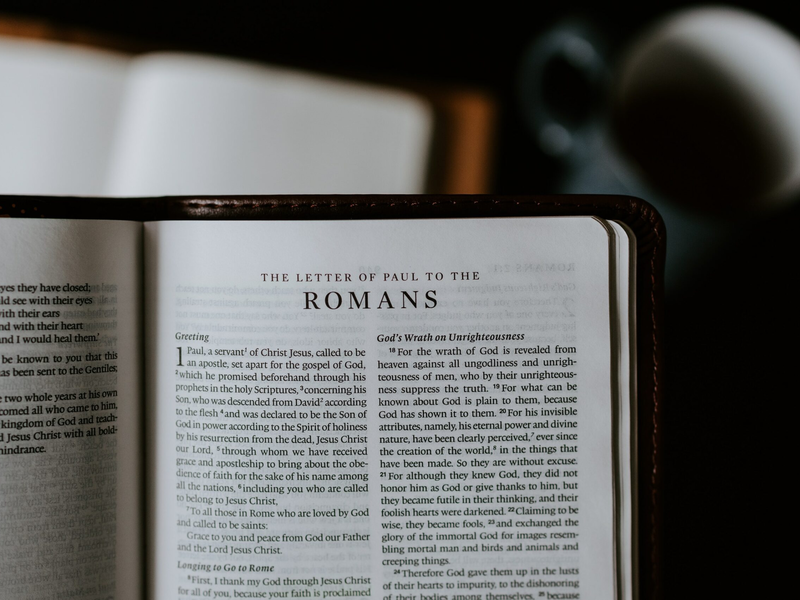
kelly-sikkema-gpoh17dxqdm-unsplash
Romans

A Pathway into Romans, Addendum

An addendum to the earlier post on Romans. In my first essay, I pointed out how the role of the sin of Joseph’s brothers in bringing about Joseph’s exaltation in Egypt, and the resulting salvation of the world from famine, might show us and explanation to some of the distinctive…

by Mark HorneMarch 7, 2013

kelly-sikkema-gpoh17dxqdm-unsplash
Romans

A Pathway into Romans

When Paul wrote to the Romans, he was obviously writing a missionary support letter of a sort. One can read Romans 1.15 and then jump into 15.23 (“[S]ince I no longer have any room. . . .) without losing virtually any coherence. Yet into this letter he “dropped,” as it…

by Mark HorneMarch 5, 2013
preston-goff-xncifslw0jw-unsplash
Biblical Studies

Mapping of Time

The Westminster Confession says that each passage has one meaning , not many, and that gets picked up on by lots of people who are suspicious of and do not like typological readings of Scripture. I will defer to wiser and more learned heads than mine as to exactly what…

by Richard BledsoeMarch 1, 2013
kiwihug-l4gw27xzn1i-unsplash
John

How Jesus Saved the World | (Part 2)

By arresting, torturing, and killing Jesus, the authorities thought that they were securing well being and peace again in their society by means of the tried and true method of a single-victim scapegoat. Everyone’s thirst for violence will be satisfied and we can get on with the business of everyday…

by Jeff MeyersFebruary 28, 2013
lea-v-z2ied5ktd-8-unsplash
Ecclesiology

A Vision of Social Harmony

This is the second in a series of essays on "Continuing the Reformation." In his important though sadly unavailable book, Calvin's Doctrine of the Church (Brill, 1970), Benjamin Charles Milner argues persuasively that in Calvin's view God's perfect order for His creation, an order that was to grow and develop…

by James B. JordanFebruary 25, 2013
markus-winkler-aid-xyrtlec-unsplash
Theopolis News

Jordan Lectures

Trinity House Fellow James Jordan recently gave a series of lectures in London on how to read the Bible. They are available online at NorthLondonChurch.org .

by Peter LeithartFebruary 24, 2013

Showing page 198 of 309

See all
See all
History

Smokin’ like a Christian

English fairs in earlier centuries displayed wares and displays from all over the world. At one there was an animal described as “a noble creature, which much resembled a Wild Hairy man” whose main skill was to doff his hat and show “his respects to the Company, and smoaks a…

October 14, 2006
Literature

The Moral of Henry V

Much of the moral and political import of Shakespeare’s Henry V is left to the audience’s or reader’s judgment. Is Henry a “pig” or is he the mirror of Christian kings? Is his invasion of France fair or foul? Shakespeare doesn’t show his hand, or not much; and one is…

October 14, 2006
Literature

The climax of Coriolanus

George Barnam notes the careful structure of Act 5 of Shakespeare’s Coriolanus: “Shakespeare had used this scene structurally to build the tension toward the climactic moment when Volumnia should appeal to her son and prevail. Three appeals are made to Marcius, and Shakespeare’s presentation of them matches in structure the…

October 14, 2006
History

Sports and the sacred

A reader wrote to respond to my suggestion that high culture is “sacred” and pop culture “profane,” citing the example of sports. Here’s my response: A football game often is a quasi-religious experience, but I’m not sure we use the same language to describe it. If someone slashed da Vinci’s…

October 14, 2006
Literature

Desacralized drama

In their “cultural history” of English drama, Simon Shepherd and Peter Womack summarize the argument of Glynne Wickham concerning the divorce of stage and sacred: “The English stage - so the argument runs - was predominantly a religious one until Elizabethan Protestantism forced a separation between theatre and the central…

October 14, 2006
History

Civil war and criticism

As Marsden describes it, the growth of neoclassical literary sensibilities developed in part in reaction to the chaos and disorder of the English civil war - following in this regard the development of late 17th century political theory. Orderliness, definiteness, clarity became virtues, while ambiguity, double entendres, and inconclusiveness became…

October 13, 2006

Showing page 1777 of 2212

Browse by Category

In Medias Res

Your weekly digest for all things Theopolis.

Donate

Theopolis is nearly 100% donor-supported. Consider joining us on our mission.