
Theopolis Logo

Writing

Explore our collection of theological essays, biblical studies, and reflections on faith and culture.

See all
giammarco-zeh-ljawhtg-unsplash
Biblical Horizons

OPEN BOOK: Views and Reviews

Isaac E. Mozeson, The Word: The Dictionary that Reveals the Hebrew Sources of English (Northvale, NJ: Jacob Aaronson Inc., 1995), 310 pp. Reviewed by James B. Jordan. Once there was only one language in the world, the language God spoke to Adam. At the Tower of Babel, there came to…

by James B. JordanJune 28, 1996
tim-wildsmith-j6jv-mkdzqs-unsplash
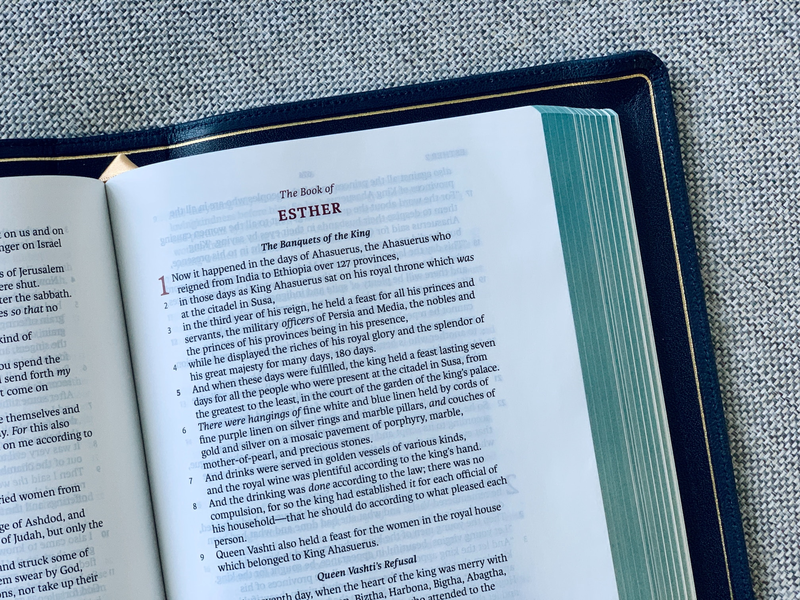
Esther

Esther: Historical & Chronological Comments (IV)

2. The Setting of the Book of Esther A. Xerxes (continued from previous issue) Ezra 6:14 says that the Jews finished building "according to the command of the God of Israel and the decree of Cyrus and Darius and Artaxerxes king of Persia." The problem with this verse is that…

by James B. JordanJune 28, 1996

ales-krivec-4mibe6zg5r0-unsplash
Acts

Jesus and Amalek

This essay goes with our previous study of the Amalek pattern back in Biblical Horizons No. 2. Since many do not have this essay, entitled "The Battle of Gog and Magog," let me cite the relevant paragraphs: Note in Genesis 12-15 that Abram moves into the land after escaping Pharaoh…

by James B. JordanJune 28, 1996
aaron-burden-1ebsmyrau-s-unsplash
Proverbs

The Strange Woman

Proverbs 7:6-23 is one of several passages early in the Proverbs in which Solomon warns his son about the wiles and dangers of the "strange woman." It is certainly quite proper to take these as straightforward warnings against sexual sins, and these are certainly warnings that need to be impressed…

by Peter LeithartJune 27, 1996
jan-kahanek-g3o5ztrk2e4-unsplash
Biblical Studies

Some Observations

1. In Luke 4:20 we read that after Jesus finished reading from Isaiah, "the eyes of all in the synagogue were fixed upon Him." This is usually taken in a psychological sense: They were amazed at Jesus somehow. I suggest that, as always, a merely psychological reading is a modern…

by James B. JordanMay 28, 1996
tim-wildsmith-j6jv-mkdzqs-unsplash
Esther

Esther: Historical & Chronological Comments (III)

2. The Setting of the Book of Esther Up to now we have assumed what we must prove, that the king in Esther is Darius the Great. While Biblical chronologists have usually taken this position, commentators on the book of Esther have often taken others as the king. One view,…

by James B. JordanMay 28, 1996

Showing page 265 of 309

See all
See all

On the History of Charisms

“T he time has come,” writes Luigino Bruni ( The Wound and the Blessing ), “to rewrite the economic and civil history of societies, taking seriously the civil and economic role of charisms.” It's impossible “to understand either the past or the present situation in European economics deeply (or well…

May 8, 2017

Inequality and Inequality

I n Adam Smith and the Character of Virtue , Ryan Patrick Hanley explains why Smith considered the “inequality of precommercial societies [to be] infinitely more pernicious than the inequality to be found in commercial society.” He does this by demonstrating “how the conditions that afford the powerful with maximal…

May 5, 2017

Blue Arrogance

A t the Daily Beast , Joel Kotkin exposes the “arrogance of Blue America,” expressed in talk of Blue State secession and contempt for Red State Trump country. According to Kotkin, “The blue bourgeoisie’s self-celebration rests on multiple misunderstandings of geography, demography, and economics. To be sure, the deep blue…

May 5, 2017

Theology of Gift

I ’ve quoted this before, often, but it's so good it merits re-quotation. From Luther's 1528 “Confession”: These are the three Persons and the one God, Who has given Himself to us wholly with all that He is and all that He has. The Father gives Himself to us, with…

May 5, 2017
Architecture

Architectural Asceticism

R eviewing Adrian Forty's Concrete and Culture in the TLS , James Hall summarizes the shifting fortunes of concrete as a building material: “Reinforced concrete's global heyday spanned roughly from the 1920s to the 60s, when exposed, cantilevered concrete was all the (modernist) rage. Then a pragmatic and/or postmodernist reaction…

May 5, 2017
Shakespeare

Authentic Shakespeare

D on-John Dugas's recent Shakespeare for Everyman offers a revisionist account of the rise of “authentic” stagings of Shakespeare in the twentieth century. The very meaning of “authentic” changed, as Sally Barnden explains in her TLS review of Dugas's book: “Authentic Shakespeare performance was no longer understood to be that…

May 5, 2017

Showing page 178 of 2212

Browse by Category

In Medias Res

Your weekly digest for all things Theopolis.

Donate

Theopolis is nearly 100% donor-supported. Consider joining us on our mission.