Theopolis Logo

Writing

Explore our collection of theological essays, biblical studies, and reflections on faith and culture.

See all
31-03-0213
Hermeneutics

Apocalyptic Eyes

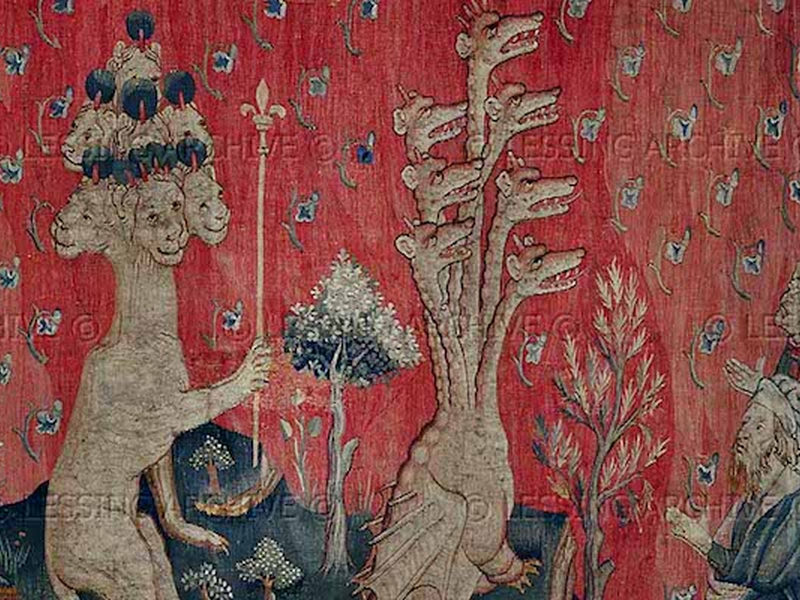
Flying scrolls. Red horses. Beasts coming out of the sea. Winged women. The list goes on. Apocalyptic literature in the Bible is like a cross between science fiction and Marvel comics. And the Bible has a fair bit of this sort of thing. Daniel sees visions in Babylon, Zechariah sees…

by Toby SumpterNovember 4, 2014

bhm-skyline-2
Theopolis News

New Name, New Look

Trinity House Institute has taken a new name, the Theopolis Institute. This striking new name expresses our unique vision and mission and captures the unified purpose behind all our specific programs and activities. We still have Bible, liturgy, and culture in our tagline. We still offer the same courses on…

by TheopolisNovember 4, 2014
istock_000012860926small
Atonement

Not Fearing the Devil

Adam Kotsko offers a socio-political variation on the Christus Victor atonement theory in his 2010 study, The Politics of Redemption: The Social Logic of Salvation . He does this by explaining "the devil" in terms of the Hegelian concept of "objective spirit," Geist . As Kotsko puts it, Geist "refers…

by Peter LeithartOctober 13, 2014
jez-timms-8muutamcwu4-unsplash
Leviticus

The Meaning of Sacrifice

Two factors keep Nahtali Meshel from discussing the meaning of sacrifice until late in his The "Grammar" of Sacrifice . The first has to do with the texts he draws from: "P says little about the meaning of its rituals" (174). The other has to do with the grammatical theory…

by Peter LeithartOctober 8, 2014
jez-timms-8muutamcwu4-unsplash
Leviticus

Praxemics

Chapter 5 of Naphtali Meshel's The "Grammar" of Sacrifice focuses on "praxemics," the physical actions of sacrificial ritual. Praxemes are constituted by six elements: an "atomact," an elementary physical act or gesture; an actor; an object that is acted up; a target for the action and often for the object…

by Peter LeithartOctober 6, 2014
markus-winkler-aid-xyrtlec-unsplash
Leviticus

Jugation and Hierarchy

Two chapters of Naphtali Meshel’s The “Grammar” of Sacrifice cover what he calls “jugation” and “hierarchies.” The first involves the addition of other materials to an animal offering. Jugates include wine, cereal, and oil that are added to the animals (zoemes) that are offered in sacrifice. Some jugates are coordinated…

by Peter LeithartOctober 1, 2014

Showing page 167 of 309

See all
See all
History

Speeding up?

Todd Gitlin says we’re not, or we are in only specific ways. George Eliot complained already in 1859 that “Leisure is gone . . . even idleness is eager now,” and Nietzsche said that “Virtue has come to consist of doing something in less time than someone else.” Actual physical…

August 31, 2006
History

For the Ladies

Between 1948 and 1951, Sayyid Qutb was in the US, and his reflections on this experience, published as Signposts , has been called the “key text of the jihadist movement.” One of the things that particularly frightened Qutb was the freedom of American women, and the comparatively casual relations between…

August 31, 2006

Antiquarians

Of the antiquarians of his day, John Donne wrote: If in his study he hath so much care To hang all old strange things, Let his wife beware.

August 31, 2006

Cultural Change

Hebrews says that with a change of priesthood there is also a change of law, and these two are the main features of covenantal shifts. In context, “law” has specific reference to the rules of qualifications for priests. One might generalize: Fundamental cultural changes are changes in priesthood and changes…

August 30, 2006
History

Crack-Up

In his book, The Last Days of the Renaissance , Theodore Rabb notes that one sign of the fragility of the late medieval church was its inability to continue to absorb fresh movements. This was not relativism; there was recognizable unity throughout the church. Yet, there was also remarkable diversity:…

August 30, 2006
History

Josiah in Cultural History

A book on the uses of the biblical story of Josiah would make a fascinating cultural history. The Reformers found inspiration for iconoclasm in Josiah. Bacon described his program as “instauration,” borrowing the Vulgate’s term for the renovation of the temple. Or, more broadly, the role of Solomon’s Temple in…

August 29, 2006

Showing page 1801 of 2212

Browse by Category

In Medias Res

Your weekly digest for all things Theopolis.

Donate

Theopolis is nearly 100% donor-supported. Consider joining us on our mission.