Theopolis Logo

Writing

Explore our collection of theological essays, biblical studies, and reflections on faith and culture.

See all
screen-shot-2023-02-24-at-1-48-41-pm
Biblical Chronology

Chronologies and Kings: Part 3

The chronology of the Kings of Judah and Israel can be divided into three periods with clearly defined boundaries. The first period begins with the death of Solomon and the accessions of Rehoboam in the south (Judah) and Jeroboam in the north (Israel). It ends with the deaths of Ahaziah…

by James B. JordanSeptember 22, 1991

johann-walter-bantz-clv9dfjlwac-unsplash-1-5
Art

Arts & Play, Part 1

Most modern people regard the arts as essentially decorative. They are hardly very important, as compared to business, politics, or religion. Yet, from a Biblical point of view, the arts lie close to the heart of human life. The universe that God created is itself an artistic masterpiece by the…

by James B. JordanSeptember 22, 1991
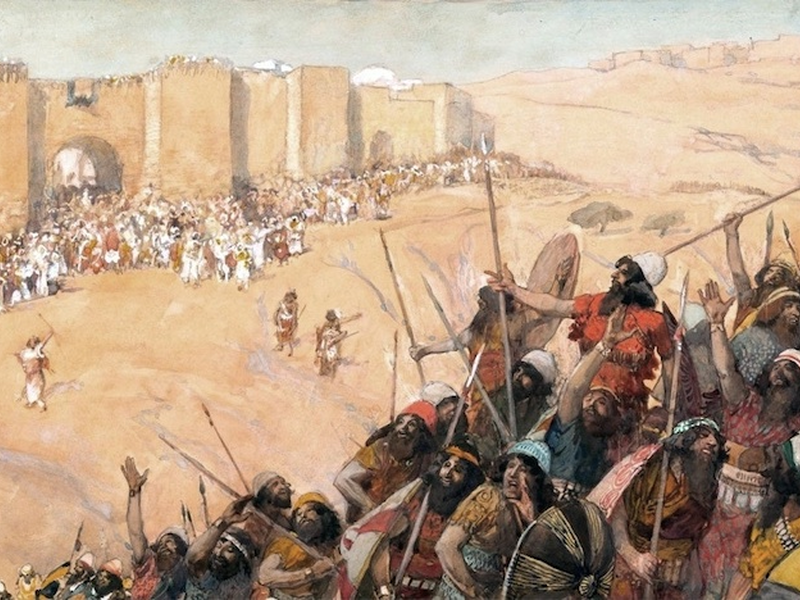
6273e95e0f5ac766258d8cf3_joshuasconquestoftheland-2
Exodus

Chronologies and Kings, Part 2

Before we move into a detailed survey of the history and chronology of the kings of Israel and Judah, let us review the chronological information that leads from creation to the kingdom. This will be helpful both to new readers of these essays, and a reminder for those who have…

by James B. JordanAugust 22, 1991
screen-shot-2023-02-24-at-1-48-41-pm
Biblical Chronology

Chronologies and Kings, Part 1

We have completed our overall survey of Biblical chronology, and now turn to a detailed examination of the Biblical information regarding the chronology of Israel’s kings. The first piece of chronological information we have regarding Israel’s kings is very cryptic, and it serves as an guide to the interpretation of…

by James B. JordanJuly 22, 1991
screenshot-2023-08-09-at-2-13-32-pm
Biblical Horizons

Book Review - To Take Place: Toward Theory in Ritual

Jonathan Z. Smith, To Take Place: Toward Theory in Ritual (Chicago: University of Chicago Press, 1987). Reviewed by Peter J. Leithart. The philosophes of the 18th century often attacked Christendom using the tools of anthropology and comparative religion. Rousseau contrasted the idyllic equality of primitive, natural peoples with the bondage…

by Peter LeithartJuly 6, 1991
screenshot-2023-08-09-at-1-47-41-pm
Biblical Horizons

Book Review: The Rise of Magic in Early Medieval Europe

Valerie I. J. Flint, The Rise of Magic in Early Medieval Europe (Princeton University Press, 1991). Reviewed by Peter J. Leithart. Valerie I. J. Flint, Professor of History at the University of Auckland, New Zealand, is refreshingly candid about her reasons for undertaking a study of The Rise of Magic…

by Peter LeithartJuly 6, 1991

Showing page 295 of 309

See all
See all

“The King”

2 Kings 16:12 describes Ahaz’s consecration of the altar built from the prototype in Damascus. Three times in that verse he is called “the king,” and in this designation, the author of Kings picks up the technique employed in 1 Kings 13 to describe Jeroboam’s consecration of the altar at…

April 20, 2006

Feminine temple

Psalm 144:12 asks that the Lord make “our daughters as corner pillars cut after the pattern of a palace.” “Pattern” is TABNIT, the noun used to describe the pattern that Moses sees on the mountain and later guides the building of the tabernacle. “Palace” is HEYKAL, the word used for…

April 20, 2006
History

Nature/Supernature, Gift and Grace

McGrath offers the following genealogy of the distinction of nature and supernature: Prior to the 12th century, theologians defined grace as a “gift of God” without distinguishing various kinds of gifts. But this left open the question of whether “all of God’s gifts” should be “identified as God’s grace.” Is…

April 20, 2006
History

Augustine Misunderstood

CS Lewis said that the courtly love tradition arose from “Ovid misunderstood.” Medieval soteriology might be said to have arisen from “Augustine misunderstood.” Everyone was Augustinian and no one wanted to be Pelagian, but Augustine’s actual teaching was confused by transmission problems both of his own works and of conciliar…

April 20, 2006

Faith = Jesus?

What happens to Paul’s doctrine of justification if “faith” in the phrase “justified by faith” is a name for Jesus, as it appears to be in Gal 3:23, 25, on analogy with the use of PISTOS as a name in Rev 19:11? Or, perhaps, if “faith” is shorthand for “faith…

April 20, 2006

Deeper justice

Cicero says, justice is rendering to each man his due, and Pelagius agrees. Paul says, justice is God’s giving ungodly sinners eternal life, and Augustine follows Paul. Remigius of Auxerre noted the contrast: “Mea iustitia est malum pro malo reddere. Tu solus iustus, quam circa nos ostendisti, reddens bonum pro…

April 20, 2006

Showing page 1853 of 2212

Browse by Category

In Medias Res

Your weekly digest for all things Theopolis.

Donate

Theopolis is nearly 100% donor-supported. Consider joining us on our mission.