Theopolis Logo

Writing

Explore our collection of theological essays, biblical studies, and reflections on faith and culture.

See all
e99a2994
Creation

Why Genesis Matters

Creationism is debated widely in the US, especially when it comes to teaching creation as an alternative theory of origins in public schools. Every few months, there’s another poll showing that many Americans still believe Ussher’s claim that the world was created around 4000 BC, which always elicits a contemptuous…

by Peter LeithartAugust 20, 2014

walker-percy
Books

Canary in the Coal Shaft

Walker Percy died in 1990, but his six published novels and his collections of essays are more relevant than when he wrote them. Percy was an American Dostoevsky, and that was no accident. “The European novels,” he says in a 1974 interview, “are more philosophical, more novels of ideas.” Dostoevsky,…

by Peter LeithartAugust 18, 2014
e99a0159
Children

Parenting in the Spirit

The Spirit is God’s agent for renewing the creation, for restoring bonds between nations, for knitting together people into the body of Christ. The Spirit is the renewer of the world, and the bond of all relations. That means that if you want your family to be knit together, if…

by Peter LeithartAugust 13, 2014
francesco-zxnkxnr32ng-unsplash
Revelation

Hunter Into Prey

In their basic physical sense , the verbs translated as "persecute" in the Bible mean “chase” or “pursue,” and that fits the context quite naturally. As Pharaoh “pursued” (LXX, dioko ; Heb. radaph ) Israel into the wilderness, for example, so the dragon chases the woman back to her place…

by Peter LeithartAugust 11, 2014
the-resolutions-of-jonathan-edwards-me4czyke-copy
Books

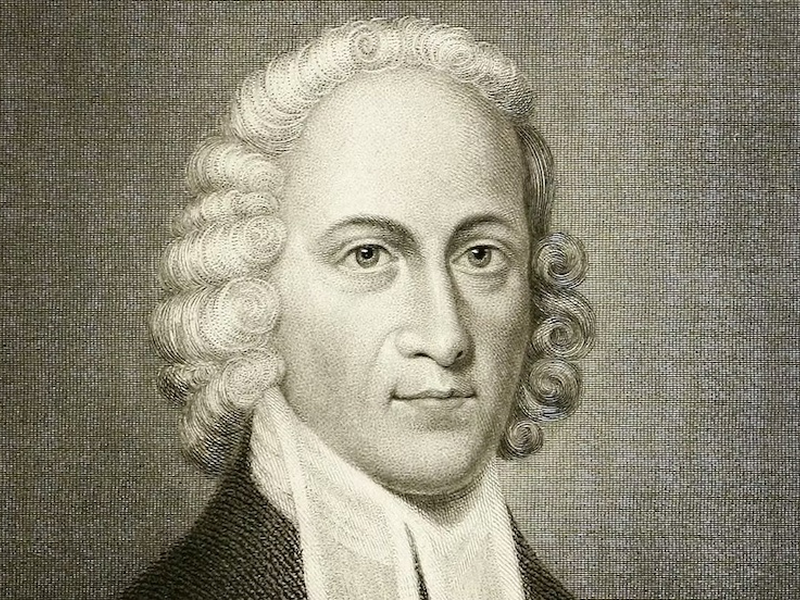
Edwards Our Contemporary

Seng-Kong Tan’s Fullness Received and Returned is a densely argued, thoroughly researched, contextually sensitive study of participation in the soteriology of Jonathan Edwards. Along the way, Tan deals with many of the central themes in Edwards’s theology. As with many recent studies of Edwards, Tan’s monograph demonstrates both Edwards’s creativity…

by Peter LeithartAugust 6, 2014
trnava-university-beeyeib-am8-unsplash
Art

Portrait of the Artist as Aesthetic Martyr

The title of James Joyce’s first novel, Portrait of the Artist as a Young Man indicates that it is a bildungsroman , a story of formation that describes the formative experiences of a poet who aspires to artistic greatness. The education described is Joyce’s own. The novel recounts the failing…

by Peter LeithartAugust 4, 2014

Showing page 170 of 309

See all
See all

Conveniens

Bauerschmidt notes that Aquinas frequently argues, especially when speaking of the incarnation, not for “proof” of doctrine but for its “fittingness.” Reason has the role of “manifesting how [the incarnation] fits together (convenire means literally ‘to come together’) with other things that Christians hold true about God.” Perhaps this can…

March 23, 2006

Extra-Augustinisticum

In Epistle 137, Augustine writes: “The Christian teaching nowhere holds that God was so poured into human flesh as either to desert or lose - or to transfer and, as it were, compress within this frail body - the care of governing the universe. This is the thought of people…

March 23, 2006

Thomas on Merit

Commenting on ST I-II, q. 109, Frederick Bauerschmidt says that Thomas uses the word “merit” analogically when we speak of God rewarding human action “since we can act in the first place only because God has given us the capacity to act.” This applies even to Jesus: “even when Thomas…

March 23, 2006

On Seneca, de Beneficiis, Books 1-2

Seneca suggests that ingratitude is the worst of vices, and nothing is more “harmful to society” than ingratitude (I.1). Later in Book I, he lists a series of moral ills that plague society – “homicides, tyrants, thieves, adulterers, ravishers, sacrilegious, traitors” – but concludes that “worse than all these is…

March 23, 2006
Literature

Prospero the Magus

I am grateful to Ralph Smith for references to Frances Yates’ work on Shakespeare’s plays. In an analysis of The Tempest, Frances Yates writes: “It is inevitable and unavoidable in thinking of Prospero to bring in the name of John Dee, the great mathematical magus of whom Shakespeare must have…

March 22, 2006
History

Elizabethan Magic

Educated Elizabethans lived in a world of similitudes. As EMW Tillyard argued, the Elizabethan world picture was constituted by a series of analogous chains of being. The social world manifested and was manifested by the natural world; the universe as a whole resembled human beings; there was a hierarchy among…

March 22, 2006

Showing page 1867 of 2212

Browse by Category

In Medias Res

Your weekly digest for all things Theopolis.

Donate

Theopolis is nearly 100% donor-supported. Consider joining us on our mission.