Theopolis Logo

Writing

Explore our collection of theological essays, biblical studies, and reflections on faith and culture.

See all
elijah-1200x630-min
Biblical Horizons

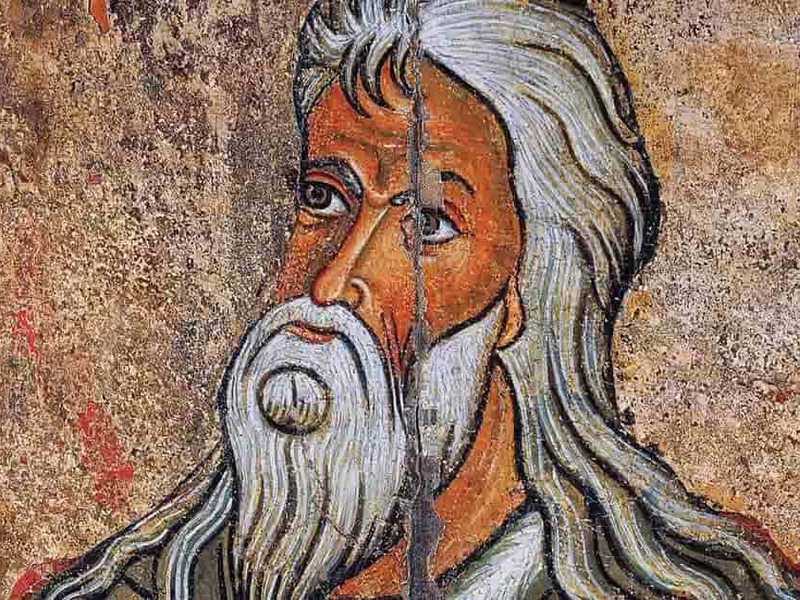
Elijah’s Exodus

1 Kings 17, which abruptly introduces Elijah into the history of the northern kingdom, is a carefully constructed literary unit. In its basic structure, it follows a clear exodus-return pattern. Like Jacob and his sons, Elijah was driven out of the land by a famine (vv. 1-4). In exile, Elijah…

by Peter LeithartJune 17, 1992

ales-krivec-4mibe6zg5r0-unsplash
Biblical Studies

All Things New

Now the Pharisees, who were lovers of money, were listening to all these things and they were scoffing at Him. And He said to them, "You are those who justify yourselves in the sight of men, but God knows your hearts; for that which is highly esteemed among men is…

by Mark HorneJune 6, 1992
aaron-burden-h8s0pf2rcqs-unsplash
Biblical Chronology

Chronologies and Kings, Part 11: The Knots of 2 Kings 11-14

In the year 3119, Ahaziah of Judah and Jehoram of Israel were both slain by Jehu as he carried out his God-appointed task of eliminating the seed and house of Ahab (2 Kings 9:13-33). Since the kings of Israel are usually counted as beginning their reign in the same year…

by James B. JordanMay 24, 1992
trnava-university-beeyeib-am8-unsplash
Biblical Studies

Gleanings from Robert Alter’s "Art of Biblical Narrative"

One of the most important developments in Biblical studies in recent years has been a movement of scholars devoted to studying the literary techniques of the Biblical writers. Tremper Longman, III of Westminster Theological Seminary has treated this movement from a Reformed perspective in his Literary Approaches to Biblical Interpretation…

by Peter LeithartMay 17, 1992
ian-schneider-iqbc4vu4ypq-unsplash
Biblical Horizons

Tentmaking

And because [Paul] was of the same trade, he stayed with [Aquila and Priscilla] and they were working; for by trade they were tentmakers (Acts 18:3). The fact that Paul was by trade a tentmaker has usually been taken as the springboard for a discussion of whether pastors should have…

by James B. JordanApril 24, 1992
screen-shot-2022-05-12-at-12-07-23-pm
Biblical Studies

Chronologies and Kings, Part 10: Jehoram of Judah

I pointed out in Chronologies and Kings Part 9 that the years of Judah’s kings are given in chronological fashion. "When we read of a Judahite king’s reign as lasting 4 years, it means that 4 years of the chronology have been given to him, and there is no chronological…

by James B. JordanApril 24, 1992

Showing page 290 of 309

See all
See all

Conveniens

Bauerschmidt notes that Aquinas frequently argues, especially when speaking of the incarnation, not for “proof” of doctrine but for its “fittingness.” Reason has the role of “manifesting how [the incarnation] fits together (convenire means literally ‘to come together’) with other things that Christians hold true about God.” Perhaps this can…

March 23, 2006

Extra-Augustinisticum

In Epistle 137, Augustine writes: “The Christian teaching nowhere holds that God was so poured into human flesh as either to desert or lose - or to transfer and, as it were, compress within this frail body - the care of governing the universe. This is the thought of people…

March 23, 2006

Thomas on Merit

Commenting on ST I-II, q. 109, Frederick Bauerschmidt says that Thomas uses the word “merit” analogically when we speak of God rewarding human action “since we can act in the first place only because God has given us the capacity to act.” This applies even to Jesus: “even when Thomas…

March 23, 2006

On Seneca, de Beneficiis, Books 1-2

Seneca suggests that ingratitude is the worst of vices, and nothing is more “harmful to society” than ingratitude (I.1). Later in Book I, he lists a series of moral ills that plague society – “homicides, tyrants, thieves, adulterers, ravishers, sacrilegious, traitors” – but concludes that “worse than all these is…

March 23, 2006
Literature

Prospero the Magus

I am grateful to Ralph Smith for references to Frances Yates’ work on Shakespeare’s plays. In an analysis of The Tempest, Frances Yates writes: “It is inevitable and unavoidable in thinking of Prospero to bring in the name of John Dee, the great mathematical magus of whom Shakespeare must have…

March 22, 2006
History

Elizabethan Magic

Educated Elizabethans lived in a world of similitudes. As EMW Tillyard argued, the Elizabethan world picture was constituted by a series of analogous chains of being. The social world manifested and was manifested by the natural world; the universe as a whole resembled human beings; there was a hierarchy among…

March 22, 2006

Showing page 1867 of 2212

Browse by Category

In Medias Res

Your weekly digest for all things Theopolis.

Donate

Theopolis is nearly 100% donor-supported. Consider joining us on our mission.