Theopolis Logo

Writing

Explore our collection of theological essays, biblical studies, and reflections on faith and culture.

See all
or
Abortion

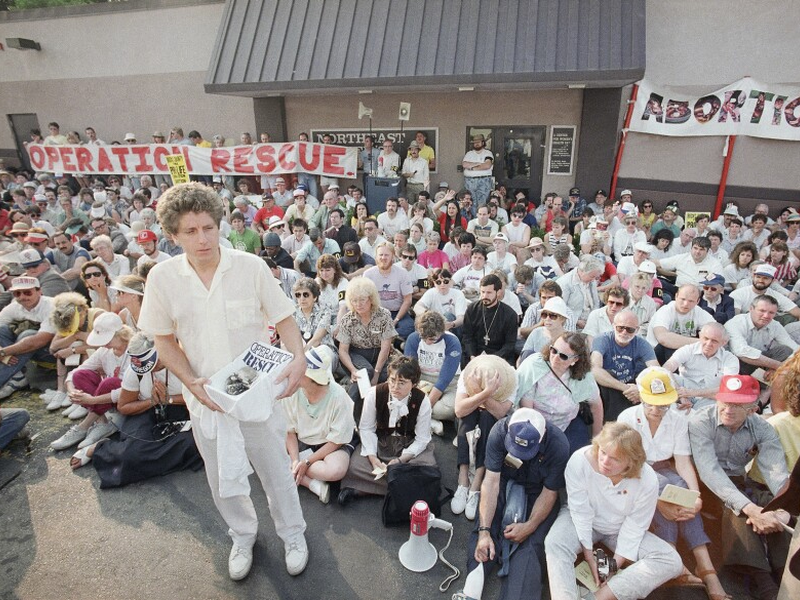
Political Hermeneutics: The Argument From Silence, Part 2

Click HERE for part 1. III This leads to a further question. I have argued that silence cannot by itself establish a Scriptural principle, but does Scripture’s silence carry any weight in itself? Does the fact that something is unbiblical in a weak sense tell us anything at all? In…

by Peter LeithartMarch 13, 1990

hebrew-manuscript-6
Biblical Chronology

Groping Through the Gaps

Although nowadays gap theories are associated with dispensationalism, it was not always so. In the nineteenth century, scholars from a variety of backgrounds (Anglican, Reformed, and proto-fundamentalist) seem to have become fascinated by gaps. If you are not familiar with what I am talking about, this newsletter will acquaint you…

by James B. JordanFebruary 26, 1990
or
Abortion

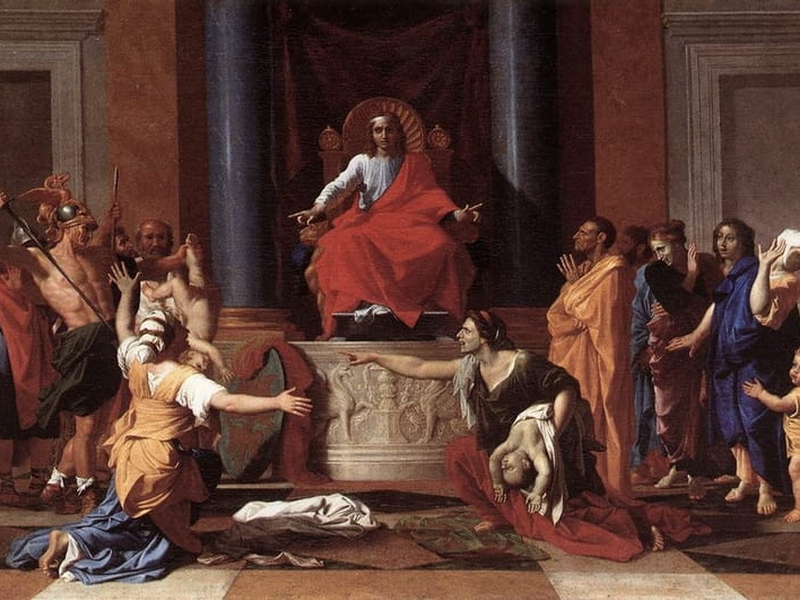
Political Hermeneutics: The Argument from Silence, Part 1

If the debate over Operation Rescue has proven anything, it has proven that there is absolutely no consensus among evangelicals in general, or among "reconstructionists" in particular, about how to use the Bible to judge political actions and movements. Each side of the debate claims biblical authority for its position,…

by Peter LeithartFebruary 13, 1990
49980-nicolas_poussin_-_the_judgment_of_solomon_-_wga18330-800w-tn
Biblical Studies

Advice From a Sojourner, Part 4

Two things I asked of Thee, Do not refuse me before I die: Keep deception and words of falsehood far from me, Give me neither poverty nor riches, Feed me with the food that it my portion, Lest I be full and deny Thee, And say, "Who is the LORD?"…

by James B. JordanFebruary 2, 1990
image-2
Biblical Horizons

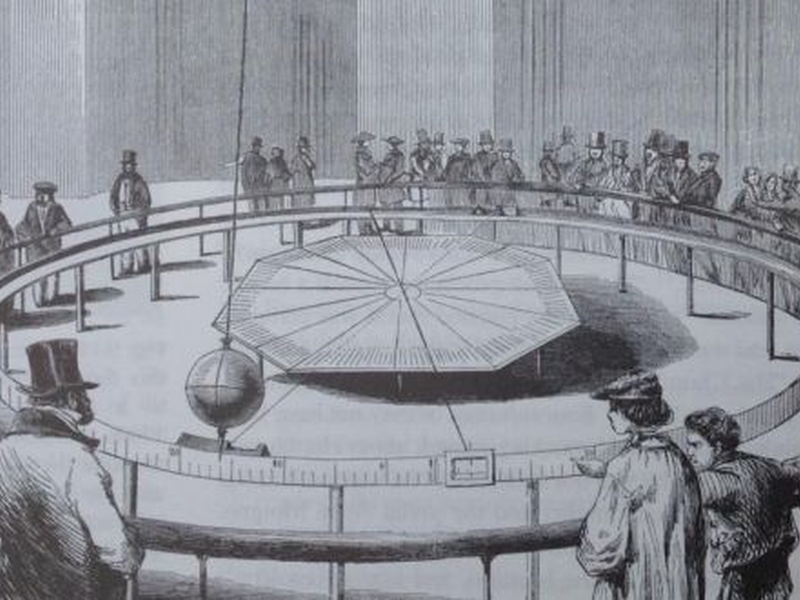
Foucault’s Pendulum

Umberto Eco’s "The Name of the Rose" was certainly one of the best literary works of the past decade, though the film version hardly measured up to it. Now Eco has given us a new novel, "Foucault’s Pendulum." Like Rose, Foucault’s Pendulum reflects on the limitations of human knowledge, and…

by James B. JordanJanuary 26, 1990
tanner-mardis-xuxghzhibn4-unsplash-1-2
Biblical Studies

What Is “Interpretive Maximalism”?

From time to time people ask me about "interpretive maximalism." They want to know what it is, and sometimes want to know if it represents some departure from the Reformed grammatico-historical, Biblico-theological approach to the Bible. I have something of a problem with these questions, because "interpretive maximalism" is not…

by James B. JordanJanuary 26, 1990

Showing page 305 of 309

See all
See all
Literature

Hamlet, 3.4

This scene, like the scene that opens Act 3, shows Hamlet encountering a woman who in his mind has betrayed him. Again, he has been sent for, and probably suspects that it is another setup like the one with Ophelia. He has just come from the play, ready to drink…

February 16, 2006
Literature

Pierre and Hamlet

FO Matthiessen described Melville’s Pierre as “an American Hamlet,” a novel that attempts to “translate” Shakespeare into 19th-century American life. In part, this is a matter of Melville matching characters and plots: “Lucy’s pale innocence fails Pierre as Ophelia’s did Hamlet; the well-named Reverend Mr. Falsgrave’s cushioned voice of worldly…

February 16, 2006
Philosophy

Metaphysics of presence

Derrida, famously, challenges what he calls the metaphysics of presence. What is challenging is not the reality of presence as such, but the notion that we can arrive at some pure presence of a thing, a moment, a self that is unmixed with anything other than itself. A pure instant…

February 16, 2006
Philosophy

How Deconstruction Works

Culler offers an example from Nietzsche that provides an excellent example of the ju-jitsu of deconstruction. Nietzsche argues that causality is not something given, but is the product of a rhetorical operation, a chronological reversal ( chronologische Umdrehung ). I feel a pain, and go searching for a cause of…

February 15, 2006
Literature

New Criticism and theory

At the beginning of his book on Deconstruction , Jonathan Culler notes that critical theory, seen “as an attempt to establish the validity or invalidity of particular interpretive procedures,” is profoundly indebted to New Criticism: This movement “not only instilled the assumption that the purpose of literary study is the…

February 15, 2006
Literature

Thoughts on Beowulf

All page numbers are from the Heany translation. The central focus of the first two fights is Heorot, the mead-hall of Hrothgar. The mead-hall is the focus of a complex of imagery. (The last fight has a similar origin, as Beowulf’s hall is destroyed by the dragon. The house is…

February 15, 2006

Showing page 1884 of 2212

Browse by Category

In Medias Res

Your weekly digest for all things Theopolis.

Donate

Theopolis is nearly 100% donor-supported. Consider joining us on our mission.