
Theopolis Logo

Writing

Explore our collection of theological essays, biblical studies, and reflections on faith and culture.

See all
kiwihug-l4gw27xzn1i-unsplash
Hermeneutics

Beginning and New Beginning in Luke

Although the events are, of course, not perfectly parallel, Luke in his gospel intends us to connect Jesus’ birth from the womb and His re-birth from the tomb. Luke 1:27 introduces us to Joseph and in verse 30 we learn that his betrothed wife was named Mary. An angel appeared…

by James B. JordanDecember 28, 1996
screenshot-2023-08-30-at-11-50-23-am
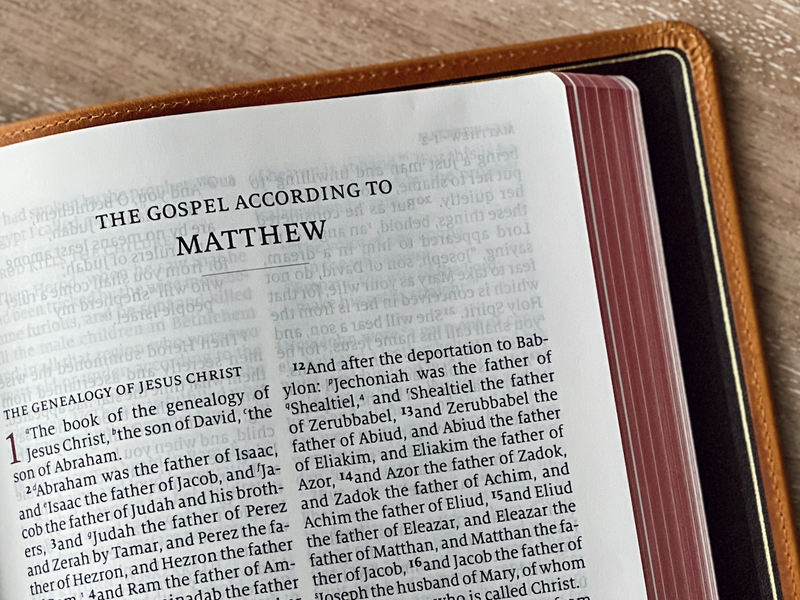
Matthew

A Note on Matthew

The apostle Matthew is also known as Levi son of Alphaeus. While not much is said about this man, the few things that are told us are significant. Matthew in Greek is Matthaios and comes from the Hebrew name Mattithiah, or Mattith-Yah, "Gift of Yah(weh)." Matthew’s other name is Levi,…

by James B. JordanDecember 28, 1996

aaron-burden-qjdzyt_k8xg-unsplash
Biblical Horizons

Twelve Fundamental Avenues of Revelation (Part 1)

Theologians often speak of "special" and "general" revelation, or of "natural" and "supernatural" revelation, or of "word" and "deed" revelation. While there are many worthwhile insights in these discussions, particularly in the discussions in Cornelius Van Til’s Introduction to Systematic Theology , I have not found any that satisfied my…

by James B. JordanDecember 28, 1996
jan-kahanek-g3o5ztrk2e4-unsplash
Ezekiel

Countdown to Exile IV: Ezekiel and the Structure of History

Ezekiel’s 430 Years In Ezekiel 4, the prophet is told to begin his ministry by setting up a model of Jerusalem and lying on his side and prophesying against it. He is to do this for 430 days, a day for a year. 390 days are against "Israel," and 40…

by James B. JordanDecember 28, 1996

img_7664
Biblical Horizons

The Oddness of the Feast of Booths

The Feast of Ingathering in the seventh month of the Sinaitic calendar is also called the Feast of Sukkoth, of Booths, also called Feast of Tabernacles. I have usually called it by that last phrase, and it is the most common today; but there is a problem: A tabernacle is…

by James B. JordanDecember 28, 1996
sixteen-miles-out-ki3hr9t8t7a-unsplash
Ezekiel

Countdown to Exile III: Warnings Against False Hopes

The End of Jehoiakim’s Reign We have seen that Jehoiakim rejected Jeremiah’s prophetic warnings at the beginning of his reign. Let us now make a year-by-year survey of his reign down to its end. In the spring of 605 BC, Nebuchadnezzar defeated the Egyptians at Carchemish. In the summer, he…

by James B. JordanNovember 28, 1996

Showing page 261 of 309

See all
See all
Literature

Plus choses changent

Long before Greenblatt and the New Historicists, Shakespeare had been interpreted as a commentator on the religious or political circumstances of Elizabethan England. Among the interpretations of Hamlet summarized by Ernest Jones in his essay on Oedipus and Hamlet (first published in 1910!) are the notions that the play is…

January 25, 2006

Jesus’ Thoughts

Donald Macleod offers some intriguing insights in his IVP book on the Person of Christ: In many respects, Jesus’ human knowledge was like our own, as He learned about His Father through revelation: “his own capacity for such knowledge would differ significantly from that of ordinary men. But it would…

January 24, 2006

Jesus’ Thoughts

Donald Macleod offers some intriguing insights in his IVP book on the Person of Christ: In many respects, Jesus’ human knowledge was like our own, as He learned about His Father through revelation: “his own capacity for such knowledge would differ significantly from that of ordinary men. But it would…

January 24, 2006
Literature

Hamlet: Act 1

Still more. ACT 1, SCENE 1 Several things about the first scene are worth examining. First, the play begins on a cold and bitter night on the ramparts of Elsinore. The darkness provides a fitting setting for the revelation that the world is out of joint, that something is rotten…

January 24, 2006
Literature

Hamlet: Texts

More notes toward a lecture. Shakespeare’s Hamlet exists in three significantly different forms. The earliest published text, the First Quarto or the “Bad Quarto,” appeared in 1603. Though recognizably Shakespeare’s play, it is different in many significant ways, and scholars have speculated that it is the product of one of…

January 24, 2006
Literature

Hamlet: Sources

Some notes toward a lecture on Hamlet. When Shakespeare put the story of Hamlet on stage in the early seventeenth century, the story was already an old one. Saxo Grammaticus, a 12th-century monk, told the story of Amleth, Prince of Jutland in his Historiae Danicae. According to Saxo’s version of…

January 24, 2006

Showing page 1894 of 2212

Browse by Category

In Medias Res

Your weekly digest for all things Theopolis.

Donate

Theopolis is nearly 100% donor-supported. Consider joining us on our mission.