Theopolis Logo

Writing

Explore our collection of theological essays, biblical studies, and reflections on faith and culture.

See all
screenshot-2025-01-28-at-9-02-46-am
Postmillennialism

Pessimistic Postmillennialism

For ye had compassion of me in my bonds, and took joyfully the spoiling of your goods, knowing in yourselves that ye have in heaven a better and an enduring substance. Hebrews 10:34 There is an old Puritan dictum that goes, “Sit lightly on the world.” George MacDonald places it…

by Garrett SoucyJanuary 28, 2025
1411px-diego_velazquez_065
Biblical Theology

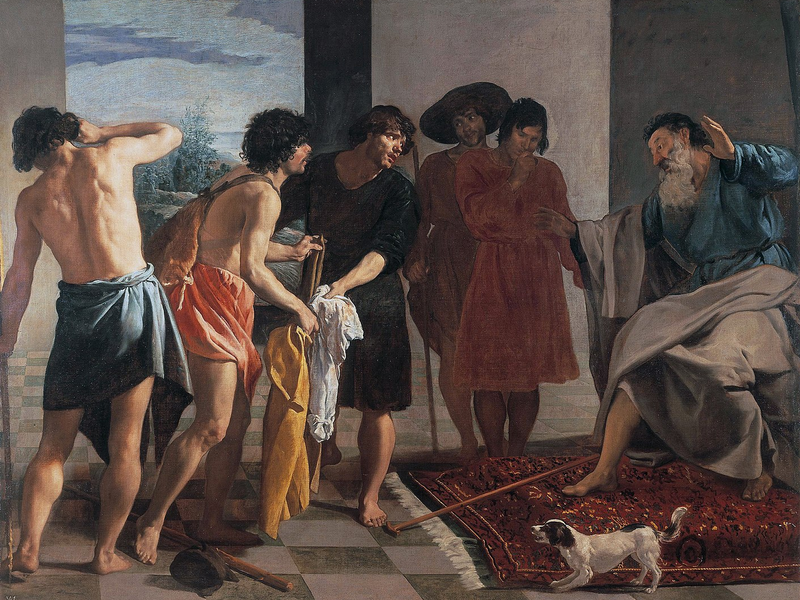
Joseph, Jesus, and the Descent to Egypt

As Genesis unfolds, God chooses a line of promise out of the nations. One by one its offshoots are peeled away as the story zooms in on God’s chosen people, Israel. First, the line of Cain is peeled away as Cain is sent out from the presence of YHWH. Though…

by James BejonJanuary 21, 2025
212342fgsdl
Exhortation

An Eschatological Vision for Ministry

The following article was an address given to Anselm Presbytery (CREC) in the Fall 2024. Grace to you and peace from God our Father and the Lord Jesus Christ. Pray with me. Father of Heavenly Lights and fount of all Wisdom, guide us we pray, by your Word and Spirit,…

by Bo CogbillJanuary 14, 2025
451199882_864804372346894_3713307977104331839_n
Books

What I Read Last Year

At my age, I’ve given up on the fantasy of “keeping up.” Much of my reading is now narrowly focused, research-reading in service of writing projects. If you want bibliography on the ontology of artifacts in Aristotle and Thomas Aquinas (which you don’t), or the purity laws of Leviticus, or…

by Peter LeithartJanuary 6, 2025
aaron-burden-qjdzyt_k8xg-unsplash
Books

What I'm Reading

I have been reading, thinking, and writing about the Internet and its effects upon our identities, communities, polities, and discourses for nearly a copy of decades. In that time, I have encountered no book as perceptive on the subject as Antón Barba-Kay’s A Web of Our Own Making: The Nature…

by Alastair RobertsDecember 31, 2024
screen-shot-2022-08-04-at-9-36-57-am
Philippians

Enemies of the Cross: Philippians 3:18

Identifying the men Paul refers to as “enemies of the cross” in Philippians 3:18 turns out to be relatively difficult. Peter O’Brian speaks of “all kinds of suggestions regarding their identity,” and offers a list of interpretations: “moral libertinists, behavioural materialists, orthodox Jews, lapsed or apostate Christians—because of persecution, Jewish…

by Ralph Allan SmithDecember 30, 2024

Showing page 14 of 309

See all
See all

You shall know them by their fear

Stott notes that 1 John 4:19 indicates that the church’s great characteristic is love, not fear. That is, it should be. Is it? Hardly. Read the next piece of direct mail you get from a Christian advocacy group. Look at the listings in a Christian book catalogue or bookstore. Analyze…

January 20, 2007

Fear and fear

Perfect love casts out fear, John says. But the Bible repeatedly exhorts us to fear God. There’s fear, then there’s fear. How do we tell the difference? The difference is in the direction our fear moves us. Adam feared God, and hid in the garden. Wrong fear drives us away…

January 20, 2007

Kantian modalism?

Post-Kantian thought cannot make room for undistorted revelation of God in history. History, creation, is necessarily a distorting medium. Is this just a form of modalism? Doesn’t this just create an unbridgeable modalist gap between God-in-Himself and God-as-revealed? Isn’t this just saying that God is not what He appears to…

January 20, 2007

God’s body

Time was when you could despise the body and love God, or despise God and love the body. One could be an ascetic or a hedonist. Then God got Himself a body. Despite efforts to retain this choice (Nietzsche, flagellants), the incarnation made the ancient choice of ascetic or hedonist…

January 19, 2007

God’s body

Time was when you could despise the body and love God, or despise God and love the body. One could be an ascetic or a hedonist. Then God got Himself a body. Despite efforts to retain this choice (Nietzsche, flagellants), the incarnation made the ancient choice of ascetic or hedonist…

January 19, 2007

Dionysus and the crucified

Shaftesbury recognized the stark difference between his own rational Deity and the vulgar bodily and crucifiable Christ. Francis Hutcheson, building on Shaftesbury, tried to conflate the two. Hutcheson was a Christian, a Presbyterian professor of moral theology. Shaftesbury loathed Christ. But which of the two was the better friend of…

January 19, 2007

Showing page 1732 of 2212

Browse by Category

In Medias Res

Your weekly digest for all things Theopolis.

Donate

Theopolis is nearly 100% donor-supported. Consider joining us on our mission.