Theopolis Logo

Writing

Explore our collection of theological essays, biblical studies, and reflections on faith and culture.

See all
screen-shot-2022-04-12-at-7-14-44-am
Biblical Horizons

Christ Is Risen! He Is Risen Indeed!

"Vanity of vanities", says the Preacher. "All is vanity". Life, we are told in the book of Ecclesiastes, is a repetitious, wearisome cycle; all that is and all that will be has already been. There is nothing new under the sun. What is crooked cannot be made straight, what is…

by Peter LeithartFebruary 23, 1991
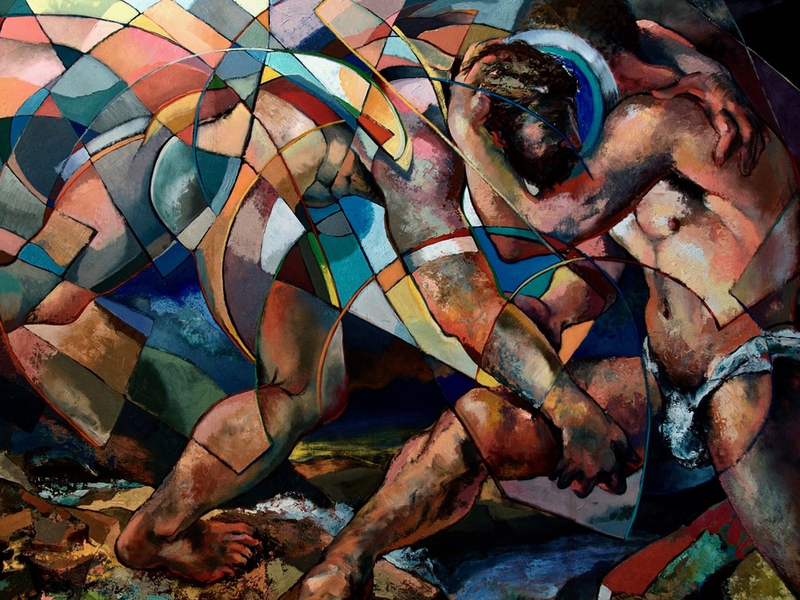
jacob-wrestling-the-angel
Biblical Studies

Three “Falls” and Three Heroes

The Bible tells us that when God created the earth, He set up three zones of life. The first was the world itself. The second was the holy land of Eden. And the third was the Garden in Eden, God’s sanctuary. God told Adam and Eve that every tree was…

by James B. JordanFebruary 22, 1991
mick-haupt-eq2z9ay9wws-unsplash
Biblical Studies

The Chronology of Ezra & Nehemiah, Part 1

In our survey of Biblical chronology we have arrived at the books of Ezra and Nehemiah, which provide chronological information for the period after the return from exile, the Restoration Period of Old Testament history. The question we begin to address in this essay is whether the Artaxerxes of these…

by James B. JordanFebruary 22, 1991
8226-sermon-on-the-mount-painting-2
Matthew

Pluck It Out!

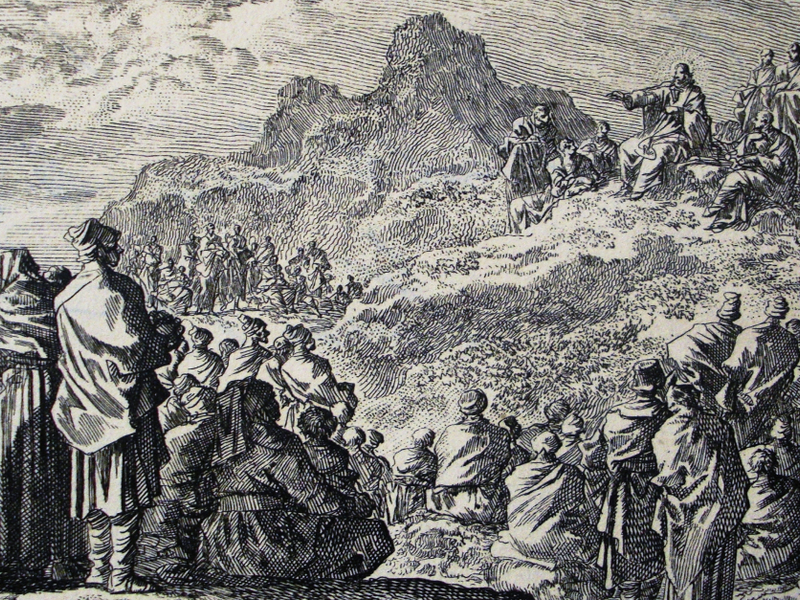
These verses from the Sermon on the Mount are generally taken in connection with Jesus’ earlier statement concerning adultery in the heart (vv. 27-28); the eye and the hand have obvious relevance to the sin of adultery. At the same time, most commentators admit that the principle of avoiding occasions…

by Peter LeithartFebruary 2, 1991
49980-nicolas_poussin_-_the_judgment_of_solomon_-_wga18330-800w-tn
Proverbs

Advice From a Sojourner, Part 9

17. The eye that mocks a father, And despises to obey a mother, The ravens of the valley will pick it out, And the young eagles will eat it. 18. There are three things that are too wonderful for me, Four that I do not understand: 19. The way of…

by James B. JordanJanuary 30, 1991
screen-shot-2020-12-03-at-1-47-33-pm
Biblical Horizons

The Dominion Church

The modern Church in America and virtually everywhere else is ideology-centered, not geographical. This is because various Churches believe different things and have different customs of worship and sacraments. The ideological Church has gradually developed from the time of the Reformation, because accuracy of doctrine has become more important to…

by James B. JordanJanuary 30, 1991

Showing page 299 of 309

See all
See all

Necessity of Incarnation

Would the Son have been incarnate if Adam had not sinned? 1 Corinthians 15:44-45 provides a prooftext for an affirmative answer. Verse 44 says that the “spiritual body” is implied by the existence of the “natural body.” Human beings were created in a natural state, but they were destined from…

August 12, 2006
Philosophy

Decentered Self of Modernity

Bishop Joseph Butler of Durham worried about the consequences of Locke’s empiricism: “That personality is not a permanent, but a transcient thing: that it lives and dies, begins and ends continually: that no one can any more remain one and the same person two moments together, than two successive moments…

August 12, 2006
History

Embedded mind

Modernity ignores the social, linguistic, and political context of thought, and the way interest shapes the mind; postmodernity foregrounds all this. Perhaps, but . . . . Descartes said that his travels demonstrates that “all those who hold notions strongly contrary to our own are not for that reason barbarians…

August 12, 2006
History

Self and World

For premoderns - ancients and medievals - there was a homology between the self and the world. Man was seen as microcosm, and, as Seigel puts it, they believed that “the world, like the self, is structured so as to fulfill intelligible moral ends.” The initial shift in early modernity,…

August 12, 2006
Philosophy

Birth of the Modern Self?

Seigel views with “considerable skepticism” the notion that Descartes constructed “a general theory of the human self and subject on the basis of the cogito .” In his treatise on the Passions of the Soul , Descartes claimed that the soul was linked with the body, which acts on the…

August 12, 2006
History

Purity

According to Seigel, “Descartes’s view of reason as most pure and solid when it was free of corruption by the world’s confusions implied nothing less than the attempt to break free of all social and cultural experience.” Not for the first time, I wish there were an anthropological history of…

August 12, 2006

Showing page 1812 of 2212

Browse by Category

In Medias Res

Your weekly digest for all things Theopolis.

Donate

Theopolis is nearly 100% donor-supported. Consider joining us on our mission.