Theopolis Logo

Writing

Explore our collection of theological essays, biblical studies, and reflections on faith and culture.

See all
screen-shot-2023-02-24-at-1-48-41-pm
Biblical Chronology

Chronologies and Kings: Part 3

The chronology of the Kings of Judah and Israel can be divided into three periods with clearly defined boundaries. The first period begins with the death of Solomon and the accessions of Rehoboam in the south (Judah) and Jeroboam in the north (Israel). It ends with the deaths of Ahaziah…

by James B. JordanSeptember 22, 1991

johann-walter-bantz-clv9dfjlwac-unsplash-1-5
Art

Arts & Play, Part 1

Most modern people regard the arts as essentially decorative. They are hardly very important, as compared to business, politics, or religion. Yet, from a Biblical point of view, the arts lie close to the heart of human life. The universe that God created is itself an artistic masterpiece by the…

by James B. JordanSeptember 22, 1991
6273e95e0f5ac766258d8cf3_joshuasconquestoftheland-2
Exodus

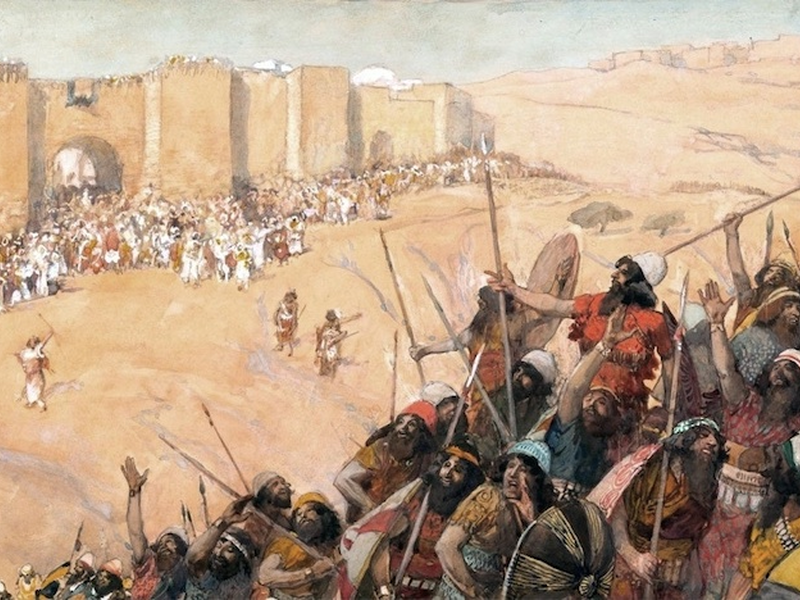
Chronologies and Kings, Part 2

Before we move into a detailed survey of the history and chronology of the kings of Israel and Judah, let us review the chronological information that leads from creation to the kingdom. This will be helpful both to new readers of these essays, and a reminder for those who have…

by James B. JordanAugust 22, 1991
screen-shot-2023-02-24-at-1-48-41-pm
Biblical Chronology

Chronologies and Kings, Part 1

We have completed our overall survey of Biblical chronology, and now turn to a detailed examination of the Biblical information regarding the chronology of Israel’s kings. The first piece of chronological information we have regarding Israel’s kings is very cryptic, and it serves as an guide to the interpretation of…

by James B. JordanJuly 22, 1991
screenshot-2023-08-09-at-2-13-32-pm
Biblical Horizons

Book Review - To Take Place: Toward Theory in Ritual

Jonathan Z. Smith, To Take Place: Toward Theory in Ritual (Chicago: University of Chicago Press, 1987). Reviewed by Peter J. Leithart. The philosophes of the 18th century often attacked Christendom using the tools of anthropology and comparative religion. Rousseau contrasted the idyllic equality of primitive, natural peoples with the bondage…

by Peter LeithartJuly 6, 1991
screenshot-2023-08-09-at-1-47-41-pm
Biblical Horizons

Book Review: The Rise of Magic in Early Medieval Europe

Valerie I. J. Flint, The Rise of Magic in Early Medieval Europe (Princeton University Press, 1991). Reviewed by Peter J. Leithart. Valerie I. J. Flint, Professor of History at the University of Auckland, New Zealand, is refreshingly candid about her reasons for undertaking a study of The Rise of Magic…

by Peter LeithartJuly 6, 1991

Showing page 295 of 309

See all
See all
Theology

Image of God

Gil Baillie, working in a Girardian framework, suggests that the claim that man is made in the image of God means “this creature can only fulfill its destiny by becoming like someone else. So counterinstinctual and counterintuitive is such a thing, that the likelihood of this creature actually fulfilling such…

April 29, 2006
History

Creative destruction

Vitz suggests that postmodern thought has been largely an act of “creative destruction” serving as an “expose, in the best sense of the term.” The result is “a much large intellectual framework within which everyone, including Christians, can function. It provides a much bigger framework than that which existed fifty…

April 29, 2006
History

Modern self

Paul Vitz describes the modern self this way: “The modern self is characterized by such things as freedom and autonomy, by a strong will, and by the presumption that the self is self-created by the will, operating freely in its construction. The self is assumed to be strong, capable, and…

April 29, 2006
Philosophy

Metanarratives

Many Christians find Lyotard’s claim that postmodernity is incredulity toward metanarratives directly contrary to Christian faith, but James KA Smith offers an interpretation of Lyotard’s that is not hostile to Christianity. For Lyotard, he argues, the issue is not so much the scope of the narrative as the claims they…

April 29, 2006
History

Anti-antimedievalism

David Burrell writes, “Modernity was fairly constituted by a quite specific opposition to medieval thought, as we have noted, so could be called ‘post’ or even ‘antimedieval’ . . . this mode of thinking proceeded by avoiding, if not aggressively removing, any reference to creation and the creator/creature relation. It…

April 29, 2006

Cosmic mediation

Philo’s views on the mediation of the logos are summarized in the TDNT article on mediator: “Stretching from the middle of the world to the ends, and back from the extreme edges to the middle . . . [the logos] holds together all the parts of the world . .…

April 29, 2006

Showing page 1849 of 2212

Browse by Category

In Medias Res

Your weekly digest for all things Theopolis.

Donate

Theopolis is nearly 100% donor-supported. Consider joining us on our mission.