Theopolis Logo

Writing

Explore our collection of theological essays, biblical studies, and reflections on faith and culture.

See all
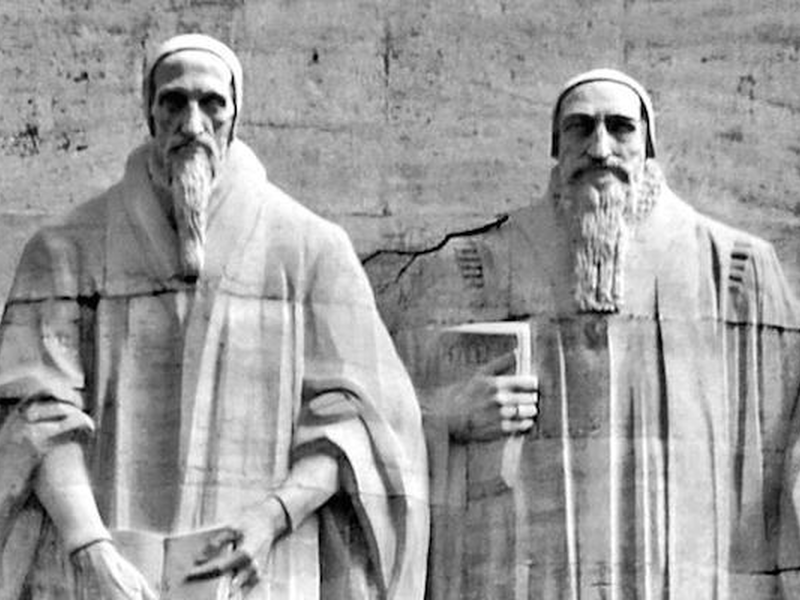
reformation-wall
History

How the Reformation Failed

The Reformers did not start out with a plan to found separated churches. Their goal was to reform the entire Latin church. In this they failed. The paradox is sharp, and we need to feel its point and its edge if we Protestants are to reckon honestly with our history…

by Peter LeithartApril 18, 2017

img_7521
Federal Vision

What is Conversion?

Conversion is a turning from sin to Christ. Now, let's think about that. Does conversion happen only once in a lifetime, or does it happen many times? That is the question, I believe, that needs answering. From my experience, and from my understanding of the Bible and of Christianity, there…

by James B. JordanApril 13, 2017
sky-from-bridge
Biblical Studies

Priests to the Nations

Israel was supposed to be a priest to the nations (Ex. 19:6). Her water would cause their trees to grow. This was signified to all men when Israel came out of Egypt, for "then they came to Elim, where they were twelve springs of water and seventy date palms, and…

by James B. JordanApril 11, 2017
holodomor
Ukraine

Borderland

Rousing Soviet songs surround us as we pass through a gloomy gauntlet of titanic statues on our way to Kyiv’s Museum of the Great Patriotic War. My friends, a Polish and a Ukrainian pastor, remember the songs, which played incessantly on the radio during their childhood. The sculpture complex depicts…

by Peter LeithartApril 6, 2017
img_0166
Eucharist

Worship and Ceremony, Part II: The Lord's Supper

This is the second installment of a two-part article. Click HERE to read Part I. The fourth perspective on ceremony is that of the action of the Lord's Supper. As we noted before, the inauguration of the Lord's Supper preceded its interpretation. Jesus did not at that point give an…

by James B. JordanApril 4, 2017
e99a9380
Course Recap

Architecture Course Recap

The best courses are those that make you see the Bible, the church, or the world differently. The recent Theopolis Architecture Course with Daniel Lee did exactly that. Architect Daniel Lee began the week with architectural theory, continued through the week taking students through a history of architectural practice, and…

by Brian MoatsMarch 31, 2017

Showing page 114 of 309

See all
See all
Politics

Arnold’s Campaign

From the radio reports I hear, it seems that Arnold’s campaign is an extension of his movie career. At one stop, he unveils a bus bearing his mug, and buses for the press labeled “Predators.” At another stop, he talks about taxes, and says that in the movies he destroys…

October 3, 2003

Edwards on Samson

In his Miscellanies , Edwards has some fascinatingly positive things to say about Samson. For example: In Judg xvi. 1, 2, we have an account how Samson loved a harlot, and from his love to her exposed himself to be compassed round by his enemies. So the prophecies represent the…

October 3, 2003

Images of Divine Things

A few quotations from Edwards’ “Images of Divine Things” (1728): “When we travail up an hill ‘tis against our natural tendency and inclination, which perpetually is to descent; and therefore we can’t go on ascending without labor and difficulty. But there arises a pleasant prospect to pay us for our…

October 3, 2003
American Religion

Noll on Edwards

Mark Noll’s account of Edwards’s role in the undermining of the Puritan “sacred canopy” in New England, in his recent book America’s God , is an important analysis of one phase in the rise of American religion. According to Noll, the pattern goes something like this: 1) The Puritans had…

October 2, 2003
History

Edwards and Beowulf

Thinking through an upcoming lecture on Edwards, I had a Borgesian moment: In 1731, there was a fire at the Cottonian library in England that nearly destroyed the single manuscript containing the Anglo-Saxon poem Beowulf . In the same year, Edwards preached a controversial sermon at his church in Northampton,…

October 2, 2003

Polupragmosune

Every great civilization has some equivalent of what the fifth-century (BC) Athenians called polupragmosune . As defined by William Arrowsmith, that word “connotes energy, enterprise, daring, ingenuity, originality, and curiosity; negatively it means restless instability, discontent with one’s lot, persistent and pointless busyness, meddling interference, and mischievous love of novelty.”…

October 2, 2003

Showing page 2188 of 2212

Browse by Category

In Medias Res

Your weekly digest for all things Theopolis.

Donate

Theopolis is nearly 100% donor-supported. Consider joining us on our mission.