Theopolis Logo

Writing

Explore our collection of theological essays, biblical studies, and reflections on faith and culture.

See all
49980-nicolas_poussin_-_the_judgment_of_solomon_-_wga18330-800w-tn
Biblical Studies

Advice From a Sojourner, Part 2

In our first essay in this series ( part 1 ), we saw that Proverbs 30 opens with a puzzle, a cryptic sentence that challenges the reader to search out a matter in order to gain understanding. "It is the glory of God to conceal a matter, but the glory…

by James B. JordanOctober 26, 1989
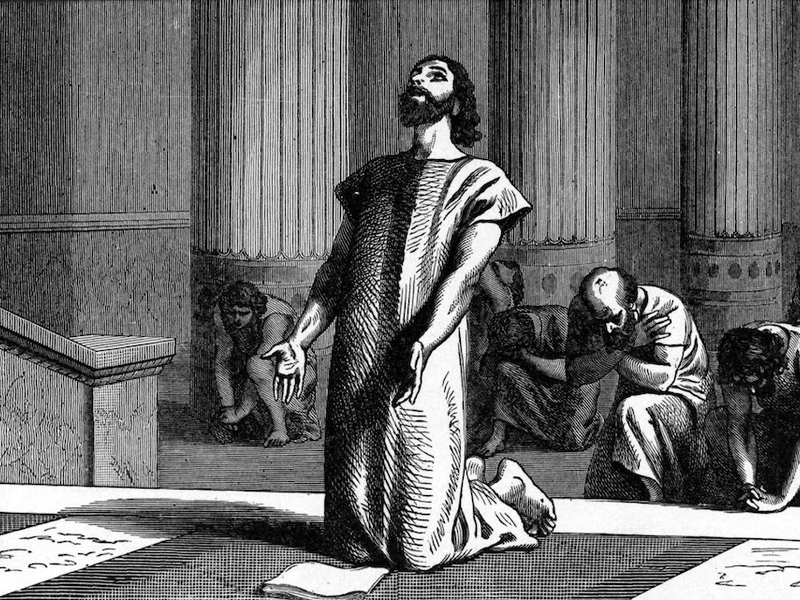
hezekiahs-prayer-2
Isaiah

Hezekiah’s Sign

The story of Hezekiah’s illness and recovery is familiar to every child who has attended Sunday School. Informed that he would die, faithful King Hezekiah pleaded in tears for a longer life. God heard his prayers and saw his tears, and promised fifteen more years. As a sign that He…

by Peter LeithartOctober 13, 1989
screen-shot-2021-08-12-at-2-57-54-pm
Proverbs

An Antidote for Yuppie Postmillennialism

1. The Blessed Hope "Looking for the blessed hope and the appearing of the glory of our great God and Savior, Christ Jesus." Titus 2:13 I was recently asked how I as a postmillennialist would preach on "The Blessed Hope." This is often a sticky question, because postmillennialists believe that…

by James B. JordanAugust 26, 1989
screen-shot-2022-01-10-at-5-52-39-pm
American Culture

Elijah’s War with Baal

1. Jeroboam and Ahab After Solomon died, the people came to his son, King Rehoboam, and asked for tax relief. Rehoboam refused to give it, and indeed told the people that he was going to tax them even more severely than his father had. At that point, with the blessing…

by James B. JordanJuly 26, 1989
screen-shot-2020-08-31-at-10-35-03-am
Biblical Horizons

The Love Feast

One aspect of truth is unity. It was Truth Incarnate who prayed for the unity of His people in John 17, which certainly makes unity a priority for them as well. In one sense, we know by faith that the Church is always invisibly unified in Christ, but there is…

by James B. JordanJune 16, 1989
screen-shot-2022-01-07-at-6-38-22-pm
Biblical Studies

The Son of Joseph, Revisited

Mr. Paul Miller of Vancouver writes that he is not persuaded by my remarks on Luke 4 on " The Son of Joseph ." He calls attention to Mark 6:1-6, where Jesus came "to His own part of the country," taught in the synagogue, and astonished many. The people said,…

by James B. JordanMay 16, 1989
See all
See all
Literature

Living in fictions

In a discussion of King Lear , David Bevington suggests that Edgar saves his father at the cliffs of Dover by constructing a cosmology in which the gods are merciful and perform miracles: “Edgar stages his fiction in this particular way because he knows his father well enough to realize…

December 27, 2006
Literature

Tyranny of gratitude

Many of Shakespeare’s plays explore the moral and political consequences of ingratitude, but Shakespeare is also cognizant of the tyrannical uses to which the demand for gratitude may be put. Lear is certainly about ingratitude, the “marble-hearted fiend” that infects and distorts the monsters of ingratitude Goneril and Regan, as…

December 27, 2006
Theology

In praise of Pietism

Friedrich Oetinger was a leading German pietist intellectual and theologian, deeply interested in the science of his day. And critical of science and rationalist philosophy as well. Against thinkers who placed a primacy on reason, Oetinger argued that sheer logical clarity is insufficient “for living knowledge.” Living knowledge takes form…

December 26, 2006

Communion in humor

I tell a joke, and you get it. I include a veiled allusion to, say, Faust in a casual conversation; you catch it; and we exchange a mental wink. Humor provides a pathway into the hermeneutics of texts and communication. It also seems to provide a pathway into the sociology…

December 26, 2006

Keeping in mind

Gadamer notes the ambiguity of “keeping something in mind.” We sometimes hold something in our mental “gaze” in order to knock into it head on. We watch it carefully until we can grab it. But keeping in mind can also be a form of forgetfulness. We might also keep something…

December 26, 2006
History

Mysticism and culture

Gadamer notes that the concept of Bildung (culture) has its origins in medieval and baroque mysticism, and continues to carry a mystical connotation when it begins to be used of the cultivated humanness. Von Humboldt, for instance, says “when in our language we say Bildung, we mean something both higher…

December 26, 2006

Showing page 1747 of 2212

Browse by Category

In Medias Res

Your weekly digest for all things Theopolis.

Donate

Theopolis is nearly 100% donor-supported. Consider joining us on our mission.